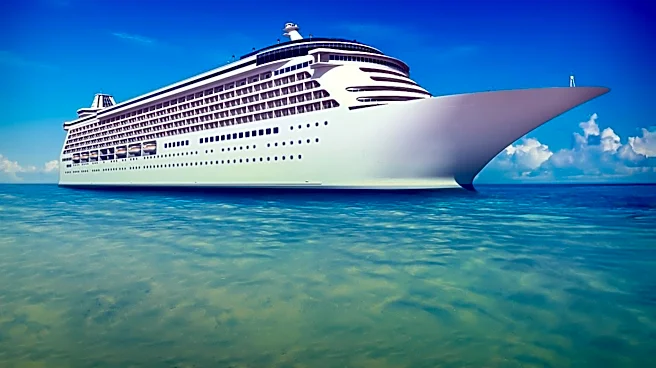






The NS Savannah, launched in 1959, was more than just a nuclear-powered merchant ship; she was a floating testament to mid-century American innovation and a vision of future maritime travel. Designed to be visually impressive, the vessel deliberately evoked the elegance of a luxury yacht rather than the utilitarian appearance of a bulk cargo carrier. This aesthetic choice was central to her role as a demonstration project for President Dwight D. Eisenhower's
"Atoms for Peace" program, aiming to showcase the peaceful applications of nuclear energy in a grand and appealing manner. Her gleaming white paint, never smudged by exhaust smoke thanks to her nuclear propulsion (except when running the diesel generator), further enhanced her pristine and modern image.
Passenger Comfort and Elegant Interiors
Despite her primary function as a cargo ship, the NS Savannah was outfitted with an array of amenities designed for passenger comfort and luxury, reflecting a blend of advanced technology and sophisticated living. She boasted thirty air-conditioned staterooms, each thoughtfully equipped with an individual bathroom, providing a level of privacy and convenience uncommon for a vessel of her type. The ship featured a spacious dining facility capable of seating 100 passengers, suggesting an emphasis on social gatherings and fine dining experiences at sea. Beyond dining, passengers could enjoy a lounge that was versatile enough to double as a movie theater, offering entertainment options during voyages.
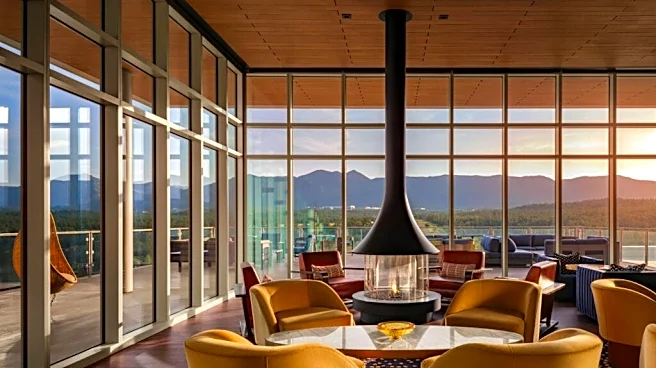
Further enhancing the passenger experience were a veranda, a swimming pool, and a well-stocked library, providing various spaces for relaxation and recreation. Even the cargo-handling equipment was designed with aesthetics in mind, ensuring that the ship's overall appearance remained uncompromised. The interior design was equally meticulous. The promenade deck, for instance, featured an elliptical main lounge, a grand main stair and elevator, and the Veranda Lounge. The bar area was notable for its enclosed walkways outboard and a glass wall that offered views of the swimming pool and the aft promenade deck. A dance floor occupied the center of the lounge, surrounded by tables with illuminated glass tops, while the back bar showcased a glass and metal sculpture interpreting the periodic table of the elements, subtly nodding to the ship's nuclear heart.
Architectural Layout and Public Spaces
The Savannah's internal layout was carefully planned to integrate both her operational and passenger-focused elements. "A" Deck, the first full deck level, housed the main lobby and purser's office, an infirmary, barber, beautician, and steward's facilities. Crucially, it also contained a health physics laboratory, dedicated to monitoring the effects of the nuclear reactor, underscoring the ship's unique nature. All thirty passenger cabins were located on this deck, each designed to accommodate one to three passengers.
"B" Deck was dedicated to culinary and crew facilities, featuring the ship's kitchen and the elegant dining room. The 75-seat dining room was adorned with a curved wall sculpture titled "Fission" by Pierre Bourdelle, a direct artistic reference to the ship's power source. At the opposite end, a metal model of the SS Savannah was set into a glass panel, connecting the pioneering nuclear ship to its historic namesake. Overhead light fixtures were screened with brass bands, stylized to represent atoms, further reinforcing the nuclear theme. The kitchen was equipped with an early water-cooled Raytheon Radarange microwave oven, highlighting the ship's cutting-edge technology. This deck also included crew quarters, a crew mess, and a lounge, ensuring that the crew's needs were met while maintaining the ship's overall high standards. The NS Savannah, therefore, stood as a remarkable blend of advanced engineering and luxurious design, a true marvel of its time.