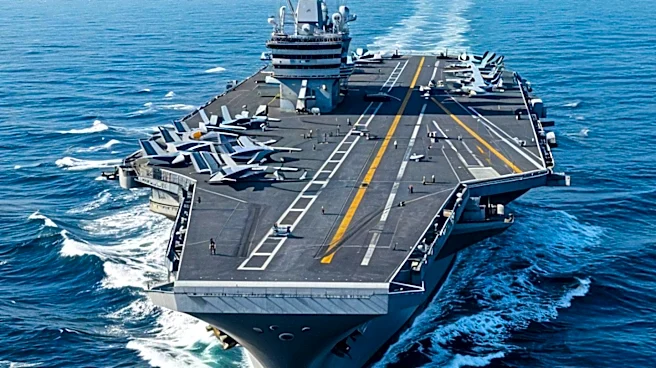






The USS Enterprise (CVN-65), often affectionately known as "Big E," holds a significant place in naval history as the world's first nuclear-powered aircraft carrier. Commissioned on November 25, 1961, this vessel represented a monumental leap in naval engineering and capability. At 1,123 feet, she was the longest naval vessel ever constructed, a record she maintained for many years. Her design and propulsion system set a new standard for future aircraft carriers,
fundamentally changing the operational dynamics of the U.S. Navy.
Revolutionary Design and Propulsion
The Enterprise was designed under project SCB 160 and was initially intended to be the lead ship of a class of six nuclear-powered aircraft carriers. However, the immense construction costs associated with her groundbreaking technology led to the cancellation of the other planned vessels, making her a unique, one-of-a-kind ship. Her most distinctive feature was her propulsion system, which housed eight A2W nuclear reactors. This was a radical departure from conventional carriers, where each reactor took the place of a traditional boiler, providing unprecedented endurance and speed.
Beyond her nuclear power, the Enterprise also featured a more cruiser-like hull and was the only carrier equipped with four rudders, two more than other classes. This design contributed to her unique operational characteristics. Initially, the ship was meant to use the new C-14 Internal Combustion Catapult Powerplant, but this was changed to C-13 steam catapults shortly after launch. This decision was made at the insistence of Admiral Rickover, who viewed the C-14 catapults as an unnecessary risk and expense given the already extraordinary cost of the ship.
Early Armament and Radar Systems
Despite her advanced propulsion, the Enterprise was launched and commissioned without the planned RIM-2 Terrier missile launchers due to the massive cost of her construction. Consequently, she initially possessed very limited defensive armament. It wasn't until late 1967 that the carrier was fitted with a prototype Basic Point Defense Missile System (BPDMS), which included two eight-round box launchers for Sea Sparrow missiles. A third BPDMS launcher was added during a refit between 1970 and 1971, enhancing her defensive capabilities.
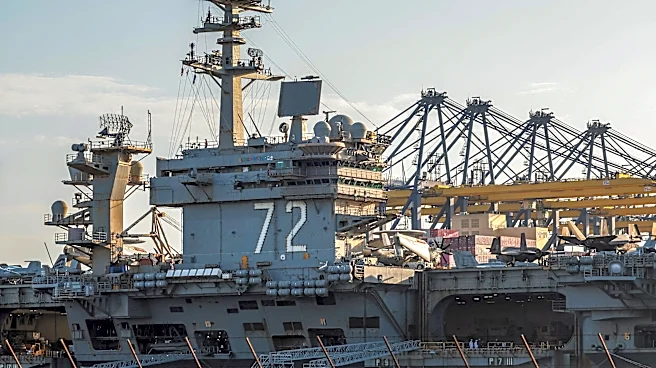
Another innovative, though challenging, aspect of the Enterprise's design was her phased-array radar system, known as SCANFAR. This system was intended to offer superior tracking of multiple airborne targets compared to conventional rotating antenna radars. SCANFAR comprised two radars: the AN/SPS-32, a long-range air search and target-acquisition radar, and the AN/SPS-33, a square array used for three-dimensional tracking. While these radars were ahead of their time and are considered an early form of phased-array technology, they faced issues with their electrical beam steering mechanisms and were not adopted for subsequent ship classes. The technology, based on vacuum tubes, required constant repairs, and the system placed an unacceptable power drain on the ship's electrical systems. These early phased arrays, which were replaced around 1980, were responsible for the carrier's distinctive square-looking island.