
The Boeing 747, an aircraft that would redefine air travel, began its journey not just as a commercial venture but with roots in military transport aspirations. Its development was a race against time,
a massive financial undertaking, and a testament to engineering ingenuity. From the drawing board to its first commercial flight, the path of the "Jumbo Jet" was marked by ambitious goals, innovative solutions, and significant challenges that ultimately forged one of the most iconic aircraft in history.
From Military Bid to Commercial Vision
The initial spark for what would become the 747 came from the United States Air Force's (USAF) need for a heavy logistics transport aircraft in the early 1960s. The CX-Heavy Logistics System (CX-HLS) program sought an aircraft capable of carrying immense payloads over long distances, with a cargo bay large enough for oversized equipment. Boeing, among other manufacturers, submitted a proposal that included a crucial design element: a cockpit positioned above the cargo area to allow for front-loading of freight. Although Boeing's design was not selected for the military's C-5 Galaxy, the concepts developed for the CX-HLS, particularly the raised cockpit and nose-loading capability, proved instrumental for its future commercial airliner.
Simultaneously, the commercial aviation landscape was changing rapidly. Pan American World Airways president Juan Trippe approached Boeing with a vision for an airliner twice the capacity of the Boeing 707. Trippe believed that larger aircraft were necessary to alleviate growing airport congestion. In 1965, Joe Sutter was tasked with leading the design of this new commercial aircraft, designated the Model 747. Recognizing the potential for supersonic airliners to eventually dominate passenger travel, Boeing designed the 747 with easy conversion to a freighter in mind, ensuring its long-term viability even if passenger demand shifted. This foresight led to the distinctive "hump" where the cockpit was placed, allowing for a hinged nose that could open for cargo loading.
The "Incredibles" and the Everett Factory
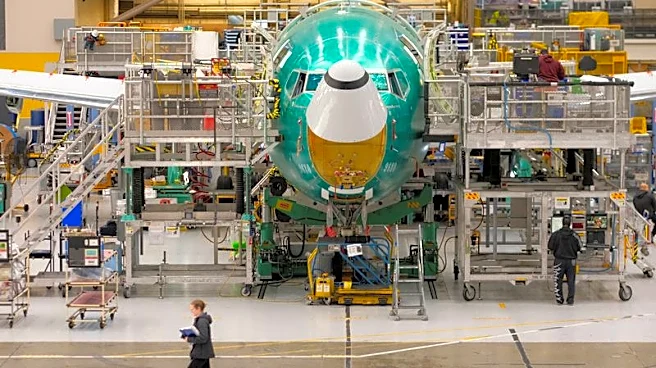
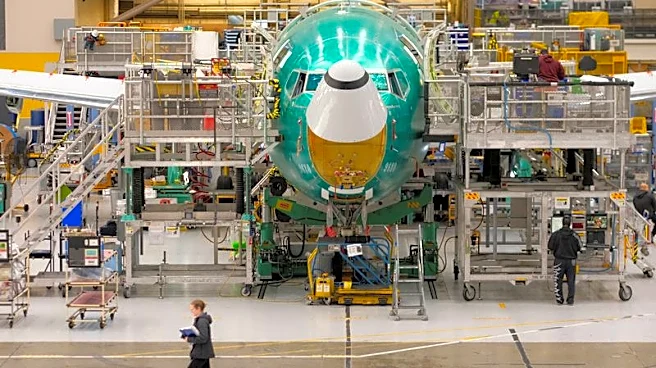
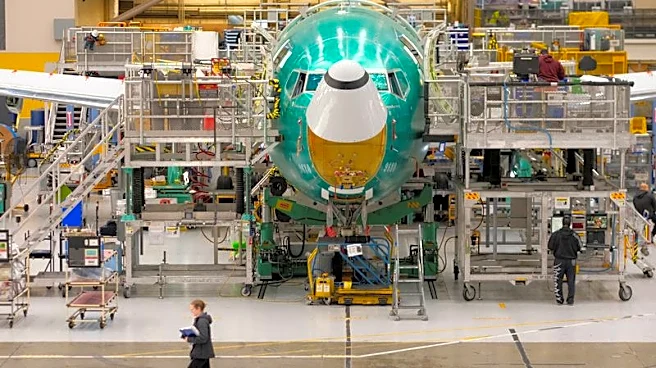
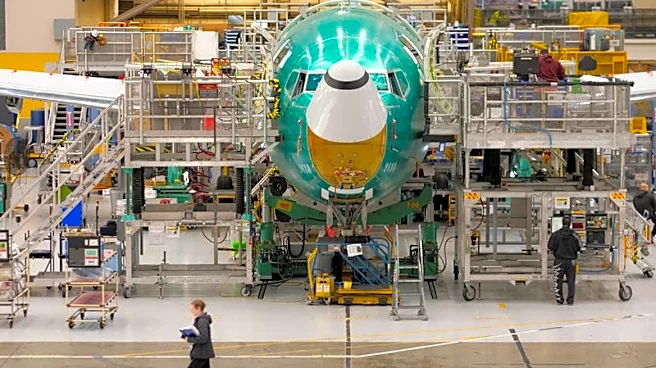
Pan Am placed a groundbreaking order for 25 747-100s in April 1966, setting an incredibly tight deadline for Boeing: delivery by the end of 1969. This left only 28 months for the entire design and construction process, a period significantly shorter than typical for such a complex aircraft. The team working on this accelerated schedule became known as "The Incredibles." The sheer size of the 747 also presented a unique logistical challenge: Boeing did not possess a facility large enough to assemble it. This led to the construction of a massive new plant near Paine Field in Everett, Washington, a monumental undertaking that involved moving millions of cubic yards of earth. The factory itself became the largest building by volume ever constructed, with the 747's full-scale mock-up being built even before the roof was completed.
Innovation extended to the aircraft's core components. The Pratt & Whitney JT9D high-bypass turbofan engine was developed specifically for the 747, promising double the power of previous turbojets with significantly better fuel efficiency. The design also incorporated advanced safety features, including structural redundancy, multiple hydraulic systems, a quadruple main landing gear, and dual control surfaces. To enable the giant aircraft to operate from existing airports, sophisticated high-lift devices, such as Krueger flaps and three-part slotted flaps, were integrated into the wing design, dramatically increasing lift and wing area when deployed.
Rigorous Testing and Entry into Service
Before the first 747 was even fully assembled, extensive testing began on its components and systems. A critical test involved evacuating 560 volunteers from a cabin mock-up via emergency chutes. Initial attempts failed to meet the FAA's 90-second mandate, and several volunteers were injured, particularly during evacuation from the upper deck, which initially used a harness and reel system. Subsequent tests achieved the time goal, though with more injuries. Taxiing such a large aircraft also required specialized training, leading to the creation of "Waddell's Wagon," a truck-mounted cockpit mock-up that allowed pilots to practice maneuvers from the elevated upper-deck position.
The prototype 747 was publicly displayed on September 30, 1968, and made its first flight on February 9, 1969. Despite a minor flap issue, the flight confirmed the aircraft's excellent handling characteristics and its immunity to "Dutch roll." However, the flight test program encountered further hurdles, including wing oscillation issues that required structural adjustments and, in early models, depleted uranium counterweights. More significantly, problems with the JT9D engines, such as stalls and turbine casing distortion, delayed deliveries. Despite these challenges, the 747 received its FAA airworthiness certificate in December 1969. Pan Am launched the first commercial 747 service on January 22, 1970, ushering in a new era of air travel and solidifying the 747's place as a true aviation pioneer.