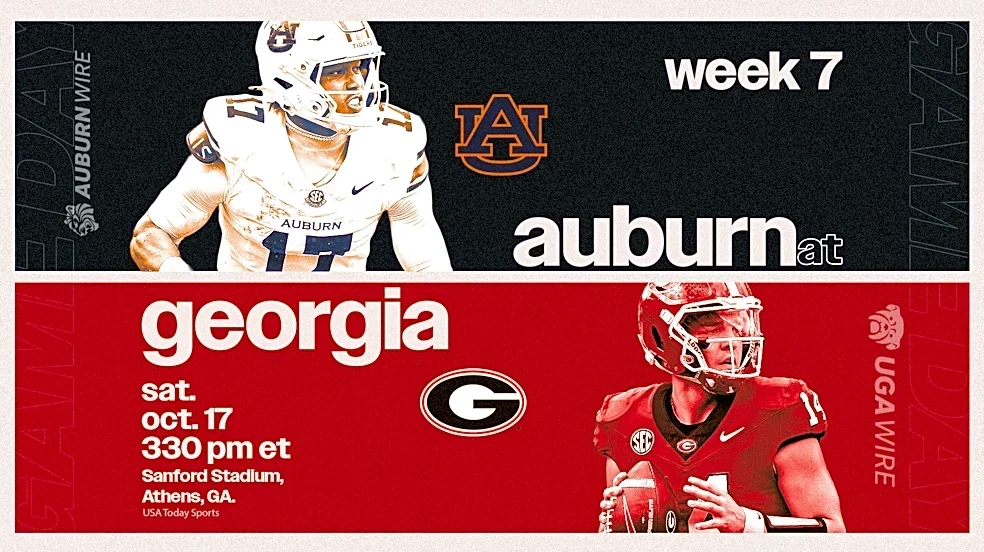




The Iron Bowl, the annual college football game between the University of Alabama's Crimson Tide and Auburn University's Tigers, stands as one of the most significant rivalries in American sports. This intense competition, which began in 1893, is deeply rooted in the history and industrial landscape of Alabama. The very name "Iron Bowl" itself is a nod to Birmingham, Alabama's historical prominence as a center for steel production, a city that once
rivaled Pittsburgh, Pennsylvania, in its output of pig iron, coke, coal, and steel. This rivalry is not just about football; it's a reflection of the state's past, its economic development, and the passionate loyalties of its residents.
Early Beginnings and the Naming of the Rivalry
The first football game between Alabama and Auburn took place on February 22, 1893, in Lakeview Park, Birmingham. Auburn emerged victorious with a score of 32-22 in front of an estimated crowd of 5,000 spectators. Interestingly, Alabama considered this game the final matchup of their 1892 season, while Auburn recorded it as the first game of their 1893 season. For many years, the game was primarily played at Legion Field in Birmingham, a city whose industrial might in the early 20th century made it a fitting backdrop for such a robust athletic contest.
The term "Iron Bowl" was officially coined by Auburn's coach Ralph "Shug" Jordan in 1964. When journalists questioned him about the disappointment of not participating in a traditional post-season bowl game, Jordan famously replied, "We have our own bowl game. We play it every year. It's the Iron Bowl in Birmingham." This statement cemented the nickname, forever linking the rivalry to Birmingham's industrial heritage and emphasizing its unique status as a self-contained, high-stakes event.
The Battle for State Resources and Institutional Identity
The rivalry between Alabama and Auburn extends far beyond the football field, with a history of political and financial competition. The contest became an extension of a bitter political debate in the Alabama State Legislature regarding the location of the new land-grant college under the Morrill Land Grant Act of 1862 during the Civil War Reconstruction Era. University of Alabama alumni, heavily represented in the legislature, pushed to sell the land scripts or have any new land holdings associated with the University of Alabama in Tuscaloosa. After more than four years of debate, Lee County and the City of Auburn secured the new university's location in 1872 by donating land and the remaining buildings of the East Alabama Male College.
During the 1870s, Auburn, then known as the Agricultural and Mechanical College of Alabama, faced financial collapse as it received no appropriated funds from the state. The University of Alabama saw an opportunity to profit from Auburn's closure by assuming the remaining land scripts. The University of Alabama itself had been closed until 1871 after being partially destroyed by Union forces during the Civil War. By 1877, competition for patronage intensified, with Auburn President Isaac Tichenor reporting that Alabama had reduced tuition and lowered graduation standards. Tichenor responded by requesting that Auburn drop tuition and create a boarding department to lower expenses further. This period highlights the deep-seated institutional rivalry that predates the football competition.
The Hiatus and Resumption of the Series
After the 1907 game, the football rivalry went into a long hiatus, not resuming until 1948. This break was due to disagreements between the two institutions regarding player compensation and the selection of officiating crews. During this hiatus, Auburn, under President Duncan, became an administrative hub for several New Deal agencies, attracting federal funding that drew the ire of the University of Alabama trustees and their allies in the state legislature. President Duncan's influence, stemming from his support for Governor Bibb Graves and his connections within the Alabama Farm Bureau, allowed Auburn to secure these agencies.
The rivalry's intensity was further fueled by legislative debates. In a 1945 legislative session, the University of Alabama's report to the Alabama Educational Survey Commission argued for its broad responsibilities in higher education, suggesting that other institutions, including Auburn, were established due to "the illogic inherent in the evolution of a democratic government." Auburn President Luther Duncan vehemently countered this, calling the report a "bolder, more deliberate, more vicious, or more deceptive document" and predicting it would "consume them just like the doctrine of Hitler." He also remarked that Alabama viewed Auburn as "the illegitimate children... born out of the misery of the Reconstruction period." By 1945, the influx of students due to the GI Bill doubled Auburn's enrollment, making it clear that the institution would not be absorbed by Alabama. In 1947, both the Auburn Board of Trustees and the Alabama House of Representatives passed resolutions encouraging the resumption of athletic competition, leading to the agreement in April 1948 to renew the series, played at Legion Field in Birmingham, thus bringing the Iron Bowl back to life.