






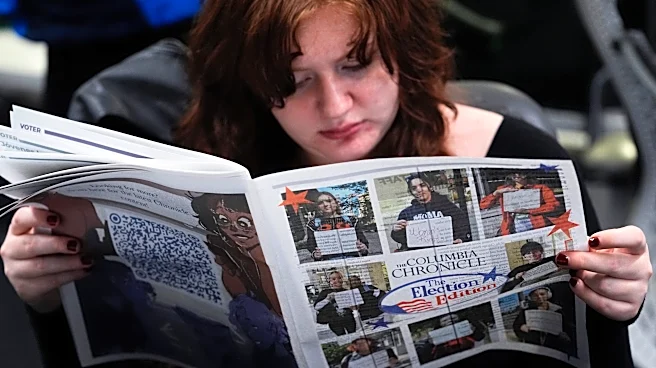

Newspapers stand as a prominent example of periodical literature, serving as regular publications that deliver written information about current events. Typically printed in black ink on a white or gray background, newspapers cover an extensive array of subjects, including politics, business, sports, art, science, and religion. Beyond factual reporting, they often incorporate diverse materials such as opinion columns, weather forecasts, reviews of local
services, obituaries, birth notices, crosswords, sudoku puzzles, editorial cartoons, comic strips, and advice columns. This broad scope makes newspapers a comprehensive source of information and entertainment for their readers.
Most traditional newspapers are structured into distinct sections, often labeled with letters like A, B, C, and so on, with pagination prefixes (e.g., A1-A20, B1-B20). A key feature of many newspapers is the editorial page, which contains editorials written by the paper's editor or editorial board, expressing opinions on public issues. This section also frequently includes "op-eds"—opinion articles contributed by guest writers—and columns where columnists share their personal views, often providing analysis and synthesis to help readers understand the significance of news events and persuade them to a particular viewpoint.
Zoned Editions and Advertising Strategies
Newspapers frequently employ zoning and editioning to refine the distribution of both advertisements and news content. Zoning occurs when editorial and advertising content are altered to reflect the specific location where the product is delivered. Editorial content might change simply due to variations in advertising quantity and layout, which affect the space available for news, or it might include region-specific news. In some instances, advertising may remain consistent across zones, while only the editorial content is localized. Zoned editions are often produced in parallel due to these content variations.
Editioning, on the other hand, involves updating the main sections of the newspaper as news evolves throughout the night. While advertising usually remains the same across editions (except for zoned regional sections), each new edition incorporates the latest available news for the subsequent press run. These editions are produced linearly, with each new version being a copy of the previous one, updated with fresh information. This process ensures that a "Newspaper of Record" is maintained and provides a fallback if quick corrections are needed for the press. For example, both The New York Times and The Wall Street Journal offer regional editions, printed by local contractors, which feature content specific to those locales.
The Business Model: Advertising and Revenue
Newspapers typically generate a significant portion of their revenue, often 70–80%, from advertising, with the remainder coming from sales and subscriptions. The content that is not advertising is referred to as editorial content or editorial matter. Historically, the business model of relying on advertising to subsidize printing and distribution costs, rather than having subscribers cover the full expense, was pioneered in 1833 by The Sun, a New York City daily. This paper charged one cent per copy, a significant reduction from the typical six cents, and depended on advertising to make up the difference.
In recent years, newspapers in countries with easy access to the internet have faced challenges due to a decline in traditional advertisers. Department stores and supermarkets, once reliable buyers of newspaper ad pages, are now less likely to do so due to industry consolidation. Additionally, traditional advertisers are shifting to new media platforms. Classified advertising, for instance, has moved to websites like Craigslist, employment sites, and auto-specific platforms. National advertisers are increasingly utilizing various digital content forms, including websites, rich media platforms, and mobile advertising. The emergence of advertorials, which are paid placements designed to resemble editorial content, further blurs the line between advertising and news, though they are often distinguished by design or labels.