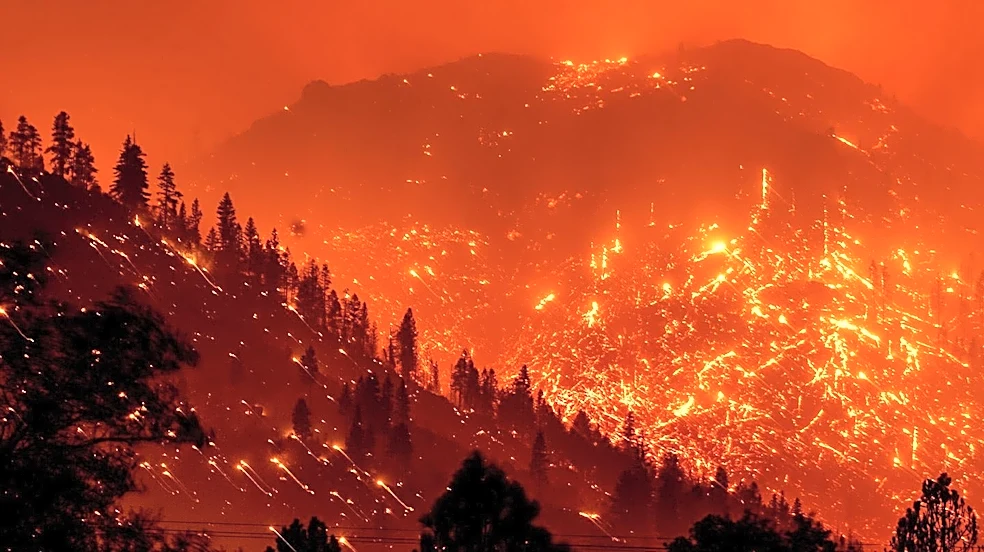




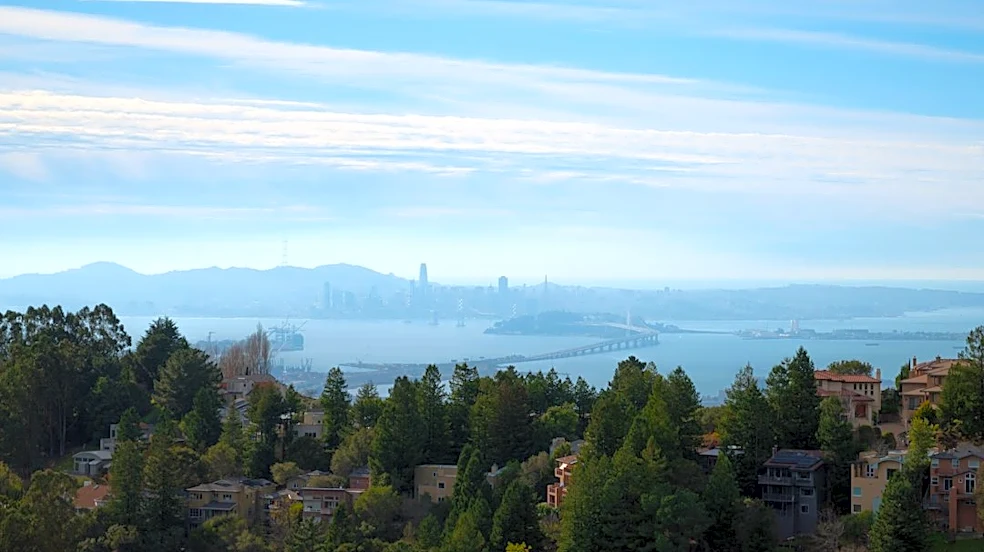

The Oakland firestorm of 1991, officially known as the Tunnel Fire by Cal Fire, was a devastating event that unfolded in the hillsides of northern Oakland, California, and southeastern Berkeley. Occurring over the weekend of October 19–20, 1991, this suburban wildland-urban interface conflagration ultimately claimed 25 lives and injured 150 people. The economic toll was estimated at $1.5 billion in 1991 dollars, equivalent to approximately $3.07 billion in 2025.
The fire's rapid spread and intensity were fueled by a combination of environmental factors and initial difficulties in firefighting response, leading to widespread destruction across 1,520 acres.
Origins and Rapid Escalation
The fire's origins trace back to an incompletely and improperly extinguished grass fire that began on Saturday, October 19, in the Berkeley Hills. This initial blaze, located northeast of the intersection of California State Routes 24 and 13, was fought by firefighters who believed it to be under control by Saturday night. However, the cause of this original grass fire remained inconclusive.
The situation dramatically changed on Sunday, October 20, when the fire re-ignited as a brush fire shortly before 11:00 a.m. Driven by powerful wind gusts reaching up to 65 miles per hour, the fire rapidly spread southwest. Within a short time, it overwhelmed local and regional firefighting resources. By 11:30 a.m., the fire had reached the Parkwoods Apartments, adjacent to the Caldecott Tunnel. Before noon, it had been blown to the top of Hiller Highlands, from where it descended into the Hiller Highlands development and the southern hills of Berkeley. Burning embers, carried by the torrid winds, ignited new blazes ahead of the main fire line, contributing to its swift progression. Within just thirty minutes, the fire had crossed both Highway 24, an eight-lane freeway, and Highway 13, a four-lane freeway, engulfing hundreds of homes in the Forest Park neighborhood and the upper Rockridge neighborhood. The fire even touched the edge of Piedmont, affecting some municipal property, though buildings and houses there were spared.
The Role of Diablo Winds and Fire-Generated Conditions
Hot, dry northeasterly winds, locally known as "Diablo winds," played a critical role in the fire's rapid and destructive spread. These winds, similar to the Santa Ana winds in Southern California, are a periodic occurrence during the early fall season and have historically contributed to numerous devastating fires. The Oakland firestorm was so intense that it began generating its own wind, a defining characteristic of a firestorm. These superheated, fire-driven winds interacted with warmer, drier air east of the Berkeley Hills and cooler, more moist Bay/Coastal air, creating erratic and dangerous gusts. This phenomenon helped spread the fire by tossing embers in all directions. The wind's force was so significant that it carried debris across the bay into San Francisco, with ash falling onto the field of Candlestick Park during a football game. Live footage of the fire was even shown during the CBS telecast of the game, providing many with their first glimpse of the disaster.
Overwhelmed Firefighting Efforts and Critical Challenges
Firefighting teams were initially overwhelmed by the firestorm due to a confluence of factors. The extreme wind gusts, sometimes exceeding 70 miles per hour, led to erratic and unpredictable fire behavior. A major challenge was the loss of power to 17 pumping stations in the Oakland water system, which severely hampered water supply. Furthermore, outside fire teams faced equipment compatibility issues, as hydrants in Oakland had differently-sized outlets compared to hoses used by neighboring counties. Communication was also a significant problem; Oakland's antiquated equipment and lack of access to statewide radio frequencies, a result of budget restrictions in preceding years, prevented effective coordination with many mutual aid resources. In some areas, firefighters simply ran out of water because there was no power to refill emptied reservoirs. Narrow, winding roads, often congested with parked cars, including those blocking fire hydrants, further impeded the movement of fire trucks and ambulances. The rapid spread of the wind-driven fire was the most critical factor, destroying one house every 11 seconds at its peak and nearly 790 structures within the first hour, before most firefighting resources could even reach the scene. The fire's start at the interface between developed and undeveloped land, surrounded by thick, dry vegetation, along with the prevalence of wood shake/shingle roofs and wood chip mulch, also contributed to its rapid and devastating progression.
By mid-afternoon on Sunday, the wind slowed and shifted to the west, pushing the fire southeast. The wind then abruptly stopped around 9:00 p.m., offering firefighters a crucial opportunity to begin containing the blaze. Full containment, however, would not be achieved until October 22, with the fire officially declared under control on Wednesday, October 23, almost 72 hours after its re-ignition.