




The financial crisis of 1914 emerged as a significant global economic disruption, primarily triggered by the sell-off of approximately $3 billion (equivalent to $96 billion in 2025) in foreign portfolio investments. This massive divestment was largely undertaken by the British, who required funds to support their war efforts during the July Crisis, which marked the beginning of World War I. While often overshadowed by the concurrent political turmoil,
this financial crisis had profound and lasting effects, including the extended closure of major stock markets in the U.S. and London, and it ultimately signaled a shift in the international economic order, positioning the U.S. as a burgeoning leader in global financial markets.
International Market Closures and Banking Suspensions
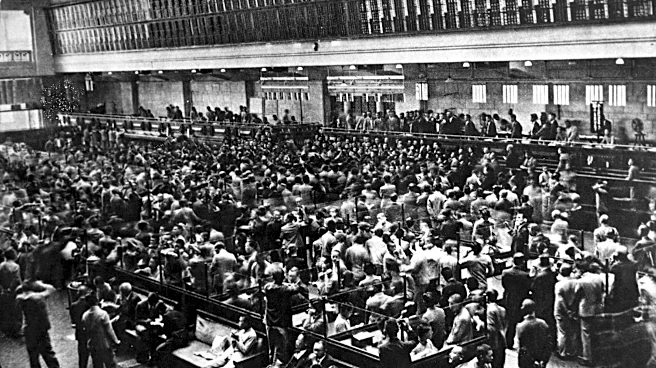
One of the most immediate and dramatic consequences of the escalating crisis was the widespread closure of international stock markets. Beginning on August 1, 1914, most major global stock exchanges ceased operations for an extended period. This unprecedented measure was a direct response to the intense financial instability gripping the world. Simultaneously, many leading economies moved to declare a moratorium on all required payments of negotiable instruments, a step aimed at preventing a complete collapse of their financial systems.
Key central banks also took drastic actions to safeguard their gold reserves. The State Bank of the Russian Empire, for instance, suspended payments in gold on July 27, 1914. This was quickly followed by similar actions from the Reichsbank on August 4, 1914, and the Bank of France on August 5, 1914. These suspensions highlighted the severe pressure on national treasuries and the urgent need to conserve precious metals as the specter of war loomed large.
Pre-War Financial Instability and Gold Hoarding
The period leading up to the official outbreak of World War I, particularly between the Ultimatum of July 23, 1914, and July 27, 1914, saw significant financial distress. London banks, a central hub of global finance, began calling in their loans, hoarding gold, and withdrawing funding. This created a ripple effect across international markets. Shipments of gold from the U.S. to Europe reached record highs as Europeans sought to exchange dollars for gold, reflecting a deep-seated fear of currency devaluation and economic uncertainty.
During this time, the British pound sterling experienced a surge in value. This was driven by increased demand as individuals and institutions sought to repay British loans, further illustrating the scramble for stable assets and the tightening of credit markets. The assassination of Archduke Franz Ferdinand on June 28, 1914, had set off a chain of events that made war appear unavoidable, and financial markets reacted with extreme caution and widespread panic, leading to these protective measures by banks and governments.
Long-Term Market Impacts and Reopening
The closures of major stock markets were not brief interruptions but extended shutdowns that underscored the severity of the crisis. The U.S. stock market remained closed for four months, while the London stock market was shut for an even longer period of five months. When the New York Stock Exchange finally reopened for bond trading on November 28, 1914, and for stock trading on December 12, 1914, the initial reaction was dramatic. On the day of its full reopening, the Dow Jones Industrial Average, when calculated retroactively based on its 1916 components, experienced a significant drop of 24.39%, falling from 71 to 54. This marked its worst decline since its inception. However, when calculated using the 12 components actually in the index on that specific day, the index surprisingly rose. Despite this initial volatility, the stock market did recover later that year, though it would later fall by 40% between late 1916 and early 1917. The London Stock Exchange reopened on January 4, 1915, but by then, the international economic order had fundamentally changed, with the U.S. beginning its ascent in global finance.