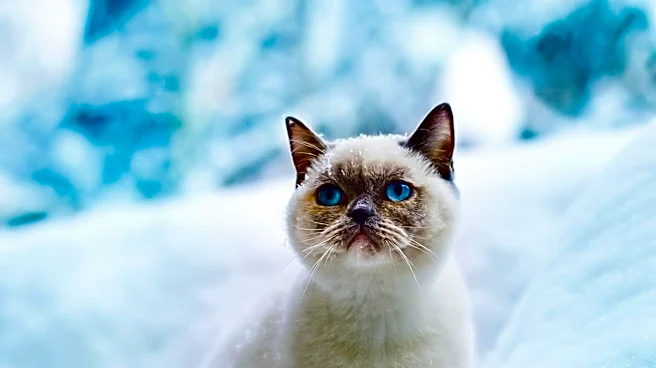







The Snowshoe cat, a domestic breed originating in the United States during the 1960s, is distinguished by its striking bicolour colourpoint pattern and characteristic white feet, which give the breed its name. This medium-sized cat combines the robust build of its shorthair ancestors with the elongated form of its oriental predecessors, creating an elegant and athletic appearance. However, achieving the desired markings and patterns in Snowshoe cats
presents significant challenges for breeders, contributing to the breed's rarity.
The Distinctive Appearance of the Snowshoe
The Snowshoe cat is recognized for its unique physical traits, particularly its coat and body structure. Its coat is short to medium-short, bright, and smooth, lacking a noticeable undercoat. A plush or double coat is considered a fault by cat associations. The texture is described as glossy and close-lying, and it undergoes seasonal changes, requiring minimal grooming. The breed is a pointed cat, meaning it has darker coloration on its extremities, and always features blue eyes.
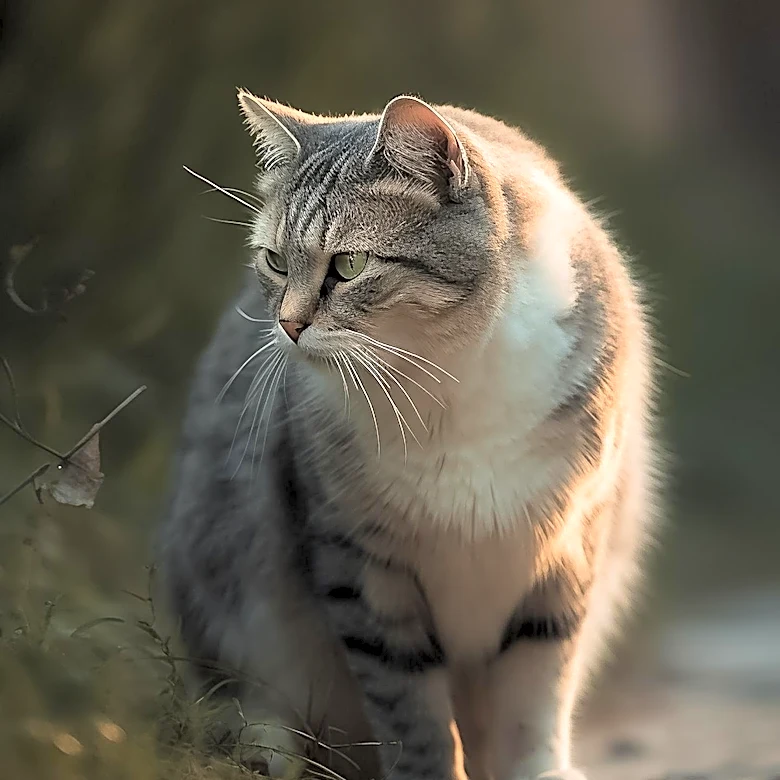
In terms of body, the Snowshoe is of a foreign type, balancing the heftiness of its shorthair lineage with the length of its oriental ancestors. It possesses a long, firm body with medium bone structure and musculature, appearing well-knit and powerful without being bulky. Overall balance is crucial, with no extreme features in size or type. The cat is muscular yet agile, projecting the image of a runner rather than a weightlifter, with no exaggerated characteristics.
The Intricacies of Coat Coloration and White Spotting
Recognized Snowshoe coat coloration involves a light body color contrasted with darker ears, face, legs, and tail. The points—ears, mask, legs, and tail—must be clearly defined and harmonize with the body color. A key feature is the sharply contrasting white tips on the paws and the nose/muzzle area. While the ACFA recognizes black ('seal') and blue point colorations, other associations like FIFe and TICA acknowledge a broader spectrum, including chocolate, lilac, cinnamon, fawn, red, and cream point. FIFe also recognizes tortoiseshell, tabby, and tortoiseshell-tabby patterns. Snowshoe kittens are born white, with their markings developing within one to three weeks.
White spotting is a critical element of the Snowshoe's appearance. Any amount of white on the body is permitted, and the chin may be white, point-colored, or a combination. A white bib on the chest or a collar around the neck is normal, as is white on the stomach. The nose leather can be pink, point-colored, flesh-toned, or mottled. A defining characteristic is that all four feet must be white, with specific limits: white extends from the toes up to the mid-leg on the front legs and up to the mid-thigh on the back legs. The preferred facial pattern is a white inverted 'V' shape, combined with the white shoe pattern.
Breeding Challenges and Genetic Factors
The Snowshoe's rarity is largely attributed to the difficulty in breeding cats that consistently meet the breed's strict standards for markings and patterns. Each Snowshoe possesses a unique pattern, influenced by recessive genes and other factors. For instance, the 'V' facial pattern is an example of incomplete dominance; an offspring with two dominant genes for this marking will have a larger feature than one with a single dominant gene. However, other factors can influence the outcome, making precise prediction challenging.
Another significant breeding hurdle involves the white 'boots.' These can be caused by either a white spotting gene or a gloving gene, both of which are difficult to control. Breeders often encounter cats whose white markings extend too far up the leg, not far enough, or are entirely absent. Consequently, many pet-quality Snowshoes exhibit too much white, too little white, or mismarked white features. The complexity is further compounded by the need to achieve the correct head shape and ear set, while simultaneously maintaining the body structure derived from American Shorthair and Siamese ancestors.