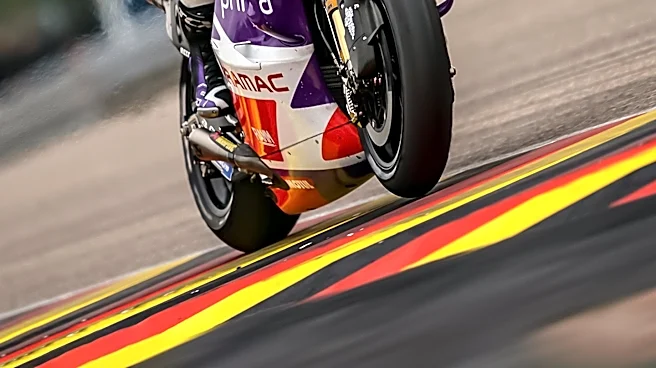



Grand Prix motorcycle racing stands as the premier championship in motorcycle road racing, a sport with a rich history dating back to 1949. Established by the FIM (Fédération Internationale de Motocyclisme), it holds the distinction of being the oldest motorsport world championship still in existence. Over the decades, the sport has undergone significant transformations, particularly in its top tier, which evolved from the 500cc class to what is now
known as MotoGP. This evolution reflects ongoing efforts to balance technological advancement, safety, and the sustainability of the sport, leading to changes in engine displacement, type, and overall class structure.
Early Days and the Dominance of Two-Strokes
When the Grand Prix Road-Racing World Championship began in 1949, it featured several classes, including 500cc, 350cc, 250cc, 125cc, and sidecar. Initially, four-stroke engines were dominant across all classes through the 1950s and much of the 1960s. However, advancements in engine design soon saw two-stroke engines gain prominence, particularly in the smaller categories. By the mid-1970s, two-strokes had completely eclipsed four-strokes in all classes due to their ability to produce power with every rotation of the crank, as opposed to every second rotation for four-strokes.From the mid-1970s until 2001, the premier class of GP racing allowed a maximum displacement of 500cc with up to four cylinders, regardless of whether the engine was a two-stroke or four-stroke. This rule effectively favored two-stroke engines, making them the universal choice in the top class. While some two- and three-cylinder 500cc two-strokes were seen, offering a minimum-weight advantage and higher corner speeds, they generally lacked the raw power of the four-cylinder machines. Honda even attempted to reintroduce four-stroke technology with the NR500 in 1979, but this project ultimately failed, leading Honda to also adopt two-stroke 500cc engines by 1983.
The Dawn of MotoGP and Four-Stroke Revival
The year 2002 marked a pivotal moment in the history of Grand Prix motorcycle racing with the introduction of significant rule changes aimed at phasing out two-stroke engines. The premier class was rebranded as MotoGP, replacing the long-standing 500cc class. This new era allowed manufacturers to choose between running two-stroke engines up to 500cc or four-stroke engines with a displacement of up to 990cc. Manufacturers were also given flexibility in their choice of engine configuration. This change was driven by the recognition that the high costs of developing specialized two-stroke engines, which resulted in non-commercial end products, were not sustainable for the sport.Despite the increased development costs associated with the new four-stroke engines, they quickly proved superior to their two-stroke counterparts. Their performance advantage was so significant that by 2003, no two-stroke machines remained in the MotoGP field, marking a complete transition to four-stroke technology in the premier class. This shift was a strategic move by Dorna, the commercial rights holder, with support from manufacturers, to ensure the sport's future viability and relevance.
Further Technical Adjustments and Class Restructuring
The evolution of MotoGP did not stop in 2002. In 2007, the maximum engine displacement for the MotoGP class was reduced to 800cc, a regulation intended to last for at least five years. This change was part of ongoing efforts to manage performance and safety within the sport. However, for the 2012 season, the MotoGP engine capacity was increased once again to 1,000cc, reflecting a continuous adjustment to technical regulations.Beyond the premier class, the entire Grand Prix motorcycle racing structure also saw significant changes. In 2010, the 250cc two-stroke class was replaced by the new Moto2 class, featuring 600cc four-stroke engines. Two years later, in 2012, the 125cc two-stroke class was succeeded by the Moto3 class, which utilized 250cc four-stroke engines with a weight limit of 65 kg including fuel. These changes effectively retired two-stroke bikes from all Grand Prix motorcycle racing classes, standardizing the sport around four-stroke technology. The introduction of MotoE in 2019, an electric motorcycle class, further diversified the championship, initially as a World Cup and later gaining World Championship status, though it is slated for a hiatus after the 2025 season. These continuous adjustments underscore the dynamic nature of Grand Prix motorcycle racing, always adapting to technological advancements and the demands of competitive sport.