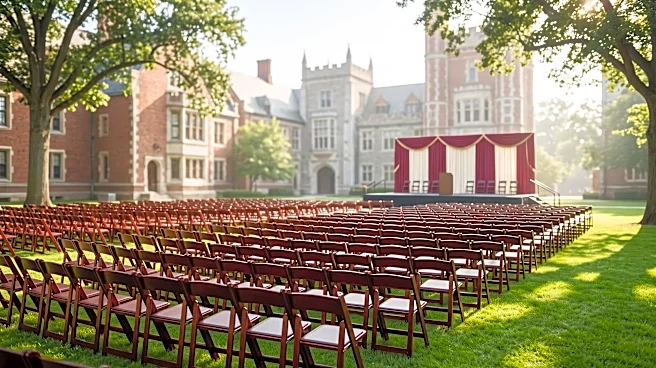



Harvard University's Commencement Day is a culmination of academic achievement, marked by a series of ceremonies, with the Morning Exercises standing as the grand centerpiece. This event, held in the expansive central green of Harvard Yard, known as Tercentenary Theatre, is a spectacle of tradition and academic pomp. It brings together a vast assembly of approximately 32,000 individuals, including graduating students, university leadership, faculty,
distinguished guests, and the families and friends who have come to celebrate this significant milestone. The dais, where the main proceedings unfold, is strategically placed before the steps of Memorial Church, facing the iconic Widener Library, creating a visually impressive backdrop for the day's events.
The Grand Academic Parade
The Morning Exercises commence with a meticulously organized Academic Parade, a procession that is rich in symbolism and historical significance. The parade begins with the candidates for graduate and professional degrees, who are followed by the university's alumni and alumnae. Next in line are the candidates for undergraduate degrees, who observe a long-standing tradition of removing their headgear as they pass the statue of John Harvard. This sequence of entry underscores the hierarchical and historical structure of the university community.
Following these groups, the President's Procession makes its entrance, a segment of the parade that is particularly notable for its distinguished participants and unique customs. This procession includes the sheriffs of Middlesex and Suffolk counties, who, in a nod to tradition, have historically entered the Yard through the Johnston Gate. They are described as riding white horses, dressed in morning coats, top hats, and striped pants, and carrying swords and scabbards, presenting a striking image of historical pageantry. While some elements of the procession have evolved, such as the Governor of the Commonwealth of Massachusetts no longer arriving on horseback with armed escorts since 1971, the presence of these figures maintains a link to Harvard's deep past.
Distinguished Participants and Ancient Roles
The President's Procession is a gathering of many of the university's most important figures and honored guests. It includes the University Marshal, who escorts the Harvard President and any former presidents who are in attendance. Also present are the Fellows of Harvard College and the Honorable and Reverend the Board of Overseers, key governing bodies of the institution. Candidates for honorary degrees, whose identities are kept secret until Commencement Day itself, also join the procession, accompanied by their faculty escorts. The deans and vice-presidents of the university, along with the faculty, ranked according to academic standing, further fill out this impressive display.
Beyond the immediate university hierarchy, the procession also incorporates figures representing broader historical and community ties. These include former Fellows and Overseers, former faculty, and past officers of the alumni associations. Uniquely, the "teaching elders [ministers] of the sixe [historically] next adjoining townes," which included Cambridge, Watertown, Charlestown, Boston, Roxbury, and Dorchester, along with clergy of the "Old Cambridge" churches, participate, reflecting the university's historical connections to its surrounding communities. Consuls to Boston, state and federal judges, past recipients of honorary degrees, public officials, and other guests complete the diverse array of individuals who form this grand procession, all contributing to the solemn and celebratory atmosphere of the Morning Exercises.
The Holyoke Chair and the Fellowship of Scholars
Amidst the formal proceedings, a few distinctive traditions add character to the Morning Exercises. One such tradition involves the Harvard president occupying the Holyoke Chair, a "bizarre" sixteenth-century piece of furniture known for its tendency to tip over. This quirky detail serves as a tangible link to the university's long history and its embrace of unique customs. Another significant moment is the welcoming of newly minted bachelors to "the fellowship of educated men and women." This phrase encapsulates the enduring purpose of a Harvard education and the community into which graduates are formally inducted. These elements, from the grand parade to the specific rituals, ensure that the Morning Exercises are not merely a degree-conferring event but a memorable and deeply traditional experience.