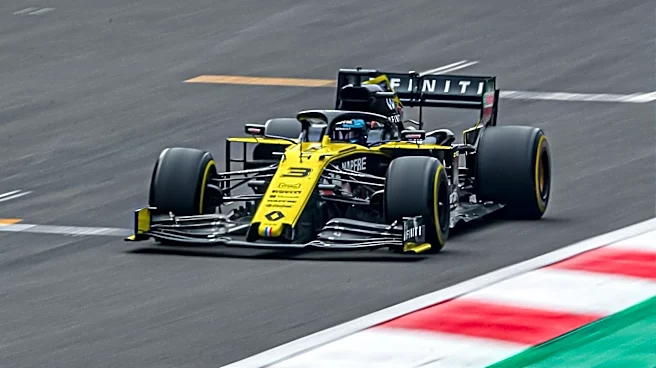



The World Series by Renault, often abbreviated as WSR, represented a significant chapter in European motor racing. Created in 2005, this racing format brought together various single-make categories under the umbrella of the Renault manufacturer. Its establishment marked a pivotal moment, emerging from the merger of existing championships and evolving over more than a decade before its eventual rebranding and discontinuation. The series was designed
to showcase Renault-powered racing and provide a structured pathway for drivers through different levels of competition.
Origins and Formation
The World Series by Renault was born out of a strategic consolidation in the motor racing landscape. Its creation in 2005 was a direct result of the merger between two prominent championships: the World Series by Nissan and the Formula Renault V6 Eurocup. This merger was crucial, as it combined the strengths and legacies of both series to form a new, comprehensive racing platform. The Formula Renault V6 Eurocup, which Renault had initiated in 2003, served as a support series during Eurosport's Super Racing Weekends, featuring events like the ETCC and FIA GT Championship. It utilized Tatuus chassis and a Nissan 3.5 L V6 engine, laying some of the groundwork for the future series.
When Renault decided to leave the Super Racing Weekend in 2005, it seized the opportunity to launch the World Series by Renault and the Formula Renault 3.5 Series. The engine contract for the World Series by Nissan had concluded, facilitating its integration into the new Renault-backed structure. The technical characteristics of the Formula Renault V6 Eurocup were largely preserved for the creation of the Formula Renault 3.5 Series, which quickly became the flagship championship of the WSR. The Dallara chassis was retained, and the Renault V6 engine was enhanced to produce 425 PS, signaling a commitment to high-performance racing.
Expanding the Racing Program
Beyond its main event, the World Series by Renault was designed as a multi-category racing festival. In addition to the Formula Renault 3.5 Series, the program incorporated other significant championships from its inception in 2005. The Eurocup Formula Renault 2.0, which served as a stepping stone or "antechamber" to the 3.5 Series, was a key component, offering a platform for emerging talent. The Eurocup Mégane Trophy also joined the series in 2005, further diversifying the types of racing on offer and appealing to a broader audience of motorsport enthusiasts.
Over its lifespan, the WSR continued to evolve its lineup of supporting races. The Renault Sport Trophy and the Eurocup Clio were later additions to the program, demonstrating Renault's ongoing commitment to various forms of motorsport. In 2010, the F4 Eurocup 1.6 was briefly included in the World Series, though it was subsequently folded for 2011. This dynamic approach to its championship roster allowed the World Series by Renault to maintain relevance and offer a comprehensive racing experience, often including national Formula Renault championships at its meetings. The flexibility even allowed the Formula Renault 3.5 Series to organize races outside the WSR framework, such as during the prestigious Monaco Formula 1 Grand Prix.
Rebranding and Conclusion
By the end of July 2015, a significant shift occurred when Renault Sport announced its decision to withdraw its backing from the Formula Renault 3.5 Series starting in 2016. Control of the series was handed over to its co-organizer, RPM, leading to its rebranding as Formula V8 3.5. Despite this change, Renault Sport affirmed its intention to continue the broader Renault Sport Series, which would still feature the Renault Sport Trophy and the Formula Renault 2.0 Eurocup. This marked a transition for the flagship series, but not an immediate end to the overall racing format.
However, the World Series by Renault, under its original name, was rebranded as the Renault Sport Series in 2016. This rebranding was short-lived, as the entire series was discontinued in the same year, bringing an end to a significant era of European motor racing. The Eurocup Formula Renault 2.0, one of its long-standing components, eventually merged into the Formula Regional European Championship in 2020, signifying the final chapter of the legacy initiated by the World Series by Renault.