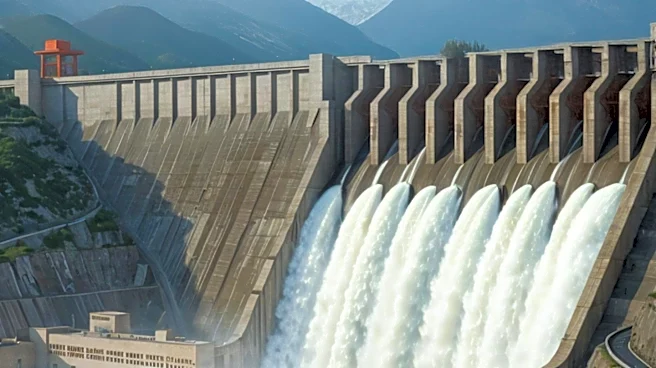








The Bonneville Lock and Dam, strategically located on the Columbia River between Oregon and Washington, serves as a cornerstone of electrical power generation for the Pacific Northwest. Situated 40 miles east of Portland, Oregon, in the Columbia River Gorge, this massive structure, managed by the United States Army Corps of Engineers, was primarily designed to generate electricity and facilitate river navigation. Its construction in the 1930s marked
a pivotal moment, establishing it as the largest water impoundment project of its kind in the nation at that time, capable of withstanding significant flooding.
Initial Power Generation and Economic Impact
The vision for developing the Columbia River to provide hydroelectricity was recognized even before the New Deal era. However, it was during the Great Depression, under the Franklin D. Roosevelt administration, that the Bonneville Dam project gained momentum. Funded by the Public Works Administration in 1934, the dam's construction not only provided much-needed employment but also laid the groundwork for a new source of inexpensive hydroelectricity. This readily available and affordable power was a significant catalyst for economic development in the region, notably fostering a strong aluminum industry, although this industry has since ceased operations.
While the dam began producing hydroelectricity in 1937, the commercial transfer of this electricity officially commenced in 1938. The power generated at Bonneville is distributed by the Bonneville Power Administration, an entity crucial to the regional power grid. The initial powerhouse, constructed on the south (Oregon) side of Bradford Island, was a key component of this early electrical infrastructure, contributing to the dam's installed capacity.
Expansion and Modern Capacity
To meet growing energy demands, the Bonneville Dam underwent a significant expansion in its power generation capabilities. A second powerhouse and dam structure were initiated in 1974 and completed in 1981. This expansion involved widening the river channel on the Washington side, which led to the formation of Cascades Island, situated between the new powerhouse and the original spillway. This strategic addition substantially increased the dam's overall electrical output.
Today, the combined rated capacity electrical output of the two powerhouses at Bonneville stands at an impressive 1.2 gigawatts. This substantial capacity underscores the dam's continued importance as a major contributor to the energy supply of the Pacific Northwest. The annual generation from Bonneville Dam was recorded at 4,466 GWh in 2009, demonstrating its consistent role in providing reliable and significant amounts of electricity to the region. The dam's enduring legacy is not just in its historical significance but also in its ongoing contribution to powering homes and industries across the U.S. states of Oregon and Washington.