



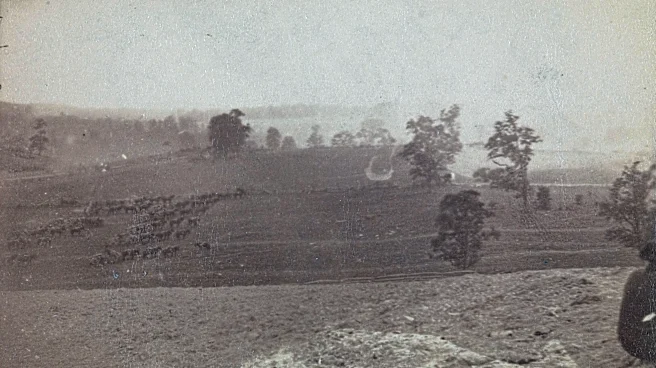


The Union Army's pursuit of the Confederate forces during their retreat from Gettysburg was a critical phase in the Gettysburg campaign. Led by Maj. Gen. George G. Meade, the Union forces faced numerous challenges as they attempted to capitalize on their victory at Gettysburg and prevent the Confederate Army of Northern Virginia from escaping back to Virginia. This pursuit involved strategic decisions, logistical hurdles, and intense combat operations.
Strategic Decisions and Delays
Following the Confederate retreat, Meade was initially reluctant to pursue Lee's army immediately. He was unsure whether Lee intended to attack again and was required to protect Baltimore and Washington, D.C. Meade believed the Confederates had fortified the South Mountain passes, leading him to pursue Lee on the east side of the mountains. This decision resulted in longer roads and delayed the Union's ability to intercept the retreating Confederate forces.
Meade's hesitation was compounded by conflicting orders and the need for reconnaissance. He held a council of war on July 4, where his corps commanders agreed to remain at Gettysburg until Lee acted. Meade ordered a reconnaissance to determine Lee's intentions, but delays and cautious approaches hindered the Union's ability to engage the Confederate forces effectively.
Combat Operations During the Pursuit
Despite the challenges, the Union cavalry played a significant role in harassing the Confederate retreat. Brig. Gen. Judson Kilpatrick's division engaged in combat operations at Monterey Pass, capturing numerous Confederate prisoners and destroying wagons. The Union cavalry also clashed with Confederate forces at Hagerstown, Boonsboro, and Funkstown, attempting to disrupt the retreat and seize key positions.
The Union infantry, marching hard since July 7, faced difficult terrain and inclement weather. The torrential rains turned roads into quagmires, complicating the pursuit. Meade's forces concentrated in a line from Rohrersville to Boonsboro, with additional troops protecting the outer flanks. Despite these efforts, the Confederate forces managed to erect defensive positions and escape across the Potomac River.
The Outcome of the Pursuit
The Union Army's pursuit of Lee's forces ultimately failed to prevent their escape. Meade's delays and cautious approach allowed the Confederate Army to cross the Potomac River, frustrating the Lincoln administration. The minor success against the Confederate rear guard at Falling Waters did not compensate for the missed opportunity to decisively defeat Lee's army.
The pursuit highlighted the challenges of military operations, including the importance of timing, reconnaissance, and logistics. Meade faced criticism for allowing Lee to escape, similar to the criticism faced by Maj. Gen. George B. McClellan after the Battle of Antietam. The pursuit demonstrated the complexities of warfare and the difficulties in achieving decisive victories.