







Airmail, initially a daring experiment, rapidly evolved into an indispensable service, particularly during times of global conflict and in the quest for faster international communication. Its journey from a specialized, premium service to an integrated component of modern logistics reflects a continuous drive for efficiency and connectivity. This transformation highlights airmail's critical role in shaping global communication, demonstrating its
adaptability and enduring importance in an increasingly interconnected world. The story of airmail is not just about delivering letters; it's about bridging distances, supporting strategic objectives, and ultimately setting new standards for postal services worldwide.
Airmail as a Strategic Asset in Global Conflicts
The strategic importance of airmail became acutely apparent during the major conflicts of the 20th century. During World War I, as the United States prepared to enter the conflict, deep flaws in American airpower, including obsolete aircraft and a shortage of pilots, were exposed. Post Office and military officials recognized that airmail could serve a dual purpose: increasing the speed of communication while simultaneously improving military pilots' skills. By flying the mail, novice aviators could develop crucial long-distance flying abilities, including aerial navigation, in a practical, real-world setting, thus contributing to national defense.
World War II further solidified airmail's role as a vital communication link. The war significantly impacted intercontinental airmail routes established in the 1930s, causing disruptions, diversions, and the opening of new routes, especially after the United States entered the conflict in 1941. Military airmail became one of the most critical possibilities for communication between the front lines and the home front. The airmail network expanded decisively in almost all participating countries. For instance, in the German Reich, military airmail was intended for fronts furthest from the homeland, with soldiers receiving special "Zulassungsmarken" (authorization stamps) to send letters and postcards. The Allies also developed sophisticated systems, such as the Airgraph service, which began on April 21, 1941, on a military mail route from Cairo to London. This innovative service photographed soldiers' messages onto microfilm, allowing 1,600 letters to be transported on a film weighing just 5 ounces, a stark contrast to the 50 pounds 1,600 ordinary letters would weigh. The United States Post Office adopted a similar system called V-mail, which sent over a billion letters by this method, demonstrating the immense scale and efficiency of wartime airmail innovation.
Post-War Resurgence and the Path to Standardization
The end of World War II brought about a period of recovery and reorganization for airmail services, particularly in war-torn regions. In occupied German-speaking areas of Austria and Germany, airmail operations were initially taken over by foreign companies. However, regular airmail service quickly resumed, with Austria re-establishing its service just two years after the war. In West Germany, it took until October 20, 1948, for all inhabitants to be able to send airmail consignments. The re-establishment of national airlines, such as Deutsche Lufthansa in West Germany in 1954, further facilitated the return of regular German airmail flights by April 1, 1955, and international connections by May 17, 1955. East Germany also had its own Lufthansa responsible for airmail, illustrating the global effort to rebuild and expand aerial postal networks.
The need for international coordination and standardization became increasingly evident as airmail expanded globally. The Universal Postal Union (UPU) played a crucial role in this process, adopting comprehensive rules for airmail at its 1929 Postal Union Congress in London. Given that French is the official language of the UPU, airmail items worldwide are often marked "Par avion," literally meaning "by airplane," a testament to this international standardization. This global cooperation ensured that airmail could operate seamlessly across borders, facilitating faster and more reliable communication between nations.
The Modern Evolution of Airmail: Speed and Intermodal Integration
For approximately the first half-century of its existence, airmail was typically categorized and sold as a separate, premium service distinct from surface mail. It offered a clear advantage in speed, often being the only viable option for sending mail to some overseas destinations where surface mail could take weeks. This premium branding and pricing reflected its priority of service and the specialized infrastructure required.
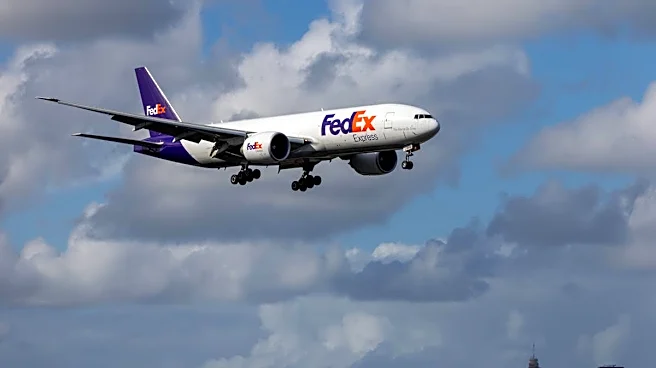
Today, the landscape of mail service has evolved significantly. While the term "airmail" still exists, mail service is often categorized and sold primarily according to transit time. The mode of transport—whether land, sea, or air—is frequently decided on the back end through dynamic intermodal combinations. This means that even "regular" mail may make part of its journey on an aircraft, a practice known as "air-speeded" mail. Such air-speeded mail differs from nominal airmail in its branding, price, and priority, as it is not explicitly sold as an airmail service but benefits from air transport when it optimizes delivery time. This modern approach underscores airmail's enduring legacy, transforming from a distinct service into an integrated, often invisible, component of efficient global postal logistics, ensuring that speed remains a cornerstone of modern communication.