


The Beatles' 1964 North American tour was a monumental undertaking, not just for the band members but for an entire entourage of support staff, journalists, and security personnel. Beyond the screaming fans and sold-out concerts, the tour involved intricate logistics, personal interactions, and the constant management of unprecedented fame. This behind-the-scenes look reveals the complexities and human elements that underpinned one of rock and roll's
most iconic journeys.
The Press and Tour Personnel
An integral part of the tour's narrative was the presence of journalist Larry Kane from WFUN in Miami. At just 20 years old, Kane took the initiative to write to Beatles manager Brian Epstein, requesting a one-time interview. To his surprise, Epstein invited him to travel with the group as part of the press party. Kane speculated that Epstein's decision might have stemmed from a mistaken belief that Kane was a well-known American personality who owned several radio stations. This inclusion provided a unique perspective on the tour, allowing a journalist to witness the daily life and challenges of the world's most famous band firsthand.
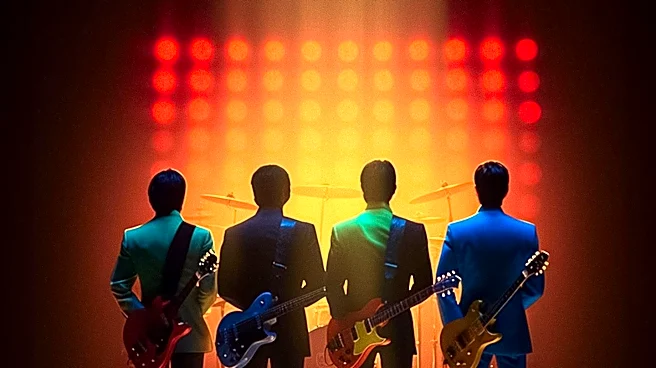
The band's equipment and performance setup also required careful management. George Harrison, for instance, frequently switched between his Gretsch Country Gentleman and Rickenbacker 12-string guitars during shows, sometimes opting for a different instrument than what was used on the original studio recordings. A significant upgrade for the tour was the use of new 100-watt amplifiers for all their performances. However, even with this enhanced amplification, the sound of the music was consistently drowned out by the overwhelming screams of their devoted fans, a testament to the sheer volume of Beatlemania.
Supporting Acts and Security Measures
The Beatles were not alone on stage; a variety of supporting acts accompanied them throughout the tour. These included the Bill Black Combo, the Exciters, the Righteous Brothers, Jackie DeShannon, Larry Lee and the Leesures (who performed only in Las Vegas), and Clarence "Frogman" Henry. For their own concert repertoire, the Beatles meticulously selected only released songs, prioritizing those whose recorded arrangements could be effectively replicated in a live setting. This careful curation ensured that their live performances met the high expectations set by their studio work.
Security was a paramount concern due to the intense fan reactions. Mobbing crowds were a constant feature, necessitating enhanced security measures at every turn. Beyond the use of decoy limousines, the band often resorted to highly unusual forms of transportation, such as delivery vans and even ambulances, to move discreetly between venues and accommodations. These measures highlight the extraordinary lengths to which organizers had to go to protect the band members from their adoring public. The tour's press officer, Derek Taylor, played a crucial role in managing crowd control, notably threatening to cancel concerts in Cleveland and Kansas City when fans broke through police lines to climb onto the stage, a tactic that successfully restored order.
Personal Moments and Controversies
Amidst the chaos, there were also personal moments and unexpected challenges. In Montreal, a newspaper reported a threat against Ringo Starr. Starr later speculated that this threat was due to antisemitism and an incorrect assumption that he was Jewish. In response to this serious concern, the Beatles departed immediately after their Montreal show for Jacksonville, Florida. However, Hurricane Dora forced their flight to divert to Key West, where they landed at 3:30 AM on September 9. During their stay at the hotel, Paul McCartney and John Lennon reportedly engaged in deep, emotional conversations late into the night, offering a glimpse into the personal toll and camaraderie forged during such an intense period.