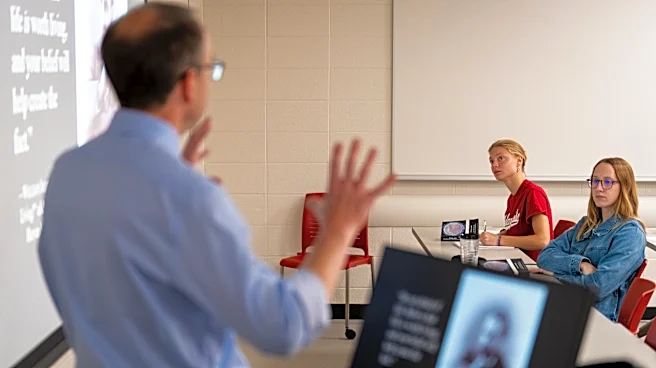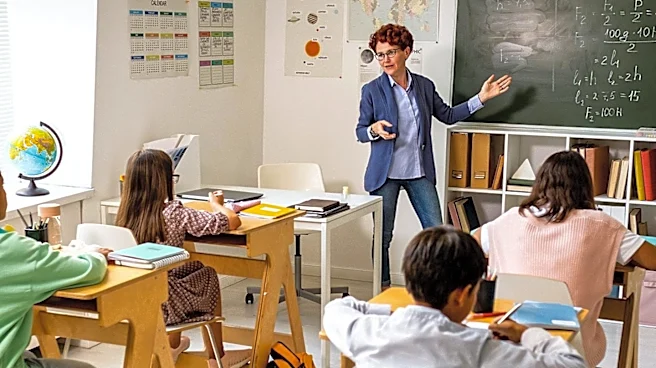








Classroom management encompasses a wide array of strategies and philosophies teachers employ to maintain an effective learning environment. These approaches range from overarching styles that define a teacher's general demeanor and control in the classroom to specific techniques designed to prevent or address disruptive behavior. Understanding this spectrum reveals how educators can tailor their methods to suit different student needs and classroom dynamics,
all with the goal of fostering a productive and respectful space for learning.
General Styles of Classroom Management
The four general styles of classroom management provide a framework for understanding a teacher's overall approach to student behavior and instruction. These include authoritarian, authoritative, permissive, and disengaged styles. Each style influences many aspects of the learning environment, from how expectations are set to how conflicts are resolved. For instance, an authoritarian teacher might emphasize strict rules and immediate consequences, while a permissive teacher might allow more student autonomy, potentially leading to less structured environments. The authoritative style, often seen as a balance, combines clear expectations with warmth and support, aiming for student self-regulation within a guided structure. A disengaged approach, conversely, might involve minimal teacher involvement in managing behavior, which can lead to a chaotic classroom.
Teachers utilize a variety of positive guidance and disciplinary strategies to refocus student attention or manage conflicts. These strategies are often informed by their chosen management style. The effectiveness of any given technique can depend heavily on its consistent application and the teacher's ability to adapt it to the specific needs of their students. The goal is always to create an atmosphere conducive to learning, where students feel secure and understand the boundaries.
Building Positive Teacher-Student Relationships
One of the foundational techniques for effective classroom management is establishing good teacher-student relationships. This involves appropriate levels of dominance, cooperation, professionalism, and an awareness of high-needs students. Dominance, in this context, refers to the teacher's ability to provide clear purpose and guidance regarding student behavior and academics. This is achieved by setting clear expectations and consequences for student behavior, which helps build effective relationships. These expectations can cover various aspects, such as classroom etiquette, group work, seating arrangements, use of materials, and handling disruptions. Crucially, these expectations must be enforced consistently among all students, as inconsistency can be perceived as unfair and diminish student respect for the teacher.
Assertive teacher behavior further reinforces these messages. This can be demonstrated through an erect posture, an appropriate tone of voice for the situation, and taking action rather than ignoring inappropriate behavior. Another strategy for building strong relationships is using inclusive pronouns, such as saying, "we've got a lot of work to do today, so let's get back to it," instead of "you need to get back to work" when a class is misbehaving. William Purkey's "three pluses and a wish" technique also helps: a teacher offers three compliments to a student before making a request, putting the student in a more cooperative mindset. For example, a teacher might say, "Thanks so much for your participation in class today. I love hearing your comments. I think you provided a fair amount of educational insight to the discussion. I would appreciate if you could raise your hand before commenting, so that other students can follow your example."
Preventive and Intervention Techniques
Preventive techniques are crucial for minimizing disruptions before they occur. The strategic use of praise and rewards is one such method, used to inform students about their behavior rather than solely to control it. Teachers should emphasize the value of the rewarded behavior and explain the specific skills demonstrated to earn the reward. Encouraging student collaboration in selecting rewards and defining appropriate behaviors also enhances this approach. Behavior-specific praise (BSP), where a teacher praises an exact positive behavior, is highly effective. For instance, if a student who usually struggles to stay in their seat remains seated, the teacher might express pride in this specific action, validating the positive behavior and increasing its likelihood of recurrence.
Over-planning is another often-overlooked preventive technique. Students tend to fill awkward pauses or silences, so having ample material and activities reduces opportunities for misbehavior. Minimizing transition times to less than 30 seconds also helps. Teachers and students alike need to be prepared and organized, with an organizational routine implemented early in the year and reinforced daily until it becomes instinctive. The Blue vs. Orange Card Theory, also by William Purkey, suggests that supportive, encouraging statements ("blue cards") help students feel valuable and responsible, while critical messages ("orange cards") are discouraging. The goal is to fill a student's "file box" with more "blue cards" to foster a positive self-concept.
When interventions are needed, William Purkey's "high cards and low cards" provide a framework. Low cards are less invasive interventions, such as raising eyebrows, politely staring, moving closer to the student while talking, or calling a student by name to check if they are listening. High cards are stronger interventions, like sending a student to the principal's office, keeping them after school, or calling home. Assertive discipline is another widely used approach, where teachers confidently react to situations, demanding student compliance without being abrasive or hostile. This method uses positive reinforcement and negative consequences, with teachers remaining consistent and just. Constructivist discipline, conversely, assigns developmentally enriching tasks in response to disruption, aiming to re-establish the teacher's role peacefully and creatively, fostering student trust and long-term emotional benefits.