





Viniyoga represents a dynamic and gentle yoga practice that places a strong emphasis on an individualized approach for each practitioner. The term "viniyogah" itself, mentioned in the Yoga Sutras in sutra 3.6, translates to "application" or "action," rather than denoting a specific style of yoga. This philosophy underpins the entire method, suggesting that yoga should be adapted to the individual, not the other way around. This approach contrasts
with many other yoga styles that might follow a more rigid sequence or set of techniques.
The foundation of Viniyoga is rooted in the work of Tirumalai Krishnamacharya, a pivotal figure in modern yoga. His teachings were guided by the principle, "Teach what is appropriate for an individual." While Krishnamacharya is revered globally as a yogi, in India he was primarily known as a healer who integrated both Ayurvedic and yogic traditions to restore health and well-being. This healing aspect and the focus on individual needs were central to his work and subsequently to the development of Viniyoga.
The Evolution of Viniyoga Through Krishnamacharya's Teachings
Krishnamacharya's journey as a yoga teacher saw him constantly refining his methods. He began teaching in the early 20th century, and his style of yoga, which combined breathing with movement, came to be known as Viniyoga or Vinyasa Krama Yoga. This emphasis on synchronizing breath with movement is a hallmark of the practice. His early work included traveling around India, giving lectures and demonstrations to promote yoga, even performing feats like seemingly stopping his heartbeat.
As he grew older, Krishnamacharya's reputation as a strict teacher mellowed. In Madras, he took a position as a lecturer and began to attract a diverse group of students with varying backgrounds and physical conditions. This diversity necessitated that he adapt his teaching to each student's unique abilities. This period marked a significant refinement of his individualized approach, which ultimately became known as Viniyoga. He considered himself a perpetual student, always "studying, exploring and experimenting" with the practice, which further fueled his adaptive teaching style.
T.K.V. Desikachar's Contribution and the Krishnamacharya Yoga Mandiram
T.K.V. Desikachar, Krishnamacharya's son and student, played a crucial role in further developing and disseminating the Viniyoga approach. Desikachar, who was born in 1938, began his studies with his father in 1960 and continued for 30 years, delving deeply into yoga, Ayurveda, and Sanskrit. He is widely considered the founder of the Viniyoga tradition, though he himself later requested that the methods he taught simply be called "yoga" without a specific style name, emphasizing that Viniyoga is a method of teaching yoga rather than a distinct style.
In 1976, Desikachar, along with A.G. Mohan, established the Krishnamacharya Yoga Mandiram (KYM) in Madras, India. This non-profit public charitable trust served as a yoga therapy clinic and yoga center. Under Desikachar's leadership, the KYM offered teacher training and individualized instruction in various aspects of yoga, including asana, pranayama, meditation, yoga philosophy, and Vedic chanting. The center also conducted research into the impact of yoga on conditions such as schizophrenia, diabetes, asthma, and depression, highlighting the therapeutic applications of the Viniyoga approach.
Key Characteristics of the Viniyoga Method
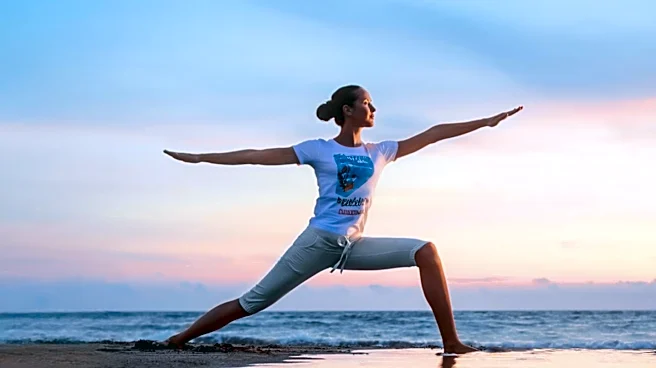
The Viniyoga method is characterized by its flexibility in choosing tools for the transformation of a student's consciousness. It incorporates a wide range of practices, including asanas (postures), pranayamas (breathing techniques), meditation, relaxation techniques, mantras, and philosophical lectures. A core tenet is that the practice exists for the student, not the student for the practice, meaning yoga methods are adapted to the practitioner's level and needs.
Unlike some other yoga styles, there is no strictly established sequence of techniques in Viniyoga. The stages of Ashtanga yoga are learned over different periods; for example, a student might begin with meditation, and only after a certain time, progress to asana practice. This allows students to master practices suitable for them first, and then move on to others as they become ready. The practice of asanas in Viniyoga allows for both dynamic and static execution. When performing dynamic asanas, practitioners enter and exit the pose multiple times, synchronizing movements with breath. Concentration during asana practice is directed to specific points, breath, or movement. The asana practice is gentle and interspersed with relaxation, always maintaining the individual approach as its foundation. This makes Viniyoga particularly adaptable and applicable as a form of individual yoga therapy, where each practitioner adjusts poses to their own needs, age, and capabilities to address personal challenges.