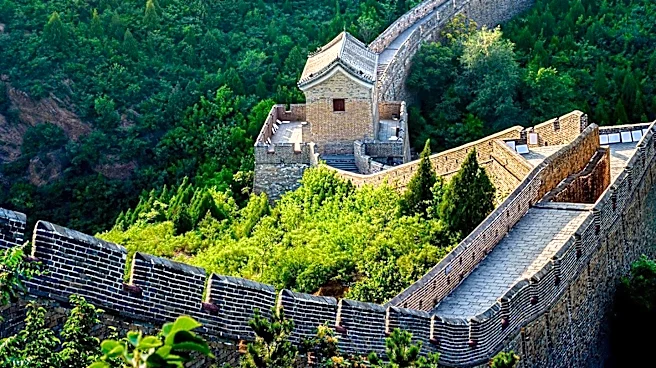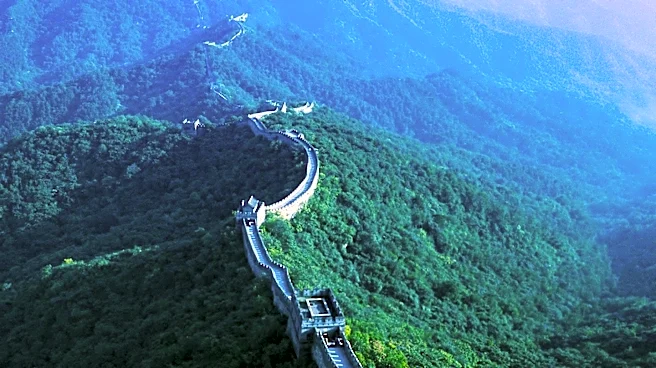







The Great Wall of China is an iconic symbol of Chinese history and engineering, and among its many sections, Mutianyu stands out as a particularly well-preserved and historically significant stretch. Located in the Huairou District, 70 kilometers northeast of Beijing's city center, Mutianyu offers a tangible connection to the defensive strategies of imperial China. Its history spans centuries, from its initial construction during the Northern Qi dynasty
to its extensive rebuilding during the Ming dynasty, culminating in its modern role as a premier tourist destination and a UNESCO World Heritage site. The story of Mutianyu is one of strategic importance, architectural evolution, and dedicated preservation.
Historical Foundations and Ming Dynasty Reconstruction
The Mutianyu section of the Great Wall boasts a history that predates some of its more famous counterparts, with its first construction dating back to the mid-6th century during the Northern Qi dynasty. This makes it older than the well-known Badaling section. Its strategic location meant it served as a crucial northern barrier, defending the capital and imperial tombs from potential invaders. The current appearance of the Mutianyu Wall largely stems from the Ming dynasty, a period of extensive rebuilding and fortification across the Great Wall system.
Under the supervision of General Xu Da, construction of the present wall at Mutianyu began, building upon the earlier Northern Qi foundations. A significant pass was added in 1404. Further extensive rebuilding occurred in 1569, and much of what stands today is a testament to that era's craftsmanship and defensive needs. The Mutianyu Great Wall is recognized for having the largest construction scale and best quality among all sections of the Great Wall. In 1568, the Longqing Emperor appointed Qi Jiguang as governor and military administrator for the Jizhou, Changping, and Baoding areas. Qi Jiguang played a vital role in maintaining a 2000-li section of the Great Wall, completed in 1572. Noticing the wall's lack of abutments, he successfully suggested their installation to officials, further enhancing its defensive capabilities.
Modern Preservation and Tourism
Mutianyu's historical significance is matched by its modern recognition and accessibility. In 1983, the State Council of the People's Republic of China officially approved the restoration of the Mutianyu Great Wall, signaling a commitment to preserving this important heritage site. Following this, in 1985, the Huairou District local government established a management body for the Mutianyu Great Wall Tourist Area, under the leadership of Mutianyu village.
This dedicated effort led to the area being opened to select tourists in 1986 and being designated as one of Beijing's 16 scenic spots in the same year. Its international importance was further cemented in 1987 when the Great Wall was selected as a UNESCO World Heritage site. By 1988, the tourist area was fully opened to all visitors, and in 1992, Mutianyu was rated as the best tourist spot in Beijing. The section is connected with Jiankou to the west and Lianhuachi to the east, forming part of a continuous defensive line. In a unique cultural exchange, selectmen from Buckland and Shelburne, Massachusetts, in the United States, signed a memorandum of agreement with Mutianyu officials in May 2007, establishing the two as the first known "sister villages," highlighting Mutianyu's global appeal and recognition.