




James Augustus "Catfish" Hunter, a prominent figure in Major League Baseball, carved out a remarkable career as a pitcher from 1965 to 1979. Born on April 8, 1946, in Hertford, North Carolina, Hunter's journey from a farm upbringing to becoming a five-time World Series champion and a Hall of Famer is a testament to his talent and perseverance. His story is marked by early challenges, groundbreaking contracts, and an enduring legacy in the sport.
Early Life and Overcoming Adversity
Hunter
grew up on a farm in northeast North Carolina, the youngest of eight children. His athletic prowess was evident early on, as he excelled in various sports at Perquimans County High School. He played linebacker and offensive tackle in football, and in baseball, he was a shortstop, cleanup batter, and pitcher. His older brothers were instrumental in teaching him how to pitch, a skill that soon attracted major-league scouts to Hertford. He led the Perquimans baseball team to the 1963 NCHSAA 2A state title during his junior season.
A significant challenge arose in November 1963, during his senior year, when Hunter's right foot was wounded in a hunting accident involving a brother. He lost one of his toes, and shotgun pellets became lodged in his foot. This accident left him somewhat hobbled and initially jeopardized his professional prospects in the eyes of many scouts. However, the Kansas City Athletics still signed him to a contract. He was sent to the Mayo Clinic for foot surgery and later recovered at the farm of Athletics owner Charles O. Finley in La Porte, Indiana.
Professional Debut and Rise to Stardom
Despite the hunting accident, Hunter signed with the A's on June 8, 1964, for a reported $75,000. He did not play professionally during the 1964 regular season due to his foot surgery and recovery. His professional baseball debut came in the Florida Instructional League in the fall of 1964. He made his Major League Baseball debut on May 13, 1965, for the Kansas City Athletics.
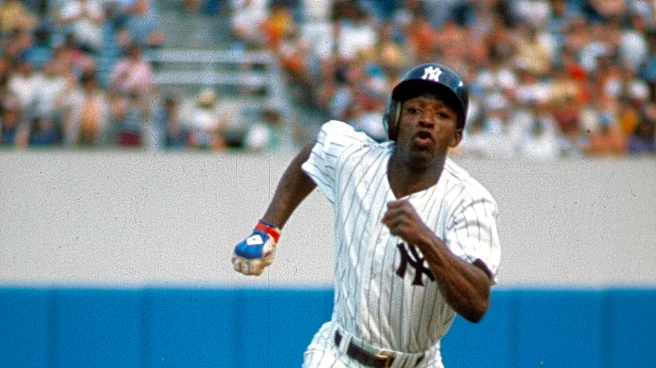
Hunter's career spanned 15 seasons, during which he played for the Kansas City/Oakland Athletics from 1965 to 1974 and the New York Yankees from 1975 to 1979. He achieved a win-loss record of 224-166, an earned run average of 3.26, and recorded 2,012 strikeouts. A notable achievement was his perfect game in 1968, which was the first perfect game in American League history since 1922. He is also recognized as the only pitcher since 1915 to win 200 games by age 31, highlighting his early and sustained success.
Legacy and Post-Career Recognition
Hunter retired at age 33 following the 1979 season due to persistent arm problems. His exceptional career was recognized with his induction into the Baseball Hall of Fame in 1987. Beyond his on-field achievements, Hunter is often referred to as baseball's first big-money free agent, a title that underscores his impact on the economics of the sport. He was a member of five World Series championship teams, further cementing his status as a winner. In 1974, he received the Catfish Hunter Award, given to the Athletics' most inspirational player. Hunter was diagnosed with amyotrophic lateral sclerosis (Lou Gehrig's disease) in his early 50s and passed away about a year after his diagnosis on September 9, 1999, at the age of 53. His life and career have been commemorated in various popular culture references, including the Bob Dylan song "Catfish."