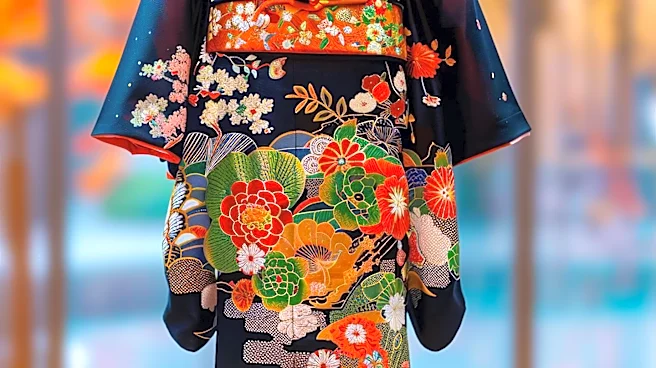





The kimono, a traditional Japanese garment, is far more than just clothing; it is a complex system of communication, conveying information about the wearer's marital status, age, and the occasion through its patterns, colors, fabrics, and even the length of its sleeves. The formality of a kimono is meticulously determined by these elements, creating a rich visual language that has evolved over centuries. From the most formal wedding attire to casual
everyday wear, each kimono tells a story.
Decoding Formality in Women's Kimonos
For women, the degree of formality in a kimono is primarily dictated by its pattern, fabric, and color. The *Kurotomesode*, a black kimono patterned only below the waist, is the most formal for married women, often worn by mothers of the bride or groom at weddings. It typically features five *kamon* (family crests) on the sleeves, chest, and back. Slightly less formal is the *Irotomesode*, a solid-colored kimono also patterned below the waist, which can have three or five *kamon* and is worn by married women, often close relatives at weddings.
Unmarried women wear the *Furisode*, distinguished by its long, "swinging" sleeves, usually 100–110 cm long. This highly patterned kimono is the most formal for single women and is seen at coming-of-age ceremonies or weddings. For broader formal occasions, the *Hōmongi* (literally "visiting wear") features patterns that flow across the shoulders, sleeves, and seams, worn by both married and unmarried women at receptions or galas. The *Tsukesage* is a slightly less formal version with simpler patterns, mainly below the waist. The *Iromuji*, a solid-colored, unpatterned kimono, is worn by both married and unmarried women, often for tea ceremonies. For daily life, the *Komon* features a small, repeating pattern throughout the fabric, suitable for informal outings and, with an appropriate *obi*, can be elevated for evening wear.
Men's Kimonos and Symbolic Motifs
Men's kimonos generally share a similar cut but differ in fabric and design, typically appearing in subdued, dark colors like black, dark blues, greens, and browns, often with a matte finish. Formality for men is primarily conveyed through the fabric, color, and the presence or absence of *kamon*. The most formal men's style is a plain black kimono with five *kamon*. Less formal options include three *kamon* and are often paired with white undergarments. The addition of *hakama* (trousers) and a *haori* (jacket) can elevate the formality of almost any men's kimono ensemble.
Kimono fabrics are frequently decorated, sometimes by hand, with motifs that carry seasonal, cultural, or religious significance. Auspicious groupings, such as the "Three Friends of Winter" (pine, plum, and bamboo), are common on formal kimonos worn year-round. Many motifs are seasonal, indicating the time of year the kimono should be worn, though some are seasonless. Cherry blossoms, for instance, are a famously seasonal motif worn in spring, typically a few weeks before the actual blossoms appear, as it's considered fashionable to anticipate the coming season. Color also plays a role in seasonality, with autumn favoring warmer, darker hues.
Cost, Care, and Cultural Continuity
The cost of kimonos can vary dramatically, from mass-produced casual styles to exquisite hand-crafted pieces that can cost thousands of euros. High-quality kimonos are often hand-sewn, and the fabrics themselves can be handmade and intricately decorated. A complete formal ensemble, including the kimono, undergarments, *obi*, ties, socks, sandals, and accessories, can be very expensive. The *obi* alone, especially for women, can be worth thousands due to intricate weaving, embroidery, or hand-painting. Men's *obi* are generally less expensive due to their narrower, shorter, and simpler designs.
Despite the expense, there is a thriving market for used kimonos in Japan, and hobbyists often make their own or use cheaper, machine-woven fabrics. Old kimonos are also repurposed in various ways: into *haoris*, children's kimonos, or their fabric used for repairs, accessories like handbags, or covers for ceremonial items. The careful folding and storage of kimonos in acid-free paper envelopes (*tatōshi*) are essential for preservation, and they require seasonal airing. While dry cleaning is an option, the traditional method of disassembling, washing, and re-sewing (*arai-hari*) is still practiced for high-end garments, reflecting the deep cultural value and meticulous care associated with these iconic garments.