




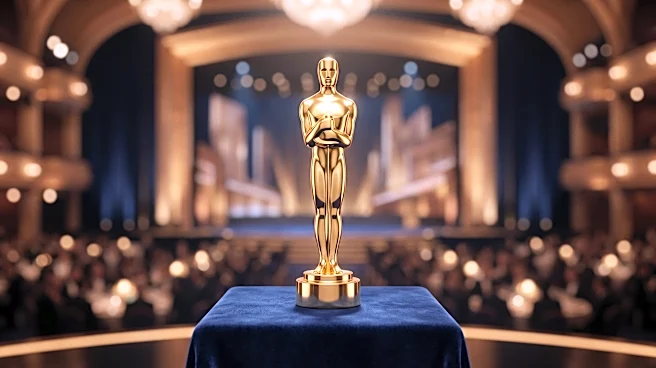


The 3rd Academy Awards ceremony, held on November 5, 1930, marked several significant changes and firsts in the nascent history of the Academy Awards. Organized by the Academy of Motion Picture Arts and Sciences (AMPAS), this event honored films released between August 1, 1929, and July 31, 1930. Notably, 1930 became the only year to host two Academy Awards ceremonies, as AMPAS adjusted the schedule to bring the awards closer to their eligibility
period. This particular ceremony also represented a shift in the voting process, being the first to involve the full membership of the Academy, moving beyond the smaller group that had determined winners in the initial two ceremonies. These foundational changes helped shape the future of the prestigious awards.
Shifting Schedules and Expanding Participation
The decision by AMPAS to hold the 3rd Academy Awards in November, just seven months after the 2nd ceremony, was a deliberate move to align the awards more closely with the films' eligibility period. This adjustment meant that for the first and only time, two Academy Awards ceremonies occurred within the same calendar year. The ceremony itself took place at the Ambassador Hotel, drawing an attendance of over 500 Academy members, a testament to the growing interest and participation in the awards.
Perhaps even more impactful than the scheduling change was the expansion of the voting body. The 3rd Academy Awards were the first to be voted on by the entire membership of AMPAS, a departure from the "small clique" that had previously made the selections. This broadened participation likely contributed to the awards' increasing legitimacy and public perception, laying the groundwork for the more inclusive voting process that would characterize future ceremonies.
Groundbreaking Wins and New Categories
The 3rd Academy Awards saw "All Quiet on the Western Front" achieve a significant milestone by becoming the first film to win both Best Picture and Best Director. This dual victory would later become a common occurrence in Oscar history, but its initial achievement at this ceremony highlighted the film's profound impact. Furthermore, Lewis Milestone, the director of "All Quiet on the Western Front," made history as the first person to win two Oscars, having previously secured the Best Director – Comedy award at the 1st Academy Awards.
Innovation also extended to the award categories themselves. Best Sound Recording was introduced at this ceremony, marking the first new category since the Oscars' inception. This award went to Douglas Shearer, whose sister, Norma Shearer, won Best Actress for "The Divorcee." Their wins made them the first siblings in Oscar history to receive awards. Another notable first was Ruth Chatterton's nomination for her performance in "Sarah and Son," a film directed by Dorothy Arzner, making it the first nominee from a female-directed film.
The Dawn of Filmed Portions and Notable Nominations
For the first time in Academy Awards history, a portion of the ceremony was filmed. This included the presentation of three major awards: Outstanding Production, Best Actress, and Best Writing. Carl Laemmle, co-founder and president of Universal Pictures, was filmed receiving the Outstanding Production award for "All Quiet on the Western Front" from Louis B. Mayer, vice president of Metro-Goldwyn-Mayer. Norma Shearer's win for Best Actress in "The Divorcee" and Frances Marion's Best Writing award for "The Big House" were also captured on film, providing early visual records of the event.
While "The Love Parade" garnered the greatest number of nominations to that point, with six nods, it notably did not win in any category. This outcome underscores the competitive nature of the awards even in their early years and demonstrates that a high number of nominations did not guarantee a win. The 3rd Academy Awards, with its procedural changes, groundbreaking wins, and the introduction of filmed segments, solidified its place as a crucial stepping stone in the evolution of the Academy Awards into the globally recognized event it is today.