






Charm bracelets, those personal adornments laden with small, decorative trinkets, boast a history far richer and longer than many might imagine. What began as a form of amulet or talisman in prehistoric times, believed to ward off evil spirits or bad luck, has evolved through millennia into a cherished fashion accessory and a deeply personal storytelling device. From the earliest uses of natural materials to the intricate designs favored by royalty
and the mass-produced items of the modern era, the charm bracelet has consistently reflected cultural beliefs, personal milestones, and prevailing styles.
Ancient Origins and Symbolic Meanings
The practice of wearing charms dates back to the prehistoric period, where early examples were crafted from readily available materials such as shells, animal bones, and clay. Evidence from Africa suggests that shells were used for adornments as far back as 75,000 years ago. In Germany, intricately carved mammoth tusk charms have been discovered, dating to approximately 30,000 years ago. These early charms were not merely decorative; they held significant symbolic weight, often serving as identifiers or as objects imbued with spiritual power.
Ancient Egypt provides further insight into the symbolic role of charms. Here, they were used for identification and as symbols of faith and luck. Crucially, charms also played a role in the afterlife, serving to identify an individual to the gods. This deep connection between charms and personal identity, belief, and destiny highlights their profound cultural importance in early civilizations.
Charms Through Classical and Medieval Eras
As civilizations progressed, so did the use and meaning of charms. During the Roman Empire, Christians ingeniously used tiny fish charms, hidden within their clothing, as a discreet way to identify themselves to fellow believers. This demonstrates how charms could serve as secret symbols of affiliation and community. Concurrently, Jewish scholars of the same period would write minute passages of Jewish law and place them in amulets worn around their necks, ensuring the law remained close to their hearts at all times.
The medieval period saw charms take on new functions, particularly in the context of warfare and social identity. Medieval knights wore charms for protection in battle, reflecting a continued belief in their talismanic properties. Beyond protection, charms were also worn to denote family origin, religious convictions, and political allegiances, making them visible markers of an individual's place within society.
Royal Influence and Modern Resurgence
Charm bracelets experienced significant waves of popularity, often influenced by prominent figures. The earliest known charm bracelets appeared between 600 and 400 BC, worn by Assyrians, Babylonians, Persians, and Hittites. However, it was Queen Victoria who played a pivotal role in popularizing charm bracelets among the European noble classes. She was known for her love of wearing and gifting these bracelets. Following the death of her beloved Prince Albert, she even made "mourning" charms fashionable, incorporating lockets of hair from the deceased, miniature portraits, and charms carved in jet.
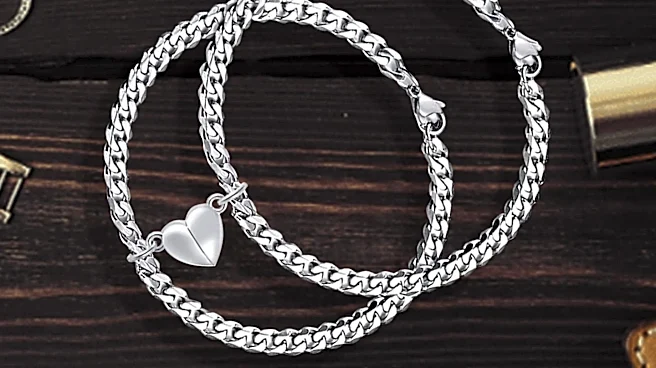
In 1889, Tiffany and Co. introduced their first charm bracelet, a simple link bracelet adorned with a single dangling heart, which remains an iconic symbol for the company today. Despite the economic hardships of the Great Depression, the 1920s and 1930s saw the introduction of platinum and diamonds into charm bracelet manufacturing, indicating their enduring appeal as luxury items. The mid-20th century brought another surge in popularity, particularly after World War II, when soldiers returned home with trinkets from abroad for their loved ones. American teenagers in the 1950s and early 1960s embraced charm collecting as a way to chronicle their life events, a trend further fueled by screen icons like Elizabeth Taylor and Joan Crawford. Although interest waned in the latter part of the 20th century, a resurgence occurred after 2000, with collectors actively seeking out vintage charms. The movie *Pirates of the Caribbean* even inspired a fashion trend in winter 2006, featuring bracelets with charms of swords, crosses, and skulls, demonstrating the charm bracelet's continuous ability to adapt and reflect contemporary culture and interests.
The Italian Charm Bracelet Phenomenon
A distinct evolution in charm bracelet design emerged in 1987 when Nomination, an Italian jewelry company based in Sesto Fiorentino, introduced its "Composable" line. These modular bracelets, crafted from stainless steel, became widely known as "Italian charm bracelets." Their unique design allowed individuals to add interconnecting links, each featuring symbols that narrated the story of important life events, milestones, achievements, hobbies, and goals. This customizable aspect resonated deeply with wearers, offering a new way to personalize their jewelry.
The popularity of Italian charm bracelets spread to the United States in the 1990s, brought over by American tourists who admired the style. By the late 1990s and early 2000s, these bracelets had become widely popularized across the U.S. The trend saw a notable reclamation of popularity by 2023, with figures like Anna-May Robey from "Love Island" Season 9 adorning them and creating buzz on platforms like TikTok. These bracelets, often made of stainless steel and embellished with materials such as 18k gold, 9k gold, 925 silver, and various gemstones, primarily appealed to young women, though men's models were also available. Their flat, interconnected design, akin to a stretch band, offered a sleek and modern alternative to traditional dangling charms, further cementing the charm bracelet's place as a versatile and enduring piece of personal jewelry.