




Howard Hanson's Symphony No. 2 in D-flat major, Op. 30, W45, famously known as the "Romantic" Symphony, stands as a significant work in 20th-century American classical music. Commissioned by Serge Koussevitzky for the 50th anniversary of the Boston Symphony Orchestra in 1930, this symphony premiered on November 28, 1930, with Koussevitzky himself conducting. Its creation marked a notable moment in Hanson's career, solidifying his reputation and producing
what would become his most recognized composition. The symphony's enduring appeal is evident in its numerous recordings and its unique cultural impact, particularly through its "Interlochen Theme."
Genesis and Premiere of a "Romantic" Work
The impetus for Symphony No. 2 came from a prestigious commission, a testament to Hanson's growing stature as a composer. Serge Koussevitzky, a prominent figure in the classical music world, sought a new work to celebrate a major milestone for the Boston Symphony Orchestra. Hanson delivered a symphony that embraced a Neo-Romantic style, a movement that aimed to carry the traditions of the Romantic era into the modern 20th century. This approach positioned Hanson as a leading "American Neoromantic composer par excellence," whose compositions were often described as rich in harmonic texture and gorgeously orchestrated.
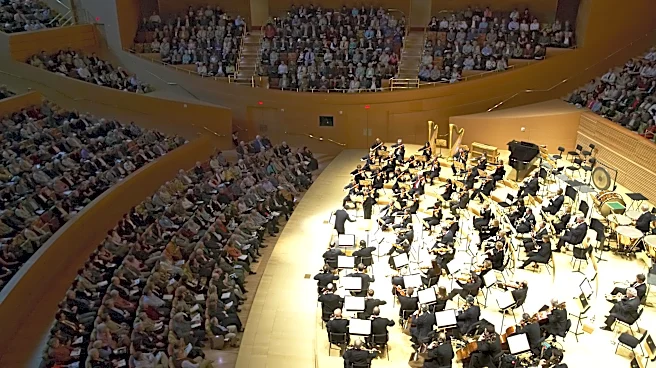
The premiere performance by the Boston Symphony Orchestra under Koussevitzky's baton introduced the work to the public. Soon after, the esteemed Arturo Toscanini also conducted the symphony with the New York Philharmonic, further cementing its early recognition. Hanson himself later conducted and recorded the work with the Eastman-Rochester Symphony Orchestra, providing his own interpretation of his creation. These early performances established the symphony's presence in the American orchestral repertoire.
Orchestration and Thematic Unity
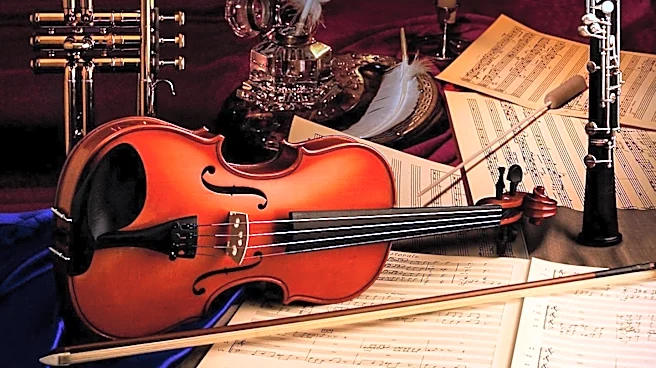
Symphony No. 2 is scored for a standard orchestra, featuring a comprehensive array of instruments that contribute to its rich sound. The instrumentation includes piccolo, 2 flutes, 2 oboes, English horn, 2 clarinets in B-flat, 2 bassoons, contrabassoon, 4 horns in F, 3 trumpets in C, 3 trombones, tuba, timpani, snare drum, bass drum, cymbals, harp, and strings. This robust ensemble allows for the "splendidly effusive" and "gorgeously orchestrated" qualities often attributed to Hanson's early symphonies.
The symphony is structured in three movements, a common form, but with a distinctive characteristic: much thematic material is shared among these movements. This thematic interconnectedness creates a sense of unity and development throughout the work. A particularly notable element is the "lyrical, haunting second theme" of the first movement, which reappears "with greater emphasis" in the subsequent two movements. This theme, later known as the "Interlochen Theme," plays a crucial role in the symphony's overall narrative and emotional arc.
The "Interlochen Theme" and Lasting Influence
The "lyrical, haunting second theme" from the first movement of Hanson's Symphony No. 2 has gained a unique cultural significance, becoming known as the "Interlochen Theme." This theme is performed at the conclusion of most public performances at the Interlochen Arts Camp, where it is a tradition for a student concertmaster to break the baton, symbolizing the end of camp, after conducting the theme. This tradition highlights the theme's deep connection to the arts camp, though it is seldom performed or mentioned at the Interlochen Arts Academy.
Beyond its role at Interlochen, the symphony, and particularly this theme, has reached a wider audience. It is widely recognized for its use in the final scene and end credits of the 1979 Ridley Scott film *Alien*. This exposure introduced Hanson's work to a new generation and a different medium, demonstrating its versatility and emotional power. The symphony's status as one of the most-recorded 20th-century American symphonies, with recordings by conductors such as Charles Gerhardt, Gerard Schwarz, Leonard Slatkin, and Erich Kunzel, further underscores its lasting impact and popularity in the classical music world.
Compositional Style and Legacy
Hanson's compositional style, as exemplified by his Symphony No. 2, is firmly rooted in the Neo-Romantic movement. Critics have identified him as a composer whose works were conceived in the grand romantic tradition, drawing comparisons to figures like Antonín Dvořák. While Hanson considered himself a "perfect fifth composer" or a "major third composer," the Symphony No. 2 prominently features the perfect fourth, which "plays a prominent part throughout the symphony in both melody and harmony." Despite an abundance of triplets, the characteristic Bruckner rhythm appears only in a few specific instances, mainly in the horns' and trumpets' parts, and in the timpani in the first movement, as well as at the end of a longer rhythmical motif in the finale.
The Symphony No. 2 is not only Hanson's best-known work but also a testament to his efforts to promote American music. His dedication to fostering an understanding and appreciation of American music, through performances, publications, and recordings, has left a significant legacy. Nearly every American composer since World War I is indebted to Hanson for his contributions to educating the public and future generations of musicians about American musical heritage. The "Romantic" Symphony remains a cornerstone of this legacy, celebrated for its emotional depth, rich orchestration, and enduring melodic appeal.