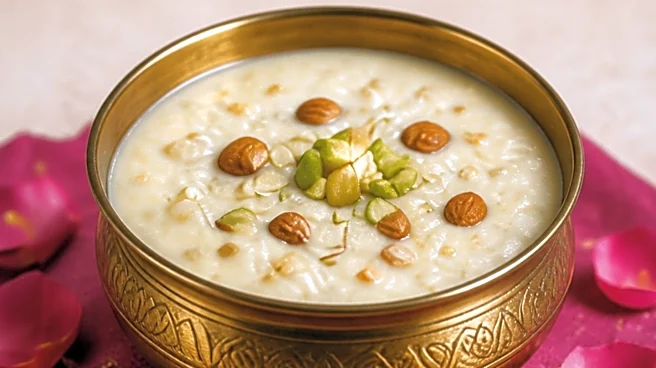








Kheer, a sweet pudding or porridge, holds a significant place in the culinary traditions of the Indian subcontinent. This beloved dessert is typically crafted by simmering milk, sugar or jaggery, and rice, though variations can incorporate cracked wheat, vermicelli, sago, or tapioca. Known by various names such as payesh, fenni, or payasam, kheer is more than just a dish; it is a symbol of celebration, nourishment, and cultural heritage. Its rich
history and diverse forms reflect the regional nuances and shared culinary threads that bind South Asia.
Etymological Roots and Ancient Origins
The name "kheer" itself offers a glimpse into its fundamental nature, deriving from the Sanskrit word "kshira," which means milk or a "milk-based dish." This etymological connection underscores milk as a core ingredient, a constant across its many forms. In South India, the term "payasam" is commonly used, originating from the Sanskrit term "pāyasa," also signifying milk or a dish made from milk. This term has evolved into regional languages like Malayalam, Telugu, Kannada, and Tamil, showcasing the dish's deep linguistic and cultural integration.Historical records suggest kheer, or payasam, was a popular dish in ancient India. Food historian K. T. Achaya notes its early mention in ancient Indian literature as a simple mixture of rice, milk, and sugar. This foundational recipe has endured for centuries, forming the basis for countless regional adaptations. Beyond its role as a general dessert, payasam held particular significance in Hindu temples, where it was, and still is, served as Prasāda to devotees, highlighting its sacred connection.
Cultural Significance and Celebratory Traditions
Kheer is deeply woven into the cultural fabric of South Asia, often associated with festivals, ceremonies, and auspicious occasions. In Nepal, kheer holds both cultural and agricultural importance, celebrated annually on Shrawan 15 of the Bikram Sambat calendar, typically in late July or early August. This day, known as Khir Khane Din, or "the day of eating kheer," marks the completion of the paddy-planting season, occurring precisely one month after Nepal's National Paddy Day.The tradition of eating kheer on this day is rooted in the belief that it provides farmers with essential nourishment and rejuvenation. After weeks of arduous labor in muddy monsoon terraces during paddy cultivation, kheer is seen as a restorative food, symbolizing comfort and strength. This cultural practice underscores the dish's role beyond mere sustenance, positioning it as a vital part of communal well-being and agricultural cycles.
Regional Variations and Culinary Diversity
The versatility of kheer is evident in its numerous regional variations. While the core ingredients of milk, sugar, and a grain remain consistent, the choice of grain, sweeteners, and flavorings creates a spectrum of distinct puddings. In Northern India, common versions include those made with rice and vermicelli (semiya). These often feature additional flavorings like dried fruits, nuts, cardamom, and saffron, enhancing their aromatic and textural profiles.Nepal's kheer tends to be thicker and uses fewer ingredients, reflecting local preferences and available resources. Other notable variations include barley kheer, kaddu ki kheer (made with pumpkin), and paal payasam (milk payasam). In Bengal, a similar dish is known as payesh, with chhanar payesh being a specific type made with chhana or paneer. This rich diversity showcases how a single culinary concept can evolve into a multitude of expressions, each reflecting the unique tastes and traditions of its region while maintaining a shared heritage as a comforting, milk-based sweet.
A Legendary Origin Story
One captivating legend from Kerala, titled "The Legend of Chessboard," connects kheer to a divine encounter. The story tells of an old sage, who was Krishna in disguise, challenging the king of Ambalapuzha to a game of chess. The king, eager to motivate the sage, offered anything the old man desired. The sage, with apparent modesty, asked for a few grains of rice, but with a specific condition: one grain on the first chess square, doubled on every subsequent square.Krishna, in his sage persona, won the game. As the king began placing the grains, he was astonished by the exponential growth of the numbers, eventually reaching trillions. Revealing his true identity, Krishna then instructed the king to provide kheer to every pilgrim visiting what is now the Ambalapuzha Krishna Temple in the Alappuzha District. This command, according to the legend, is still followed today, imbuing the serving of kheer at the temple with a sacred and historical significance.