





Lunar Orbiter 1, NASA's pioneering spacecraft, was not only the first American probe to orbit the Moon but also a testament to advanced imaging and data transmission technologies of its era. Launched in 1966, its primary mission was to photograph the lunar surface to identify safe landing sites for the Surveyor and Apollo programs. The success of this endeavor hinged significantly on its sophisticated camera system and the innovative methods used
to process and relay images back to Earth. This technological capability was crucial for mapping vast areas of the Moon and providing the detailed reconnaissance necessary for future human missions.
Origins of the Imaging System
The imaging system aboard Lunar Orbiter 1 had a notable lineage, tracing its roots to classified reconnaissance technology. It utilized Eastman Kodak cameras, which were originally developed by the National Reconnaissance Office (NRO) for their SAMOS reconnaissance satellites. This heritage meant that the cameras were designed for high-performance imaging in demanding space environments. Adapting such advanced photographic equipment for lunar exploration demonstrated a significant cross-application of technology, leveraging existing capabilities for new scientific and exploratory goals. The integration of these cameras into the Lunar Orbiter spacecraft was a key factor in its ability to capture detailed images of the lunar landscape.
NASA further enhanced this already advanced system with a groundbreaking innovation: the ability to develop film onboard the spacecraft. Instead of returning physical film to Earth, which would have been impractical and costly, Lunar Orbiter 1 processed its photographic film in space. Once developed, the images were then scanned electronically and transmitted back to Earth as a video signal. This method was revolutionary, allowing for rapid data transfer and analysis without the need for complex retrieval missions. This on-board processing and scanning capability was a critical enabler for the mission's extensive photographic coverage.
Photographic Output and Data Transmission
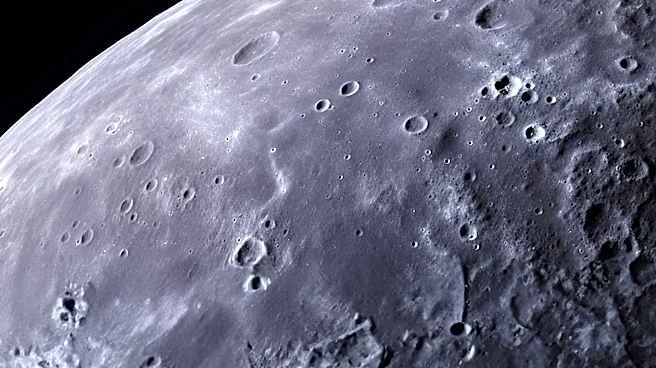
During its operational period from August 18 to August 29, 1966, Lunar Orbiter 1 captured a substantial volume of photographic data. The spacecraft acquired a total of 42 high-resolution frames and 187 medium-resolution frames. These images collectively covered more than 5 million square kilometers of the Moon's surface, achieving approximately 75% of the mission's intended photographic objectives. While some initial high-resolution photos suffered from smearing, the overall quality and quantity of the data were invaluable for lunar mapping and site selection.
The transmission of these images as video signals allowed for efficient relay to Earth, where they could be reconstructed and analyzed by mission scientists. This process provided unprecedented views of the lunar terrain, enabling detailed study of potential landing zones. Beyond its primary mapping function, the imaging system also captured iconic images, including the first two photographs of Earth taken from lunar orbit. These images not only served scientific purposes but also offered a profound new perspective on our planet, highlighting the technological prowess that made such distant observations possible.