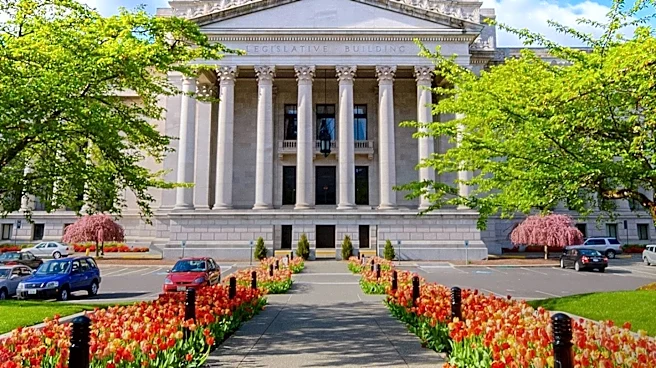





Olympia, the capital city of Washington State, holds a significant place in the Pacific Northwest. As the county seat of Thurston County, it anchors the South Puget Sound region, situated approximately 50 miles southwest of Seattle. The city's identity is multifaceted, encompassing its role in state government, its unique countercultural scene, and its historical development from a small town to a modern city. With a population of 55,605 as of the 2020
census, Olympia serves as a hub for both political activity and distinctive cultural expression.
Early Development and Incorporation
Olympia's formal establishment began in the mid-19th century. It was incorporated as a fourth-class municipality, commonly referred to as a town, on January 28, 1859. This initial incorporation marked a crucial step in its growth and organization. Later, on December 1, 1881, Olympia transitioned to a charter city, indicating a more developed form of local governance. This progression reflects the increasing population and administrative needs of the burgeoning settlement.The city's early history also saw it become a vital administrative center. In February 1851, Congress established the Customs District of Puget Sound, designating Olympia as the official customs port of entry. This required all ships entering the sound to first call at Olympia, solidifying its importance in regional commerce. By July of the same year, the first mail service was established, operating weekly via horseback and canoe, further connecting Olympia to the wider region. In 1852, Olympia was named the county seat of the newly organized Thurston County, which was then part of Oregon Territory, underscoring its growing administrative significance.
Geographical Context and Infrastructure
Geographically, Olympia is positioned at the extreme southern tip of Puget Sound on Budd Inlet. This location has historically made it a productive area, particularly for food gathering, due to abundant shellfish in the tideflats and numerous salmon-spawning streams. The city's total area spans 20.09 square miles, comprising 18.23 square miles of land and 1.87 square miles of water, contributing to its scenic environment.Modern infrastructure has also shaped Olympia. Interstate 5, a major north-south freeway, was constructed through the south side of the city in the late 1950s. This freeway replaced earlier highways that ran through downtown Olympia. Initially, there were plans for the freeway to cut directly through the city, but it was ultimately moved farther out to reduce costs. The section of Interstate 5 serving Olympia opened to traffic on December 12, 1958, and was later expanded in 1991, significantly impacting regional transportation and access to the city.
Cultural and Countercultural Hub
Beyond its governmental role, Olympia has cultivated a reputation as a countercultural hub within the Pacific Northwest. This identity is particularly evident in its music scene, which gained national prominence in the 1990s. The city played a significant role in the emergence of influential punk rock movements, including riot grrrl and grunge, contributing distinct sounds and attitudes to the broader music landscape. This vibrant artistic environment continues to be a defining characteristic of Olympia.Further contributing to its unique cultural fabric is The Evergreen State College, a public liberal arts institution located in the Olympia area. Known for its non-traditional curriculum, the college attracts students and faculty who often contribute to the city's progressive and alternative atmosphere. Additionally, Olympia boasts a high per-capita use of public transportation compared to other cities of its size, with Intercity Transit providing fare-free bus service throughout the area, reflecting a community value for accessible and sustainable transit options.