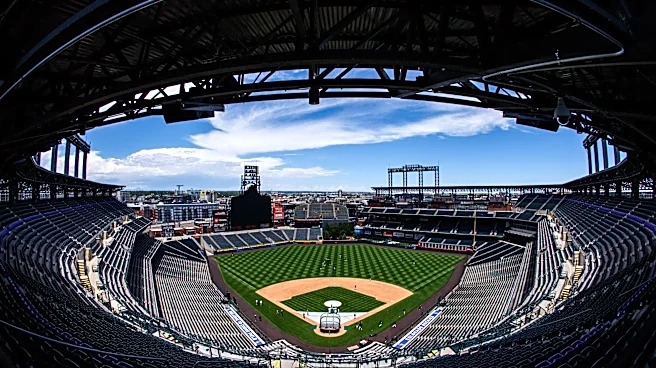







The Oakland Coliseum, a multi-purpose stadium that served as a home for both baseball and football teams for decades, has a rich history marked by significant adaptations and persistent criticisms. From its initial planning in the early 1960s to its final years as a major league venue, the Coliseum underwent numerous changes to accommodate the evolving needs of its tenants, the Oakland Raiders and the Oakland Athletics. Despite these efforts, the stadium frequently
faced criticism for its design, maintenance, and overall suitability for professional sports, ultimately leading to the departure of its long-term occupants.
Planning and Initial Design
The desire for a major league stadium in Oakland intensified during the 1950s and 1960s, driven by business and political leaders who sought to establish the East Bay as a viable metropolitan area distinct from San Francisco. Preliminary architectural plans for the Coliseum were unveiled in November 1960, and a site west of the Elmhurst district of East Oakland, alongside the recently completed Nimitz Freeway, was chosen. The Port of Oakland played a crucial role by donating 105 acres of land to the city for the complex. Rather than relying on taxpayer-backed bonds, a non-profit corporation, headed by local real estate developer Robert T. Nahas, was formed to oversee the financing and development, with ownership transferring to the city and county upon retirement of the construction financing. Construction began in the spring of 1962, though it was delayed for two years due to legal issues and cost overruns, requiring slight modifications to the original design to stay within budget. The stadium complex, which also included an indoor arena and an exhibition hall, ultimately cost $25.5 million to build and rests on 120 acres of land.
Adaptations for Dual-Sport Use
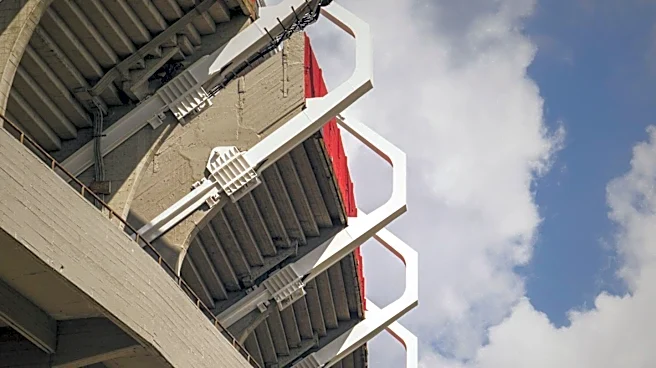
Designed to host both baseball and football, the Coliseum featured an underground design where the playing surface was 21 feet below sea level. This unique configuration meant that fans entering the stadium found themselves on the main concourse at the top of the first level of seats, with only the third deck visible from outside. The stadium's ability to convert between baseball and football layouts was a defining characteristic. From 1968 through 1981 and again in 1995, two football configurations were used. During Raider preseason games and early regular season games, the field was set up from home plate to center field (east/west). Seats along the foul lines for baseball became sideline seats for football, though they were up to 120 feet away from the field. Once the Athletics' season concluded, the orientation switched to north-south, with the football field running from the left field line to the right field line. Seats were moved to create end zone corners, and temporary bleachers were added. After a 1996 expansion, the field consistently ran north-south throughout the season.
Seating Capacity and "Mount Davis"
The Coliseum's seating capacity varied significantly over its history. Initially, it could hold up to 63,132 spectators depending on the configuration. A major renovation in 1996, undertaken for the Raiders' return to Oakland, added an upper deck that fans dubbed "Mount Davis." This expansion, however, also had the peculiar effect of creating an inward jog in the outfield fence for baseball games. In 2006, the Athletics, aiming for a more "intimate" environment, blocked off the entire third deck, artificially limiting capacity to 34,077, making it the smallest stadium in Major League Baseball at the time. However, by April 2017, with Dave Kaval as team president, the Athletics began reopening some sections of the third deck and the Mount Davis deck for selected marquee games, which, by contrast, made it the largest baseball stadium in the United States by capacity through 2024.
Naming Rights and Facility Issues
Over its lifespan, the Coliseum underwent several naming rights changes. For over three decades, it was known as the Oakland–Alameda County Coliseum. In 1997, UMAX Technologies briefly acquired naming rights, but a dispute led to the reinstatement of the original name. In 1998, Network Associates secured naming rights, and the stadium became Network Associates Coliseum, or "the Net." This name changed to McAfee Coliseum in 2004 after Network Associates rebranded. After McAfee declined to renew in 2008, the name reverted to Oakland–Alameda County Coliseum until 2011, when Overstock.com acquired naming rights, renaming it O.co Coliseum. A contract dispute with the Athletics meant the team continued to use the original name in official communications. Overstock opted out in 2016, and the stadium again became the Oakland–Alameda County Coliseum. A new three-year deal with RingCentral was agreed to in late 2020, after an earlier deal was rescinded due to allegations against the head of the Coliseum Authority.
Beyond naming rights, the Coliseum faced widespread criticism for its condition. Sports fans and players often cited it as poorly maintained and out of date, frequently ranking it among the worst ballparks in MLB during its later years. Facility issues were a constant concern, contributing to the Athletics' long search for a new stadium. The team played its final season at the Coliseum in 2024, moving to Sutter Health Park in Sacramento for 2025-2027 before their planned relocation to Las Vegas. The Oakland Roots and Soul soccer teams announced their intention to use the Coliseum for their 2025 and 2026 seasons, with the grass field aligned to the third base line, continuing to honor the playing surface as Rickey Henderson Field.