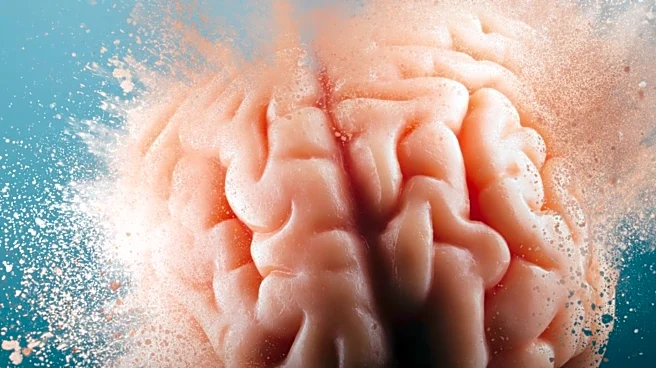








The mere-exposure effect challenges conventional understandings of how we form preferences and make decisions, particularly through Robert Zajonc's groundbreaking work on affective primacy. Zajonc proposed that emotional reactions, or "affective judgments," can occur with minimal stimulus input and often precede conscious cognitive processing. This idea suggests that our feelings about something can be formed without us even being aware of why we feel that way,
a concept that has significantly influenced the study of the relationship between cognition and emotion.
The Affective Primacy Hypothesis
In 1980, Robert Zajonc introduced his affective primacy hypothesis, asserting that affective reactions, such as liking, can be "elicited with minimal stimulus input." Through his mere-exposure experiments, Zajonc aimed to provide evidence for this hypothesis, demonstrating that emotional judgments are made without the necessity of prior cognitive processes. He tested this by presenting repeated stimuli to participants at suboptimal thresholds, meaning the stimuli were shown so briefly that participants did not consciously recognize or show awareness of them. Despite this lack of conscious perception, participants consistently exhibited an affective bias toward the repeatedly exposed stimuli.
Zajonc compared the results from primes exposed for longer durations, which allowed for conscious awareness, to stimuli shown so briefly that participants had no conscious recognition. He found that the primes shown more briefly and not consciously recognized prompted faster responses for liking than those presented at conscious levels. This finding was crucial in supporting his claim that preferences can form independently of conscious thought, encapsulated in his famous statement: "preferences need no inferences." This assertion sparked extensive research into the intricate relationship between cognition and affect.
Evidence from Subliminal Exposure and Neurological Studies
Further experiments provided compelling evidence for the mere-exposure effect operating outside conscious awareness. In one variation, participants were shown an image on a tachistoscope for such a brief duration that it could not be consciously perceived. This subliminal exposure still produced the same effect, leading to increased liking for the previously unseen images. However, it's important to note that such subliminal effects are generally unlikely to occur without highly controlled laboratory conditions.
Supporting Zajonc's claim that affect does not require cognition, experiments conducted by Zola-Morgan in 2001 on monkeys with lesions to the amygdala (a brain structure responsive to affective stimuli) provided neurological insights. Zola-Morgan's research showed that lesions to the amygdala impaired affective functioning but left cognitive processes intact. Conversely, lesions in the hippocampus, the brain structure responsible for memory, impaired cognitive functions while leaving emotional responses fully functional. These findings suggest distinct neural pathways for emotional and cognitive processing, lending credence to the idea that affect can indeed operate independently of conscious thought and memory.
Cognition, Affect, and Decision-Making
Zajonc argued that if preferences were based solely on information units with attached affect, then persuasion would be a simple matter. He contended that the failure of many simple persuasion tactics indicates this is not the case. He posited that affective responses to stimuli occur much more rapidly than cognitive responses and are often made with greater confidence. Zajonc viewed thought (cognition) and feeling (affect) as distinct, yet interconnected, systems. He suggested that feeling accompanies all cognitions, arising early in the process of registration and retrieval, albeit weakly and vaguely, and stemming from a parallel, separate, and partly independent system within the organism.
According to Zajonc, there is no empirical proof that cognition necessarily precedes every form of decision-making. While it is a common assumption, he argued that decisions are more likely made with little to no cognition. He equated deciding upon something with liking it, implying that people often cognize reasons to rationalize a decision after it has already been made, rather than making the decision based on prior rational thought. In essence, we often make judgments first and then seek to justify them through rationalization.