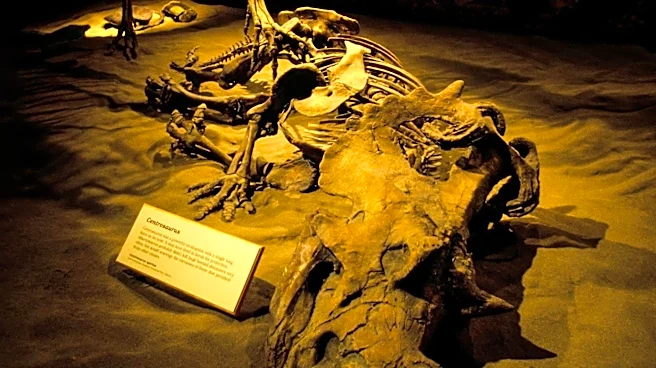








Dinosaur National Monument, situated on the southeastern flank of the Uinta Mountains, straddles the border between Colorado and Utah, offering a unique window into Earth's ancient past. Initially established in 1915, its primary purpose was to safeguard the renowned Dinosaur Quarry, a site of immense paleontological importance. Over time, the monument's scope broadened significantly, and by 1938, it was expanded to encompass a much wider array of natural
history treasures, reflecting a deeper appreciation for the diverse scientific and historical value of the region.
The Genesis of a Monument: Protecting Ancient Giants
The initial preservation efforts in 1915 were specifically aimed at protecting the Dinosaur Quarry. This quarry quickly gained fame for its abundant fossil discoveries, drawing scientific interest and public fascination. The sheer volume and quality of dinosaur remains found here made it a critical location for understanding prehistoric life. The decision to designate it as a national monument underscored the recognition of these fossils as irreplaceable natural heritage, deserving of federal protection and study.
This early designation ensured that the fossil beds would be preserved for future generations of paleontologists and visitors. The quarry provided an unparalleled opportunity to observe dinosaur fossils embedded in their original rock matrix, offering direct insights into the ancient environments and ecosystems that once thrived in this area. The initial focus was clear: to protect the tangible evidence of dinosaurs that roamed the Earth millions of years ago.
Expanding Horizons: Embracing Natural History
The expansion of Dinosaur National Monument in 1938 marked a pivotal moment, shifting its focus from solely a dinosaur quarry to a broader natural history preserve. This expansion recognized that the area held more than just dinosaur bones; it contained a wealth of geological, ecological, and cultural resources. The enlarged boundaries allowed for the protection of diverse landscapes, river systems, and other significant natural features that contribute to the region's unique character.
This broader mandate meant that the monument would now safeguard not only the paleontological sites but also the intricate web of natural processes and features that define the Uinta Mountains region. The inclusion of these additional natural history elements ensured a more comprehensive approach to conservation, acknowledging the interconnectedness of the environment and its long-term geological and biological evolution. The monument became a place where visitors could explore not just dinosaurs, but the entire natural world they inhabited.
A Rich Tapestry of Paleontological Discoveries
Today, Dinosaur National Monument is celebrated for its extraordinary paleontological richness, boasting over 800 paleontological sites within its boundaries. These sites have yielded an impressive array of dinosaur fossils, providing crucial data for scientific research and public education. Among the notable dinosaur species discovered here are the formidable Allosaurus, the agile Deinonychus, and the long-necked Abydosaurus.
Beyond these specific examples, the monument is also a significant source of various sauropod fossils. Sauropods, known for their immense size and herbivorous diets, represent some of the largest animals to have ever walked the Earth. The presence of such a diverse collection of dinosaur remains, from predators to herbivores, offers a comprehensive picture of the ancient ecosystems that once flourished in this part of North America. The ongoing discoveries continue to enhance our understanding of dinosaur evolution and the prehistoric world.