



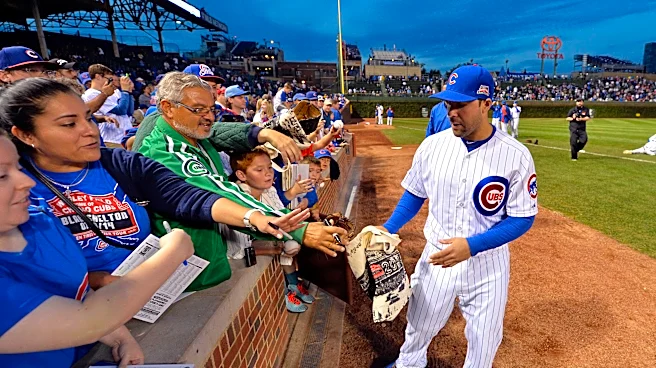
The 1906 Chicago Cubs season stands as a monumental chapter in baseball history, marked by a level of regular-season dominance that remains largely unmatched. Under the leadership of new manager Frank Chance, the Cubs achieved an astounding 116 wins against only 36 losses, resulting in a .763 winning percentage. This record for wins has never been surpassed in Major League Baseball, though it was tied by the 2001 Seattle Mariners, who played a longer
162-game season. The Cubs' remarkable performance in 1906 established a benchmark for excellence, showcasing a team that excelled in nearly every aspect of the game.
Unprecedented Regular Season Performance
The Cubs' 1906 season was characterized by overwhelming superiority within the National League. They led the league by significant margins in both runs scored and fewest runs allowed, demonstrating a rare balance of offensive power and defensive stinginess. Their .763 winning percentage set a modern-era record, representing the best overall performance since 1885. While this mark did not set a National League record or even a franchise record, as the 19th-century White Stockings had better records on three occasions (1876, 1880, and 1885), it remains a testament to their exceptional play in the two-league era.
This level of consistent winning throughout the season highlighted a team that was well-managed and deeply talented. The roster included four future Hall of Famers: manager and first baseman Frank Chance, second baseman Johnny Evers, shortstop Joe Tinker, and pitcher Mordecai Brown. Their collective skill and leadership were instrumental in guiding the Cubs to such an impressive regular season, making them a formidable force in the National League.
The Pitching Staff's Historic Achievements
A cornerstone of the 1906 Cubs' success was their pitching staff, which delivered a performance for the ages. The team led the majors with an incredible earned run average (ERA) of 1.75. This dominant pitching was not the work of just one or two individuals; six members of the staff achieved double-digit victories. Mordecai Brown led the way with 26 wins, followed by Jack Pfiester (20), Ed Reulbach (19), Carl Lundgren (17), Orval Overall (12), and Jack Taylor (12).
Among these stellar pitchers, Mordecai Brown's individual performance was particularly noteworthy. He set a major league record for the lowest earned run average attained with at least 250 innings pitched, posting an astonishing 1.04 ERA. Although this record was later broken by Dutch Leonard in 1914, Brown's mark still stands as the National League record. Another remarkable feat from the pitching staff involved Jack Taylor, who on August 9, threw the last of a major league record 187 consecutive complete games. This incredible streak, which began in 1901 when Taylor pitched for the Chicago Orphans, showcased an unparalleled level of endurance and consistency, further solidifying the 1906 Cubs' reputation for pitching excellence.
Offensive Contributions and Overall Strength
While the pitching staff garnered significant attention, the Cubs' offense also played a crucial role in their dominant season. The team led the National League in runs scored, indicating a potent lineup capable of consistently putting runs on the board. The offensive star of the team was third baseman Harry Steinfeldt, who led the National League in both hits and RBIs. His ability to get on base and drive in runs provided the necessary support for the exceptional pitching staff.
The combination of a high-scoring offense and an almost impenetrable pitching staff created a team that was difficult to beat. This comprehensive strength allowed the Cubs to maintain their record-setting pace throughout the season, culminating in their historic 116-win campaign. Despite their eventual upset in the World Series, the 1906 Chicago Cubs' regular season remains a benchmark for baseball excellence, a testament to a team that achieved an unprecedented level of dominance.