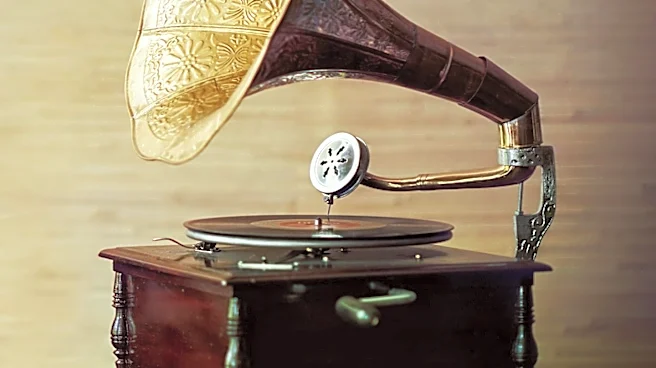



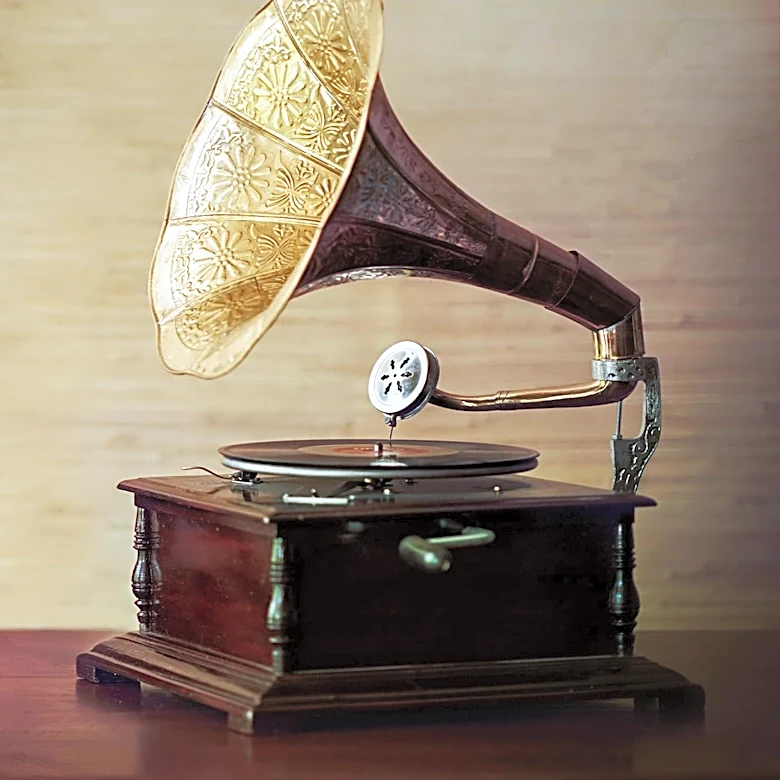





Emile Berliner, a German-American inventor, is primarily celebrated for his groundbreaking invention of the lateral-cut flat disc record, commonly known as the "gramophone record." This innovation, coupled with his development of the gramophone player, marked a pivotal moment in the history of recorded sound, fundamentally altering how music and audio content could be produced, distributed, and consumed. Before Berliner's disc, sound recording was
largely dominated by cylinder-based phonographs, which presented challenges in mass production and durability. Berliner's flat disc offered a more practical and scalable solution, paving the way for the commercial music industry as we know it. His vision led to the establishment of the United States Gramophone Company in 1894, a testament to the commercial potential he saw in his invention.
From Merchant to Microphone Inventor
Born in Hanover, Germany, in 1851, Emile Berliner initially followed his family's tradition by completing an apprenticeship to become a merchant. However, his true passion lay in invention. After migrating to the United States in 1870 to avoid being drafted into the Franco-Prussian War, Berliner supported himself with various temporary jobs, including a paper route and cleaning bottles, while diligently studying physics at night at the Cooper Union Institute in New York. This self-education proved instrumental in his later successes.
Berliner's early forays into invention focused on audio technology. After working in a livery stable, he became deeply interested in the emerging fields of the telephone and phonograph. His inventive efforts led to an improved telephone transmitter, which was one of the first types of microphones. This significant invention was acquired by the Bell Telephone Company. However, its ownership became the subject of a protracted legal battle with Thomas Edison. Ultimately, on February 27, 1901, the United States Court of Appeals ruled against Berliner, awarding Edison full rights to the invention, stating that Edison had preceded Berliner in speech transmission and the use of carbon in a transmitter.
The Birth of the Disc Record and Gramophone
Despite the setback regarding the microphone patent, Berliner's inventive spirit was undeterred. After working for Bell Telephone until 1883 and becoming a U.S. citizen in Boston, he returned to Washington, D.C., to establish himself as a private researcher. It was during this period that he conceived and developed the lateral-cut flat disc record and the gramophone designed to play it. This invention was revolutionary because it offered several advantages over the existing cylinder phonographs. Flat discs were easier to mass-produce through stamping, more compact for storage, and generally more durable. This made recorded music accessible to a wider audience and facilitated the growth of a commercial recording industry.
In 1894, Berliner founded the United States Gramophone Company, a crucial step in commercializing his invention. This company was instrumental in bringing the gramophone and disc records to the public, laying the foundation for the modern record industry. The shift from cylinders to discs was a monumental change, establishing a standard that would dominate sound recording for decades. Berliner's gramophone not only provided a new way to listen to music but also created a new cultural phenomenon, making recorded sound a staple in homes and public spaces across the nation and eventually the world. His legacy is deeply intertwined with the evolution of how we experience and share audio.