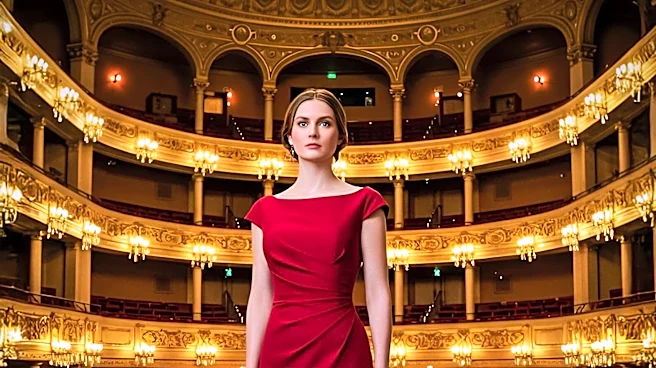










Vincenzo Bellini's opera "Norma," which premiered on December 26, 1831, at La Scala in Milan, stands as a monumental work within the bel canto genre. This Italian opera, a "tragedia lirica" in two acts, features a libretto by Felice Romani, adapted from Alexandre Soumet's play "Norma, ou L'infanticide." From its initial staging, "Norma" has been recognized for its profound emotional depth, intricate vocal demands, and the unique fusion of dramatic
poetry and song that Bellini masterfully achieved. Its influence extends beyond the operatic stage, touching other art forms and earning praise from notable figures like Giuseppe Verdi and Arthur Schopenhauer.
The Essence of Bel Canto and Bellini's Innovation
"Norma" is widely considered a leading example of the bel canto style, a term that emphasizes beautiful singing and vocal agility. Bellini, at the height of his powers during its composition, was known for his demanding approach to librettists, requiring numerous rewrites to ensure the text perfectly served his musical vision. This meticulous process resulted in a work where, as David Kimbell notes, Bellini's "most astonishing achievement...is to have asserted his belief that the true magic of opera depended on a kind of incantation in which dramatic poetry and song are perfectly fused." This fusion is evident in the opera's long, flowing melodies, which Verdi himself praised, stating that Bellini produced "long, long, long melodies such as no-one before him had produced."
The vocal demands of the title role, Norma, are particularly legendary. It requires an interpreter with the most accomplished technique, encompassing breath control, precise vocalizations, and extreme agility. The famous soprano prayer "Casta diva" from Act 1, a mystical invocation to the moon, exemplifies the bel canto ideal with its sustained lines and intricate passages. Beyond the technical prowess, the role also demands a performer capable of conveying a complex range of emotions—pride, passion, and vindictiveness—making it one of the most challenging and rewarding roles in the operatic repertoire. The opera's recitatives, often overlooked in other works, are given particular emphasis by Bellini, who sought to merge textual and musical components to enhance their dramatic relief.
Critical Acclaim and Enduring Influence
"Norma" garnered significant critical attention, not only from fellow musicians but also from philosophers. Giuseppe Verdi, late in his life, offered perceptive comments on Bellini's work, highlighting the composer's richness in feeling and individual melancholy, despite perceived shortcomings in harmony and instrumentation. Verdi specifically lauded the truth and power of declamation in the duet between Pollione and Norma in Act 2, Scene 3, and the "elation of thought" in its introduction, calling it "more beautiful and heavenly" than anything created before.
Philosopher Arthur Schopenhauer also praised "Norma" for its artistic excellence and its ability to evoke a genuinely tragic effect. Schopenhauer believed that tragedy could cause the spectator to lose the will to live, revealing the bitterness and worthlessness of life. He found this effect particularly well-produced in "Norma," especially in the duet "Qual cor tradisti, qual cor perdesti." He noted how the music's sudden quietness in this section clearly indicated a "conversion of the will," leading to the hero's resignation and spiritual exaltation. Schopenhauer considered the opera a "tragedy of extreme perfection," a model for tragic disposition, action, and development, which profoundly affects both the characters and the audience. This enduring critical appreciation underscores "Norma's" status not just as an operatic achievement, but as a significant work of art with lasting philosophical resonance.
Notable Interpretations and Cultural Impact
The title role of Norma has attracted some of the most celebrated sopranos throughout history. In the first half of the 20th century, Rosa Ponselle was a renowned interpreter, performing the role in New York and London. In the post-war period, legendary singers such as Maria Callas, Leyla Gencer, Joan Sutherland, and Montserrat Caballé became notable exponents of the role, each bringing their unique vocal and dramatic interpretations to the demanding character. Their performances have cemented "Norma's" place in the operatic canon and continue to inspire new generations of singers and audiences.
The opera's narrative and themes have also resonated beyond the stage. Henrik Ibsen, the renowned playwright, wrote an opera parody titled "Norma, or A Politician's Love," influenced by Bellini's opera, which he saw in 1851. This parody, featuring contemporary politicians as characters, demonstrates the cultural penetration of "Norma's" story. More recently, author Marion Zimmer Bradley acknowledged that her 1993 historical novel "The Forest House" was based on the plot of "Norma," relocating the story from Gaul to Britain but retaining the core narrative of a love affair between a Druidic priestess and a Roman officer. Bradley even adapted hymns in her book from the opera's libretto, further illustrating the lasting impact and adaptability of Bellini's masterpiece.