




Effective power training extends beyond simply lifting heavy weights or performing explosive movements; it relies heavily on foundational physical attributes. A robust core, strong and flexible joints, and correctly proportioned muscle strength are universal elements that underpin an individual's ability to generate and transfer power efficiently. Neglecting these fundamental aspects can limit power output, increase injury risk, and hinder overall
athletic performance. Therefore, a comprehensive power training regimen must address these areas systematically.
The Indispensable Role of Core Strength
The body's core, often referred to as the torso or trunk, serves as the central support system for all other movements. In power-intensive activities, the core musculature is increasingly recruited to provide additional power and stability. A strong core not only enhances power generation but also significantly improves a person's ability to balance. The most effective core strength training involves strengthening all parts of the core through a variety of movements, including bending and straightening (flexion and extension), circular movements (rotation and circumduction), and holding isometric poses. Additional resistance can be incorporated as needed to progressively challenge the core muscles.
The more comprehensive and balanced the core training, the greater the benefits to a person's ability to apply power. This is partly because it helps avoid the common problem of disproportionately weak core muscles hindering the power output of stronger muscles they work in conjunction with. For example, if an individual has developed powerful bending and straightening core movements but lacks strong rotational capabilities, any compound movement requiring bending, straightening, and rotation will be limited by the weaker rotational strength. This effectively reduces the potential advantages gained from the stronger movement ranges. Similarly, insufficient muscular strength to stabilize the core will negatively impact the ability to move powerfully. To ensure balanced development, training programs focusing on the core often recommend working towards the correct ratio of strength between muscles. The National Strength and Conditioning Association suggests a general guideline of a 1-1-1-1 exercise ratio for the four main core movements: flexion, extension, lateral flexion, and rotation. Furthermore, the core acts as a crucial bridge, facilitating the transfer of force between the upper and lower body; a stronger core improves this force transference, while a weaker one diminishes it.
Joint Strength and Injury Prevention
Applying a large amount of power is only possible if the body's joints are strong enough to cope with and effectively transfer that force. If a joint is excessively weak, the power that can be applied by and through it is inherently limited. This is particularly critical in dynamic movements that demand the rapid application of force to an external object and the absorption of impact forces by the body. Consider a sprinter, who requires strong ankle joints to effectively apply leverage and transfer force to the ground, as well as to absorb impact forces upon foot placement. Due to the varied requirements of each stride, the ankle must be strengthened in all ranges of movement, including twisting. This can be achieved through exercises like running backward and sideways, or hopping and landing in different directions.
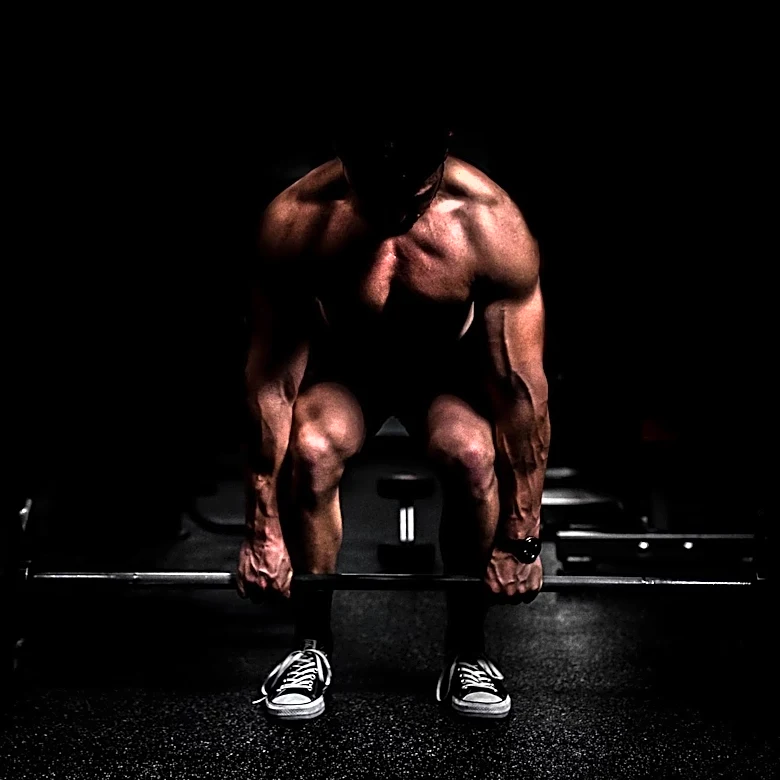
A boxer, for instance, would also need strong ankles, but additionally, robust wrists are essential to adequately transfer the power generated by their body to their fists and, consequently, to the target. An example of a wrist-strengthening exercise is a one-handed barbell deadlift, which demands increased wrist utilization for stabilization. Strong and flexible joints are also vital for preventing injuries. An injured or excessively weak joint will inhibit the amount of power it can handle and transfer, thereby impeding movement—much like a person with a sprained ankle cannot walk properly. Therefore, developing and maintaining joint strength and flexibility is a non-negotiable aspect of effective power training.
Optimizing Power Through Proportional Strength
The body produces power most efficiently when its strength-producing areas exist in particular proportions. When these proportions are in the correct ratio to each other, power generation can be optimized. Conversely, if one area is disproportionately strong relative to others, it can lead to several issues. A weaker area may be excessively strained when working in conjunction with a stronger area, and the stronger area's performance might be slowed down by the weaker link. Such imbalances can significantly hinder power development.
The optimal proportions of strength for power generation can be either non-sports specific, aiming for general power improvement, or sports-specific, tailored to the demands of a particular sport. For example, a sprint cyclist might incorporate heavy back squats to increase leg strength, which helps generate more power on the bike. However, this could lead to excessive leg strength relative to core strength, potentially hindering performance improvements and increasing injury risk. In such cases, incorporating core training can improve back squat efficiency and reduce injury risk, making the exercise more beneficial for cycling. This highlights that achieving optimal strength proportions often requires supplementary exercises, as performing the sport or exercise alone may not naturally lead to the most powerful physical development.