











Kneading is a crucial technique in baking, particularly when it comes to making bread. This process involves mixing ingredients and developing gluten to create a smooth, elastic dough. While it may seem simple, kneading plays a vital role in the texture and structure of the final baked product. Understanding the nuances of kneading can elevate your baking skills and lead to more consistent results.
The Science Behind Kneading
Kneading is more than just mixing ingredients; it
is a scientific process that transforms flour and water into a cohesive dough. When flour is combined with water, proteins called gliadin and glutenin interact to form gluten strands. These strands give bread its characteristic texture and structure. Kneading warms and stretches these gluten strands, making the dough springy and elastic. Without proper kneading, the dough cannot hold the gas pockets created by leavening agents like yeast, resulting in a dense loaf.
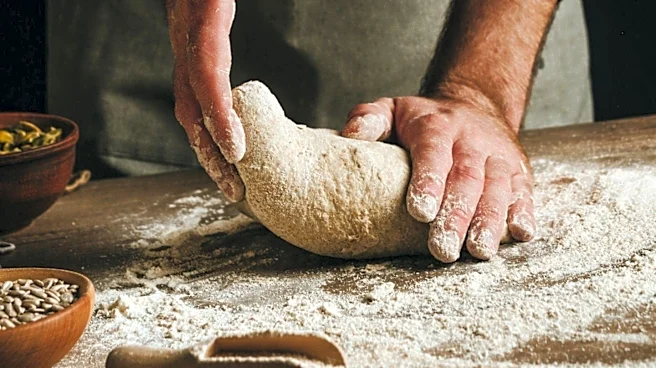
The process of kneading can be done by hand, using a mixer with a dough hook, or with a bread machine. Hand kneading involves pressing and stretching the dough with the heel of the hand, folding it over, and rotating it repeatedly until it becomes smooth. This traditional method allows bakers to feel the dough's transformation and adjust their technique accordingly.
Techniques and Variations
While kneading is essential for yeast-leavened doughs, not all doughs require this process. High-hydration doughs, such as ciabatta and focaccia, may be folded instead of kneaded to develop gluten. This technique involves gently stretching and folding the dough to redistribute gases and nutrients, allowing fermentation to continue. Folding is also known as knocking back or punching down, which is done after the dough has proved.
For pastry or quick breads like muffins and scones, kneading is avoided to prevent gluten development, which would result in a tough texture. These doughs are mixed just enough to combine ingredients without activating gluten, ensuring a tender crumb.
The Role of Kneading in Baking
Kneading is a time-dependent process that requires attention to detail. The temperature of the dough and the duration of kneading can significantly impact the final product. If the dough is too hot or cold, yeast development may be hindered, affecting the rise and texture of the bread. Similarly, kneading for too long or too short a time can lead to undesirable results.
In some cases, kneading can be substituted by allowing a wet, low-yeast dough to ferment for over 12 hours, known as the no-knead method. This technique relies on time and fermentation to develop gluten, offering an alternative for those who prefer a hands-off approach.
Kneading is a fundamental skill in baking that requires practice and patience. By mastering this technique, bakers can create a variety of bread products with the desired texture and flavor, showcasing the art and science behind this essential process.