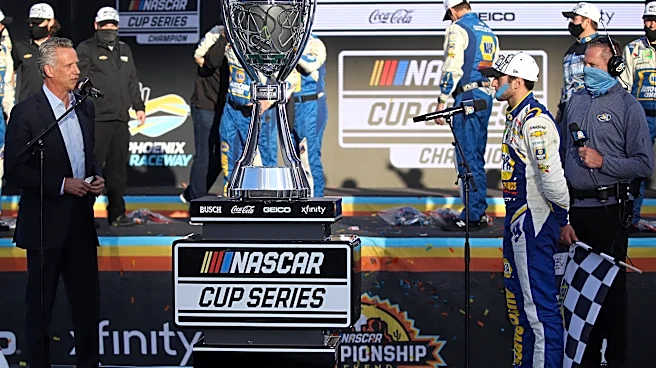







The 1990 NASCAR Winston Cup Series was a season filled with intense competition and significant controversy, ultimately culminating in Dale Earnhardt securing his fourth Winston Cup championship. This particular season, the 42nd in professional stock car racing and the 19th of the modern-era Cup Series, began on February 11 and concluded on November 18. While Earnhardt's victory was a testament to his skill and consistency with Richard Childress Racing,
the narrative of the championship was heavily influenced by a pivotal penalty assessed to his closest competitor, Mark Martin, early in the season. This incident, along with other notable events, etched the 1990 season into NASCAR history as one marked by contentious moments.
The Impact of Mark Martin's Early Season Penalty
One of the most defining moments of the 1990 season occurred early on, directly affecting the championship outcome. Mark Martin, a strong contender, was penalized 46 points after NASCAR officials discovered an oversized carburetor spacer plate in his car following a race victory. This penalty proved to be a critical factor in the championship battle. Despite winning the race, the points deduction significantly hampered Martin's standing, creating a substantial hurdle he would attempt to overcome throughout the rest of the season.The controversy surrounding this penalty highlighted the strict technical regulations in NASCAR and the consequences of non-compliance. The 46-point deduction was not a minor setback; it was a major blow that put Martin at a distinct disadvantage. Ultimately, Dale Earnhardt edged out Martin for the championship by a mere 26 points, making the early season penalty a subject of much discussion and speculation regarding its direct influence on the final standings. Without that penalty, the championship outcome could have been different, underscoring the fine margins in professional stock car racing.
Key Races and Dramatic Moments
Beyond the championship battle, the 1990 season featured several memorable races and incidents that added to its dramatic flair. The season included iconic events such as the Daytona 500, which was won by Derrike Cope, and the Coca-Cola 600, where Rusty Wallace took the checkered flag. These races, along with others like the Winston 500 won by Dale Earnhardt, showcased the diverse challenges and triumphs of the NASCAR calendar.One particularly unusual event was a race that took place in extremely cold conditions, possibly making it the coldest race in NASCAR history. Temperatures were in the mid-20s, with winds gusting up to 41 MPH, resulting in a wind chill of approximately 5 degrees. Such extreme weather conditions added another layer of challenge for drivers and teams. Another notable incident involved Stanley Smith, who lost control of his car on pit road and struck several crew members from Tracy Leslie's team. Fortunately, no one sustained serious injuries, but the event served as a stark reminder of the inherent dangers in motorsports, even in the pit area.
Dale Earnhardt's Dominance and Record-Breaking Achievements
Despite the controversies and dramatic moments, Dale Earnhardt's performance in 1990 was exceptional, solidifying his place as a dominant force in the sport. His championship win marked his fourth career Winston Cup title. Earnhardt demonstrated particular prowess on superspeedways, achieving a remarkable feat by winning three out of four major superspeedway titles during the season. This included a victory where he won the pole, led a record-breaking 134 laps, and ultimately won the race.As of 2022, Earnhardt's achievement of winning three straight restrictor plate races in 1990 remains the only time a driver has accomplished this in NASCAR history. This specific record highlights his mastery of restrictor plate racing, a discipline that requires a unique blend of skill, strategy, and car setup. His consistent performance and ability to secure victories in high-stakes races, even amidst the season's controversies, underscored his championship-winning campaign.