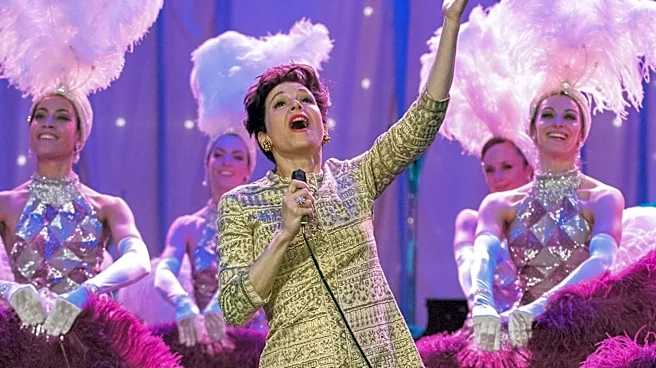




In 1944, coinciding with the release of the acclaimed Metro-Goldwyn-Mayer film, Judy Garland, the film's star, released her third studio album, *Meet Me in St. Louis*. This album, issued on November 2, 1944, by Decca Records, served as a musical companion to the eponymous motion picture. Orchestrated with Georgie Stoll's Orchestra, the recording was specifically made for Decca, as Garland was under contract with the label at the time. The album captured
the essence of the film's musical numbers, allowing audiences to take home the memorable songs performed by one of Hollywood's most beloved stars.
Recording and Track Selection
The recording sessions for the *Meet Me in St. Louis* album took place over two days, April 20–21, 1944, at Decca Studios in Los Angeles, California. These sessions were crucial in translating the cinematic musical experience into a phonograph record format. The album was structured as a set of three discs, each containing two tracks, carefully selected from the film's soundtrack to represent its most popular and pivotal songs.
Disc 1 (catalog number 23360) featured the title track, "Meet Me in St. Louis, Louis," recorded on April 21, 1944, alongside "Skip to My Lou," also recorded on the same day. Disc 2 (catalog number 23361) included "The Trolley Song," recorded on April 21, 1944, and "Boys and Girls Like You," recorded a day earlier on April 20, 1944. Finally, Disc 3 (catalog number 23662) presented "Have Yourself a Merry Little Christmas" and "The Boy Next Door," both recorded on April 20, 1944. This selection ensured that the album offered a comprehensive musical overview of the film's most cherished moments.
Commercial Reception and Critical Acclaim
Judy Garland's *Meet Me in St. Louis* album was released less than ten days before Columbia and Victor Records formally concluded the 1942–44 recording ban, a significant event in the music industry. Despite this timing, the album achieved considerable commercial success, peaking at number two on the *Billboard* Best-Selling Popular Record Albums chart on April 7, 1945. This strong performance underscored both the film's popularity and Garland's appeal as a recording artist.
The album also garnered positive critical attention. *Billboard* magazine, in its "Record Possibilities" column, specifically praised "The Trolley Song." The review highlighted the track's vibrant energy, noting that it possessed "plenty of bounce" and was given "movie treatment," with a rich sound that captured the cinematic feel. The reviewer even suggested that listeners might need to play the song multiple times to fully appreciate its depth, recommending it even to those who might already own another version. This reception solidified the album's status as a successful musical endeavor, further cementing the legacy of both the film and its iconic star.