






The term "vivarium" encompasses a wide array of enclosed environments designed for keeping and raising lifeforms, often with the goal of mimicking their natural habitats. This concept has evolved significantly over centuries, from its ancient Roman origins to its modern applications in scientific study, public display, and private hobbies. Understanding the vivarium requires appreciating its diverse forms and purposes, reflecting humanity's enduring
fascination with observing and interacting with the natural world.
Ancient Roots: Roman Vivariums
Historically, the term "vivarium" referred to enclosures used by the ancient Romans. These were not for scientific study or pet keeping in the modern sense, but rather for housing wild animals. These animals were typically destined for entertainment purposes, such as hunts or other spectacles presented in amphitheatres. One notable Roman vivarium was located near the Prenestina Gate. Another, smaller vivarium was reportedly situated near the Colosseum, beneath the convent of St. John and St. Paul on the Cœlian Mount. This second vivarium was connected to the Colosseum by a low vaulted passage, suggesting a practical necessity due to the distance between the larger vivarium and the arena. These ancient structures highlight the early human practice of containing animals for specific, often public, functions.
Modern Vivariums: Aquatic and Beyond
In contemporary usage, the term "vivarium" has broadened considerably. It can refer to any enclosed area for keeping and raising lifeforms, with a strong emphasis on recreating their natural environment. A prominent example of a modern vivarium is the aquarium. An aquarium is specifically a vivarium of any size that features at least one transparent side, used for keeping and displaying aquatic plants or animals. Fishkeepers utilize aquariums to house a variety of aquatic life, including fish, invertebrates, amphibians, and aquatic reptiles like turtles, as well as aquatic plants.
Specialization and Public Display
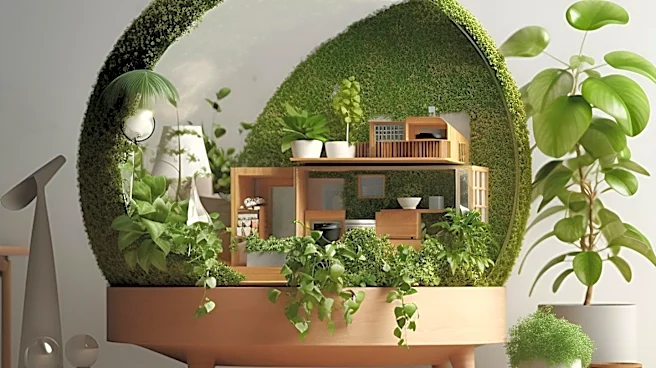
The concept of the vivarium extends to various specialized enclosures. While "aquarium" specifically denotes an aquatic vivarium, other terms exist for different types of environments. For instance, a terrarium is a vivarium for terrestrial animals, often reptiles or amphibians, and an insectarium is for insects. Public vivariums, such as large public aquariums, play a significant role in education and conservation. These institutions house vast collections of aquatic animals, sometimes including large species like otters and whales, in expansive tanks. The development of these public displays, tracing back to the first public aquarium at the London Zoo in 1853, demonstrates a continuous effort to bring diverse ecosystems closer to human observation and understanding. The overarching concept of the vivarium, therefore, serves as a testament to the human desire to observe, study, and appreciate the complexity of life within controlled, representative environments.