


Yankee Stadium, a name synonymous with baseball history, has seen two distinct iterations. The original stadium, often affectionately called "The House That Ruth Built," opened its doors in 1923 and served as the primary home for the New York Yankees for over eight decades. Its construction marked a significant moment in sports architecture, and its early years were defined by the legendary Babe Ruth, whose powerful hitting drew immense crowds. Over
time, the stadium underwent significant changes, reflecting evolving needs and standards, eventually leading to its replacement by a new facility in 2009. This journey from a historic landmark to a modern venue has been met with both praise for its amenities and considerable criticism regarding its atmosphere and accessibility.
The Birth of a Legend: Construction and Early Years
The original Yankee Stadium was born out of necessity and ambition. After playing at Hilltop Park until 1912 and then sharing the Polo Grounds with the New York Giants, the Yankees sought their own dedicated home. The team, then known as the New York Highlanders, changed their name to the Yankees after moving to the Polo Grounds. However, their success, particularly with Babe Ruth, began to overshadow the Giants, leading to their departure from the Polo Grounds after the 1922 season. This prompted the Yankees to acquire a ten-acre site in the Bronx, less than two kilometers from the Polo Grounds, for $675,000 from the estate of William Waldorf Astor.
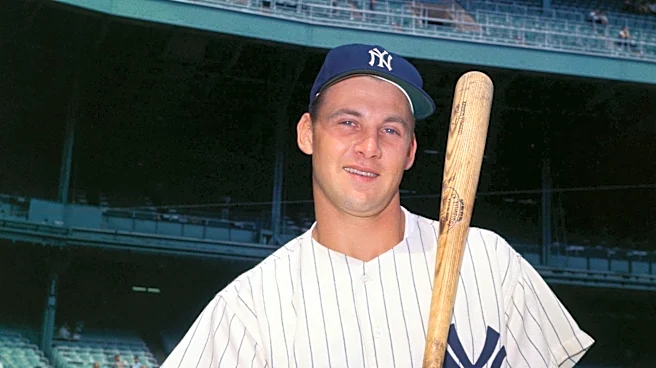
Designed by Osborn Engineering, the initial plan for the stadium was groundbreaking: a three-tiered grandstand that would encircle the entire field, making it the first baseball stadium with three balconies. Construction began on May 5, 1922, utilizing steel and concrete, and remarkably, the stadium was completed in just 284 days. It opened on April 18, 1923, with a seating capacity of 58,000. Its location at the intersection of 161st Street East and River Avenue was strategic, with the Jerome Avenue subway line (now the NYCTA number 4 line) having a stop practically outside its walls. Babe Ruth famously hit the first home run in the new stadium, solidifying its nickname, "The House That Ruth Built," as he continued to draw massive crowds. He finished that year with 41 home runs, 170 walks, and a .393 batting average, his highest as a Yankee.
Renovations and the Transition to a New Era
Over the decades, the original Yankee Stadium saw several modifications to enhance its capacity and facilities. In 1928, the main grandstand was extended into left field, and further extensions were made into right field in 1937. Concrete bleachers replaced the original wooden ones in the outfield. These changes increased the stadium's capacity, reaching 62,000 in 1926, then 82,000 in 1927, before settling at 67,113 in 1928. A significant addition was Monument Park, created in 1932 with a plaque honoring Miller Huggins, followed by others for Babe Ruth, Lou Gehrig, and other notable players. Night games began on May 28, 1946, and a new scoreboard was installed in 1959. The stadium also hosted other sports, including boxing and American football, until the early 1970s.
By the 1970s, the stadium began to show its age. In 1971, Yankees owner Mike Burke considered building a new stadium in New Jersey. However, New York City Mayor John Lindsay announced in 1972 that the city would purchase and renovate the stadium for $24 million. George Steinbrenner bought the team in the same year, and the renovation, initially planned by Burke and Mayor Lindsay, proceeded under his ownership. The extensive two-year renovation (1974-1975) required the Yankees to play their home games at Shea Stadium, home of the New York Mets, in Flushing, Queens. Parts of the stadium were completely demolished during this period. The old 18-inch green wooden seats were replaced with new 22-inch blue plastic seats, reducing the capacity to 54,000. New luxury suites and concessions were added, along with transformed press boxes and restrooms. Escalators and elevators were installed on the exterior, the facade was repainted, and a reproduction of a Louisville Slugger baseball bat was placed near the entrance. The renovated Yankee Stadium reopened on April 15, 1976.
The New Stadium: Design, Amenities, and Public Reception
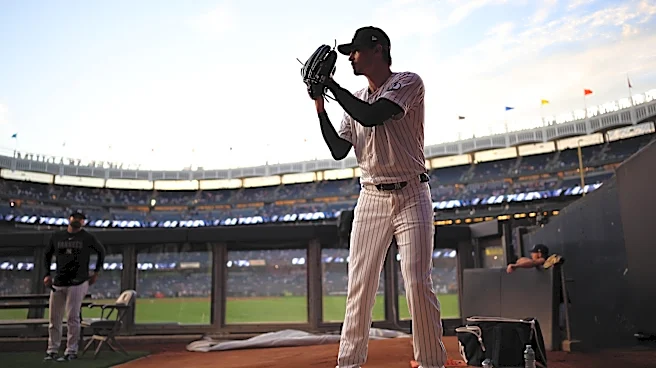
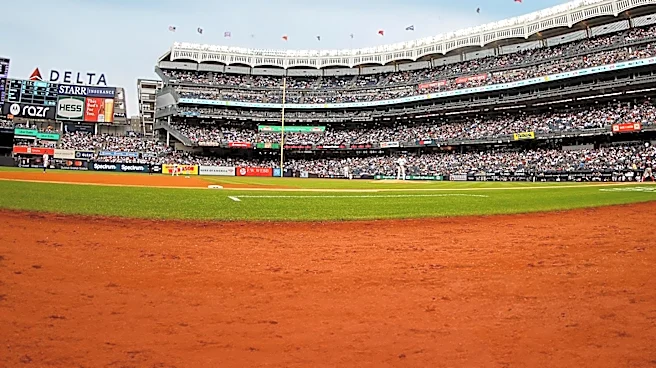
The new Yankee Stadium, which opened in April 2009, was built to replace the original structure. It is located in the Concourse neighborhood of the Bronx, on the 24-acre former site of Macombs Dam Park, just one block north of the original stadium. The design of the new stadium intentionally replicates elements of its predecessor, including its exterior and the iconic frieze, while incorporating larger spaces and modern amenities. It boasts the fifth-largest seating capacity among Major League Baseball's 30 stadiums.
Despite its modern features, the new stadium has faced significant criticism, particularly regarding its high ticket prices. Seats in the first eight rows of the lower bowl, known as the "Legends Suite," are among the most expensive in professional sports, averaging $510, with some costing up to $2,600 each. These seats have frequently been empty, creating an "embarrassing image" on television, especially behind home plate. Many ticket holders in this section have given up their tickets, and others remain unsold, leading to a surplus in the secondary market and a drop in resale prices. Even during the 2009 playoffs and World Series, despite sellouts, Legends Suite ticket holders were often found in the lounges and restaurants beneath the stands rather than in their seats. The average ticket price of $63 is the highest in baseball. Security vigorously patrols the Legends Suite, preventing fans without tickets for that section from entering, even to stand behind dugouts for batting practice or autographs. The least expensive seats, the bleachers, initially offered obstructed views due to an indoor club seating area in center field. These severely obstructed sections were removed during the 2016-2017 off-season and replaced with outdoor bars and patios, such as Franks Red Hot Terrace and Toyota Terrace, which include standing terraces accessible to all ticket holders, significantly reducing obstructed views.
Atmosphere and Fan Experience: A Tale of Two Stadiums
Beyond ticket prices and design, the new Yankee Stadium has been criticized for its lack of fan noise and atmosphere compared to the original. Commentators and players have noted a distinct difference. Terry Francona, a former Red Sox manager, observed in 2012 that while the old stadium created an intimidating environment for visiting teams, the new one felt different. Games at the new stadium often sound eerily silent, lacking the "deafening crowd moments" of its predecessor. This was evident during the 2012 playoffs, with thousands of unsold seats for crucial games. Quintin Berry of the Detroit Tigers remarked, "This is a very easy place to play now... Coming from Oakland, the fans there were so rowdy. It was easier to come here." Mariano Rivera, the Yankees' longtime relief pitcher, wrote in his autobiography, *The Closer*, that the new stadium "doesn't hold noise, or home-team fervor, anywhere near the way the old place did. The old Stadium was our 10th man—a loud and frenzied cauldron of pinstriped passion, with a lot of lifers in the stands. Maybe I'm wrong, but it's hard to see that the new place can ever quite duplicate that." Derek Jeter echoed this sentiment in 2014, noting that the old stadium was more intimidating because fans were "right on top of you," whereas the new stadium's numerous suites and alternative areas for fans make it appear empty at times.
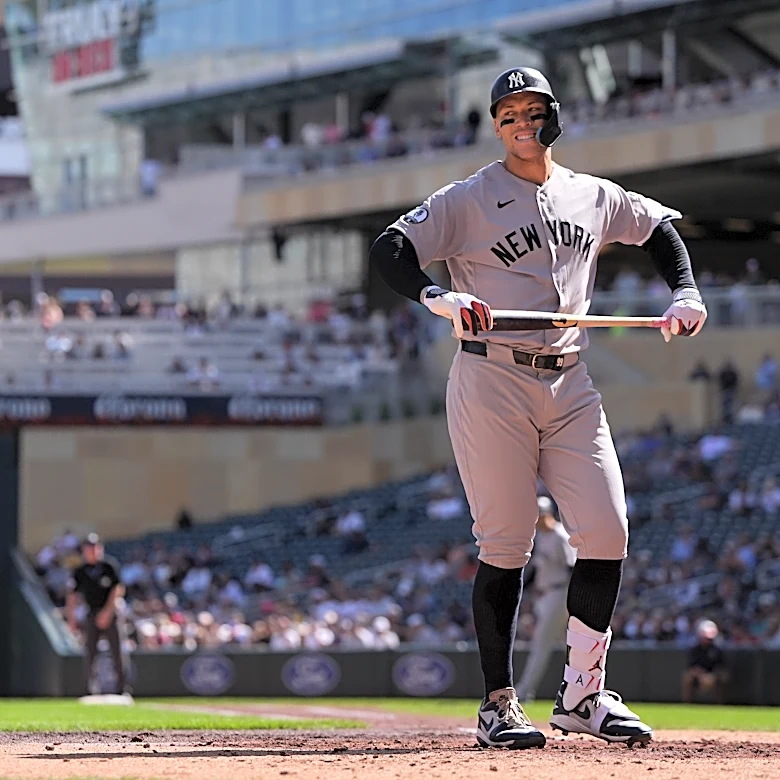
However, this perception began to shift in 2017, particularly during the American League Championship Series against the Houston Astros. In Game 4, the stadium was described as "raucous and loud" as the Yankees rallied to win. Yankees players commented on the renewed atmosphere, with CC Sabathia stating, "It felt like the old stadium tonight" and "This is as loud as I’ve ever heard it." Aaron Judge described it as "Deafening, just deafening," and Todd Frazier noted the crowd's significant role in maintaining confidence. Brett Gardner, a Yankee since 2008, confirmed, "Tonight was about as loud as it gets." This suggests that while the new stadium initially struggled to replicate the legendary atmosphere of its predecessor, it has shown the capacity to generate intense fan engagement under the right circumstances.