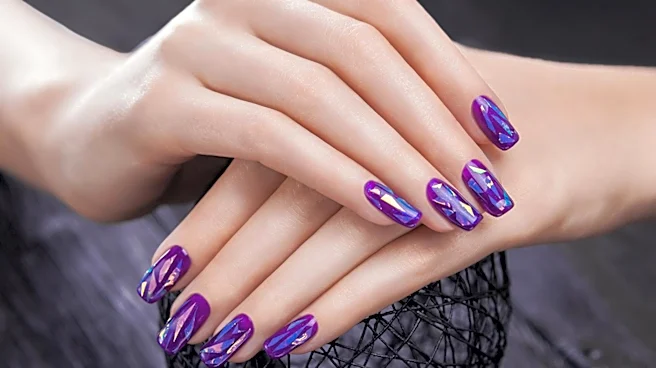






Gel nails represent a significant category within artificial nail enhancements, known for their durability and glossy finish. Unlike traditional nail polish, gel nails are created using a gel that requires curing under ultraviolet (UV) light or an LED lamp. This curing process transforms the gel into a hardened, long-lasting layer on the natural nail. While they share some similarities with acrylic nails in terms of durability and complex design possibilities,
gel nails often come with a higher cost. Their application involves painting the gel onto the nail and then exposing it to UV light, a process that ensures a strong and chip-resistant finish that can last for two to three weeks.
Traditional Gel Nails and Their Characteristics
Traditional gel nails are valued for their strength, though they may not be as strong as acrylic or fiberglass nails. A key characteristic of many types of gel nails is their resistance to acetone, the common solvent used for removing most nail polishes. This means that removal typically requires professional intervention, involving buffing and filing, often with an electric nail file. This method of removal can, over time, lead to the thinning of the natural nail plate until the buffed nails fully grow out. The chemical composition of gel nail polish often includes methacrylate polymers derived from monomers like 2-hydroxyethyl methacrylate (HEMA) and ethyl methacrylate (EMA), which contribute to their long-lasting wear and glossy appearance.
Concerns regarding acute contact dermatitis and respiratory toxicity associated with certain methacrylates, such as MMA and HEMA, have led to restrictions or bans in some regions. Consequently, EMA is now more commonly used in gel manicures. The curing process itself is a free radical polymerization, where a photoinitiator, like benzoyl peroxide, forms a carbon radical upon light exposure, leading to cross-linking and the formation of a durable polymer matrix. Trace amounts of unreacted methacrylate monomer can sometimes cause adverse health reactions, emphasizing the importance of proper formulation and curing.
The Emergence of Soft Gel Tips: Gel-X
Around 2017, a new type of gel nail extension emerged, commonly known as Gel-X or soft gel tips. This innovation offers a different approach to gel nail enhancements. Gel-X involves pre-cut soft gel nail tips that are available in various styles and lengths. These tips are designed to cover the entire nail bed, extending to the end of the natural nail. The application process for Gel-X begins with a pH bonder, which acts as a dehydrator, followed by an acid-free gel primer. The soft gel tip is then adhered to the natural nail using a gel adhesive, which is subsequently cured under a UV light.
Unlike many traditional gel nails, Gel-X nails are designed for removal by dissolving in acetone, typically requiring a 20-minute soak. This offers a less abrasive removal method compared to buffing and filing. Soft gel tips are always clear, a design choice that ensures the gel glue can be fully cured under UV light, contributing to the strength and longevity of the extension. This newer form of gel nail provides an alternative for those seeking durable extensions with a potentially gentler removal process.
Health Considerations and Application Practices
While gel nails offer aesthetic benefits and durability, improper application of gel nail products, including soft gel tips, polygel, gel polish, and builder gel, can lead to health issues such as fungal infections and allergic reactions. The chemical nature of these products, particularly the presence of methacrylate monomers, necessitates careful application and curing to minimize risks. The effectiveness of the photoinitiator's absorption spectrum and the light source directly influence the radical generation and the degree of cross-linking, which are crucial for the proper hardening of the gel and minimizing unreacted monomers.
Regular upkeep is recommended for artificial nails, including gel nails, typically every two weeks, to maintain their appearance and health. This is due to the natural growth of human fingernails, which can be around 3.47 mm per month in healthy young individuals. While gel nails can last over a month, consistent maintenance helps prevent issues that might arise from nail growth or wear. The evolution of gel nail technology continues to offer diverse options for nail enhancement, each with its own application, removal, and maintenance considerations.