




The War of 1812 saw numerous naval engagements, but few captured the American public's imagination quite like the clash between the USS Constitution and HMS Guerriere. This pivotal battle, occurring on August 19, 1812, approximately 400 miles southeast of Halifax, Nova Scotia, was more than just a victory; it was a significant morale boost for the young American nation. The encounter highlighted the prowess of the American frigate and its crew, leaving
a lasting mark on naval history and contributing to the legend of "Old Ironsides."
The Ships Prepare for Battle
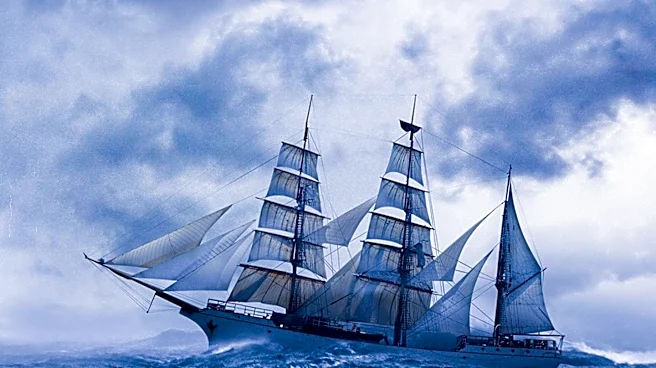
At 2:00 p.m. on August 19, the USS Constitution sighted a large ship to leeward. The weather was cloudy, and the wind was brisk, setting a dramatic stage for the impending conflict. The strange vessel was soon identified as HMS Guerriere, whose crew recognized the Constitution almost simultaneously. Both ships immediately began preparations for action, shortening sail to what was known as "fighting sail," which typically involved only topsails and jibs. As the Constitution closed in, Captain Dacres of the Guerriere initially hove to, attempting to fire a broadside, but his shots fell short.
Following this initial exchange, the Guerriere ran before the wind for about three-quarters of an hour, with the Constitution positioned on its quarter. During this period, Dacres repeatedly yawed his ship to fire broadsides at the Constitution. However, the Guerriere's broadsides were largely inaccurate, while the few shots fired from the Constitution's foremost guns had minimal effect. It was during this early phase that a cannonball reportedly bounced harmlessly off the Constitution's side, leading a crew member to exclaim, "Huzzah! Her sides are made of iron!" Despite this, the Constitution's log, kept by Captain Hull, noted that two British shots did penetrate the hull, with others falling short or flying high into the rigging.
The Intensity of Close-Quarters Combat
As the range between the two frigates closed to within a few hundred yards, Captain Hull made a decisive move. He ordered extra sail, specifically the foresail and main topgallant sail, to be set, aiming to quickly bridge the remaining distance. Captain Dacres did not counter this maneuver, and the ships soon found themselves exchanging broadsides at a very close range, described as "half pistol-shot." The Constitution was to starboard and the Guerriere to port, unleashing a furious fifteen-minute exchange. During this intense period, the Guerriere sustained significantly more damage than the Constitution, largely due to the American ship's superior firepower and accuracy.
The battle reached a critical point when the Guerriere's mizzenmast fell overboard to starboard. This fallen mast acted like a rudder, dragging the ship around and allowing the Constitution to cross ahead of the British frigate. The Constitution seized this opportunity to fire a devastating raking broadside, which brought down the Guerriere's main yard. Captain Hull then maneuvered his ship to cross the Guerriere's bow again, intending another raking broadside. However, this maneuver was executed too closely, and the Guerriere's bowsprit became entangled in the rigging of the Constitution's mizzenmast.
The Aftermath and Surrender
With the ships locked together, boarding parties were summoned on both sides, and musket fire erupted. Aboard the Constitution, Lieutenant William S. Bush was killed, and Lieutenant Charles Morris was wounded by musket shots. Captain Dacres also sustained a musket wound. The narrow bowsprit of the Guerriere was the only potential bridge between the ships, but the heavy sea conditions prevented either side from venturing across. Some of the Guerriere's gunners managed to fire at point-blank range into Hull's stern cabin, briefly setting the American ship on fire. The two entangled ships slowly rotated clockwise before finally breaking free.
Once separated, the Guerriere's foremast and mainmast both fell "by the board," meaning they snapped off at deck level, leaving the ship helpless and rolling heavily. Dacres attempted to rig a sail on the bowsprit to bring his ship before the wind, but it too had been damaged and broke. The Constitution, meanwhile, ran downwind for several minutes to repair damage to its rigging before turning back upwind to re-engage. As the Constitution prepared to renew the action, the Guerriere fired a shot in the opposite direction, which Captain Hull interpreted as a signal of surrender. A boat was dispatched with a lieutenant to the British ship. When asked if the Guerriere was prepared to surrender, Captain Dacres famously replied, "Well, Sir, I don't know. Our mizzen mast is gone, our fore and main masts are gone - I think on the whole you might say we have struck our flag."