
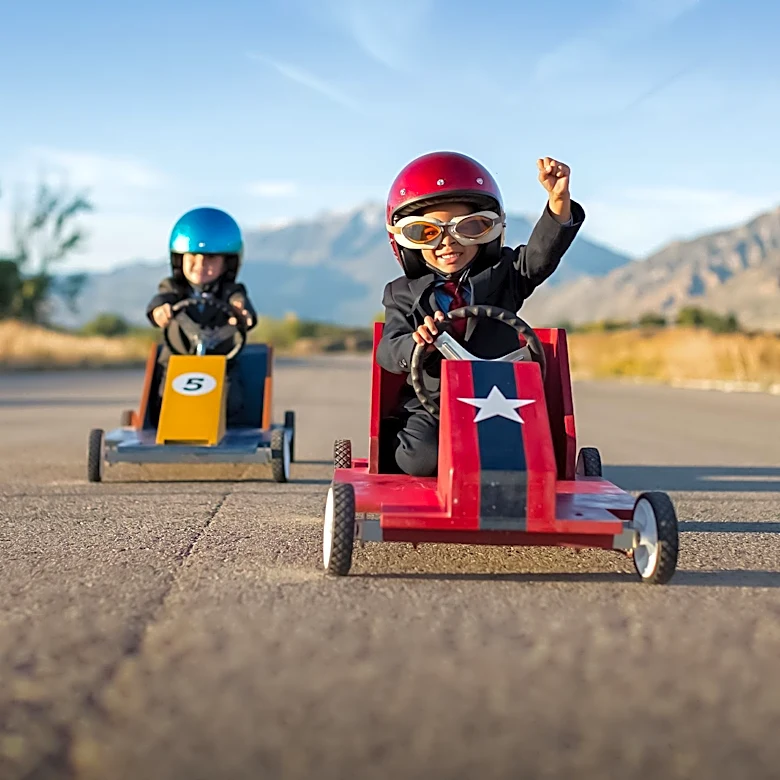

The Soap Box Derby, while celebrated for its youthful spirit and amateur competition, has always had a significant business dimension. From its early days, the event relied heavily on corporate sponsorship and strategic marketing to grow from a local curiosity into a national phenomenon. This financial backing not only provided the necessary resources for expansion but also shaped the Derby's public image and operational structure. Understanding the economic
forces at play reveals how the Derby navigated periods of prosperity and adversity, adapting to maintain its place as a cherished American tradition.
Chevrolet's Founding Sponsorship and Marketing Prowess
The transformation of the Soap Box Derby from a local Dayton event to an All-American competition was largely due to the successful acquisition of a national sponsor: the Chevrolet Motor Company. Myron Scott, the photojournalist who initiated the first city-wide race, successfully sold the idea to Chevrolet, which agreed to co-sponsor the event with the Dayton Daily News. Chevrolet's involvement was a strategic business decision, particularly during the Great Depression. The company recognized the marketing opportunity in associating its brand with a wholesome, youth-oriented activity. The "boys in cars" theme provided a subtle yet effective way to market Chevrolet's main product to parents.
Chevrolet's campaign in promoting the Derby was extensive. Dealerships across the country acted as agents for the Derby, where children would sign up and purchase essential components like wheels and axles. This arrangement served as a clever way to draw parents into showrooms, where they might browse the latest car models while their children completed applications. The company's generous financial campaign bolstered the Derby's rapid expansion across the U.S. Local newspapers also played a crucial role, publishing aggressive stories during the summer race months, boasting about their community races and local champions heading to Akron with dreams of national glory. This widespread media coverage, fueled by Chevrolet's backing, made winning the All-American a popular dream for boys during the Depression, with tens of thousands constructing racers within a year of the Derby's inauguration. The promise of a college scholarship, a significant award during challenging economic times, further enhanced the event's appeal.
Financial Challenges and New Sponsorship Models
Despite its success, the Soap Box Derby faced significant financial challenges, particularly in the 1970s. By the late 1960s, concerns arose among Derby officials about Chevrolet's continued sponsorship. General Motors management, including general manager John DeLorean, questioned whether the investment was still beneficial, deeming the Derby outdated and too expensive. On September 28, 1972, Chevrolet announced it would end its sponsorship, sending Derby Downs into a tailspin. The Akron Chamber of Commerce stepped in to ensure the 1973 World Championship would proceed, but its budget of nearly $1 million annually could not match Chevrolet's. Chevrolet did provide a final $30,000 for the 1973 race and transferred all rights, including the Soap Box Derby name and logo, and capital assets like structures and equipment, for a single settlement of $1.
The departure of Chevrolet led to a significant drop in racer enrollment and exacerbated financial uncertainty. The Akron Chamber of Commerce eventually severed ties with Derby Downs by the end of 1973. The Akron Jaycees Junior Chamber of Commerce then formed the "Save the All-American Committee," which became the All-American Soap Box Derby, Inc. In late November 1975, Barberton, Ohio, firm Novar Electronics pledged $165,000 for the following year's All-American, nearly doubling the combined spending of the previous two years. Novar's president, James H. Ott, believed losing the Derby would be a tragedy for Akron. The agreement stipulated an annual contribution and a three-year lead time if Novar intended to withdraw, aiming to prevent the sudden shock experienced with Chevrolet's departure. Novar's contributions continued until 1988 when a fiscal downturn forced them to withdraw. These shifts highlight the ongoing need for the Derby to secure stable financial backing and adapt its operational model to ensure its survival and continued growth.