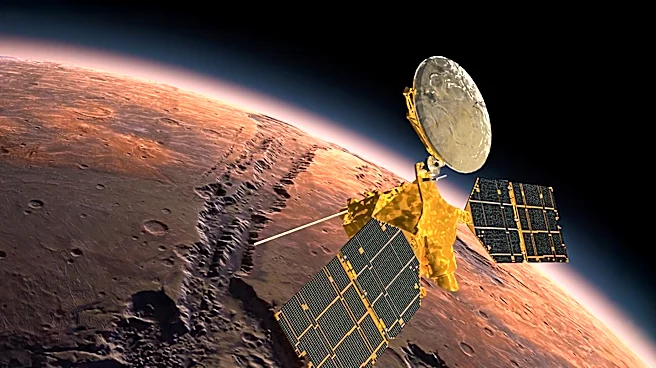






Mariner 9's mission, though concluded in 1972, left an indelible mark on planetary science and the future of space exploration. As the first spacecraft to successfully orbit another planet, it fundamentally altered humanity's perception of Mars from a distant, enigmatic world to a dynamic, geologically active body. Its extensive mapping and atmospheric studies provided a wealth of data that not only answered many questions but also posed new ones,
setting the stage for decades of subsequent Martian missions. The legacy of Mariner 9 extends beyond its immediate scientific returns, influencing mission design, scientific objectives, and our overall approach to exploring the solar system.
Correcting Early Misconceptions of Mars
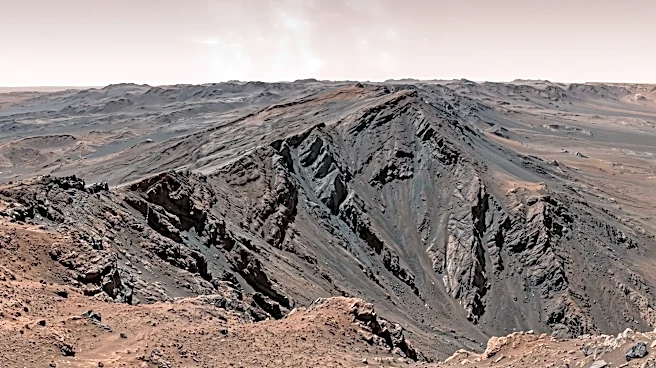
Prior to Mariner 9, earlier flyby missions like Mariner 4, 6, and 7 had returned images that, due to their limited scope, presented a somewhat misleading understanding of Mars. These missions primarily captured heavily cratered regions, leading some scientists to believe Mars was a geologically dead world, much like Earth's Moon. Mariner 9 dramatically corrected this view. By orbiting the planet and systematically mapping 85% of its surface, it revealed a diverse landscape featuring massive volcanoes, vast canyon systems, and evidence of past water flow. This comprehensive view transformed Mars into a planet of significant geological interest, demonstrating that it had experienced a much more active past than previously thought. The mission's infrared radiometer, designed to detect heat sources, contributed to this new understanding by searching for volcanic activity.
Paving the Way for Future Orbital Missions
Mariner 9's success as an orbiter established a crucial precedent for future planetary exploration. Its ability to conduct long-term observations, monitor temporal changes in the atmosphere and surface, and provide global coverage proved far more effective than brief flybys for detailed planetary study. This approach became a blueprint for subsequent Mars orbiters, which have continued to build upon the foundation laid by Mariner 9. The mission's detailed analysis of Mars's two moons, Phobos and Deimos, also provided the first close-up images of these irregular satellites, expanding our knowledge of the Martian system as a whole. The data gathered on atmospheric changes and surface features became invaluable for planning future lander and rover missions, informing decisions about potential landing sites and scientific targets.
An Enduring Presence in Martian Orbit
Even after its operational mission concluded in October 1972, Mariner 9 remained in orbit around Mars. Although its attitude control jets eventually ran out of propellant, the spacecraft continued its silent journey around the Red Planet for decades. While its ultimate fate—burning up in the Martian atmosphere or impacting the surface—is not definitively known, its long orbital presence serves as a testament to its robust design. The mission's $100 million cost yielded an immeasurable return in scientific knowledge and inspired generations of planetary scientists and engineers. Mariner 9's pioneering spirit and the wealth of data it provided continue to be a cornerstone of our understanding of Mars, solidifying its place as one of the most significant missions in space history.