

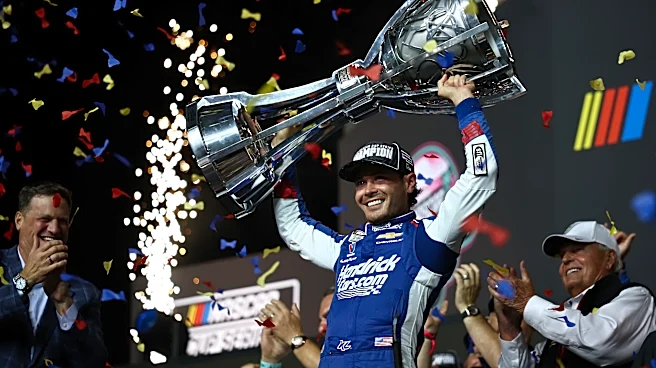
The 1995 NASCAR Winston Cup Series marked a significant turning point in the sport, largely due to the emergence of a young driver named Jeff Gordon. At just 24 years old, Gordon captured his first career championship, becoming the youngest Winston Cup Champion of the modern era, a period defined as post-1971. His consistent performance throughout the season, including a remarkable streak of top-ten finishes, solidified his status as a rising star
and shifted the spotlight onto a new generation of talent in stock car racing. This season was not just about a championship win; it was about the arrival of a new era, spearheaded by Gordon's undeniable skill and competitive drive.
Early Season Dominance and Consistent Performance
Jeff Gordon entered the 1995 season with momentum, having already secured victories in two major races in 1994: the Coca-Cola 600 and the inaugural Brickyard 400. This early success hinted at his potential, which he fully realized in 1995. Gordon quickly established himself as a frontrunner, visiting victory lane in three of the first six races of the season. This strong start set the tone for what would become a championship-winning year.
His ability to consistently perform at a high level was a hallmark of his 1995 campaign. During one particularly impressive stretch, Gordon achieved 14 consecutive top-ten finishes. Within this period of sustained excellence, he secured four additional wins, demonstrating not only his speed but also his strategic prowess and ability to navigate various track conditions and competitive pressures. This consistency proved crucial in building a points lead that would be difficult for his rivals to overcome.
Battling the Veterans: A Championship Showdown
As the 1995 season progressed, the championship battle intensified, primarily becoming a contest between Jeff Gordon, the ascending young talent, and Dale Earnhardt, the seasoned seven-time Winston Cup Champion. Earnhardt, who had tied Richard Petty's record for Cup Championships in 1994 and won four of the previous five titles, was widely considered the favorite to win his eighth championship in 1995. This created a compelling narrative: the established legend versus the hungry newcomer.
Despite Earnhardt's late-season challenge, Gordon maintained his composure and lead. The championship ultimately came down to the final race, the NAPA 500, where Gordon secured the title by a margin of 34 points. His victory was a symbolic passing of the torch, marking a shift in the competitive landscape of NASCAR. At the season-ending banquet, Gordon famously toasted Earnhardt with a glass of milk instead of champagne, a lighthearted acknowledgment of his youth and perhaps a nod to the future.
The Monte Carlo Advantage and Manufacturer Dominance
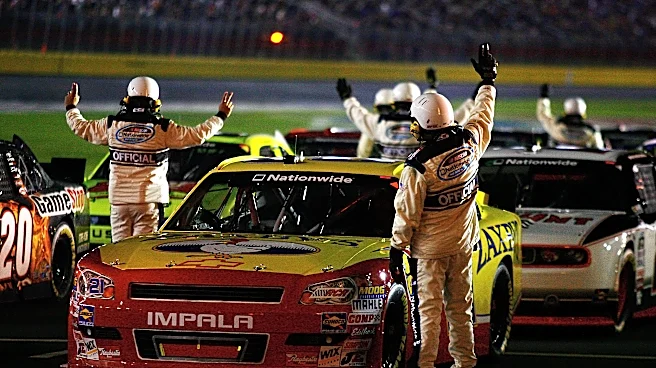
While Gordon's driving was a key factor, the performance of his Chevrolet Monte Carlo also played a significant role in his success and the overall narrative of the 1995 season. The Monte Carlo replaced the Lumina as Chevrolet's official car in NASCAR for 1995 and proved to be exceptionally dominant. Chevrolet Monte Carlos won 21 of the season's 31 races, showcasing a clear performance advantage.
This dominance was so pronounced that after Chevrolet cars won the first seven races of the season, NASCAR implemented adjustments to provide advantages to the other manufacturers, Ford and Pontiac. This highlights the sheer competitive edge the Monte Carlo provided, allowing drivers like Gordon to maximize their potential. The combination of a talented young driver and a superior vehicle created a formidable force that reshaped the 1995 NASCAR Winston Cup Series and set the stage for Gordon's legendary career.