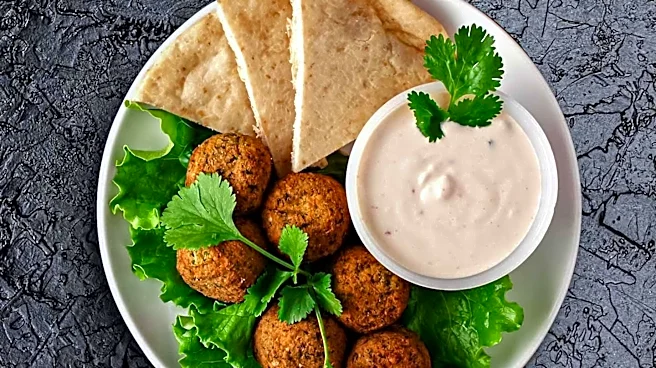







Falafel, a deep-fried fritter made from ground chickpeas or fava beans, holds a significant place in Middle Eastern cuisine and has gained widespread recognition across the globe. Originating in Egypt, this versatile dish has traveled far beyond its initial borders, becoming a popular street food and a staple in many cultures. Its journey from a regional specialty to an international favorite highlights its adaptability and universal appeal, showcasing
how a simple preparation can transcend culinary boundaries and become a beloved food item worldwide.
The Egyptian Roots of a Beloved Fritter
Falafel's origins are firmly rooted in Egypt, where it is traditionally prepared using fava beans. In Egypt and Sudan, this dish is known as *ta'amiyya*, a name derived from an Arabic word meaning 'a little piece of food' or 'small tasty thing.' This nomenclature reflects the humble yet satisfying nature of the fritter. The preparation involves soaking dried fava beans in water, then stone grinding them with various herbs and spices such as leek, parsley, green coriander, cumin, and dry coriander. This mixture is then shaped into balls or patties and typically deep-fried, resulting in a crispy exterior and a flavorful, tender interior.The Egyptian version of falafel, with its distinct fava bean base, represents the foundational form of the dish. Its presence in Egyptian cuisine dates back centuries, establishing it as a traditional food item deeply integrated into the local culinary landscape. The method of preparation, emphasizing the soaking and grinding of beans rather than cooking them beforehand, is crucial for achieving the desired texture and preventing the fritters from falling apart during frying.
Regional Variations and the Rise of Chickpea Falafel
As falafel spread from Egypt, it adapted to local ingredients and preferences, leading to distinct regional variations. In the Levant, which includes areas like Jordan, Lebanon, Syria, and Palestine, chickpeas became the predominant ingredient, either used alone or in combination with fava beans. The chickpea-based falafel is particularly notable in Palestinian cuisine and is the version that has become most popular in Western countries. This variation also involves soaking the chickpeas overnight, often with baking soda, before grinding them with ingredients like parsley, scallions, and garlic, and seasoned with spices such as cumin and coriander.The adoption of chickpeas in the Levant marked a significant evolution in falafel's history. This adaptation not only provided a different flavor profile but also contributed to its broader appeal. The chickpea version, often served in pita bread with salads, pickled vegetables, hot sauce, and tahini-based sauces, became a quintessential street food across the Middle East. Its versatility allowed it to be enjoyed as a snack, part of a meze tray, or as a complete sandwich, further cementing its place in daily diets.
Global Expansion and Cultural Significance
Falafel's journey continued beyond the Middle East, gaining immense popularity in Europe, particularly Germany, and North America. Its appeal as a vegetarian food option has been a key factor in its global success. In many parts of the world, falafel is now a common offering in Middle Eastern restaurants, food trucks, and even mainstream eateries, often customized to suit local tastes while retaining its core identity.Beyond its culinary appeal, falafel has also become a subject of cultural discussion, particularly in the Israeli-Palestinian conflict, where both sides have claimed ownership of the dish. This highlights how food can become intertwined with national identity and heritage. Despite these discussions, falafel continues to be celebrated for its delicious taste and its role as an accessible, satisfying meal. Its transformation from a simple Egyptian fritter to a globally recognized dish underscores its enduring culinary legacy and its ability to connect diverse cultures through shared enjoyment of food.