

The phrase "Spahn and Sain and pray for rain" has become an iconic part of baseball lore, encapsulating a specific moment in the sport's history and the reliance on two dominant pitchers. This sentiment originated from a poem written by Gerald V. Hern, a sports editor for The Boston Post, and was published on September 14, 1948. The poem was an ode to the Boston Braves' star pitchers, Warren Spahn and Johnny Sain, who were instrumental in the team's
success during that season. Their combined efforts on the mound were so crucial that the team's fortunes seemed to hinge on their availability, leading to the memorable plea for rain to provide rest days for the rest of the pitching staff.
The Genesis of a Baseball Classic
The poem's creation was directly tied to the 1948 Boston Braves' pennant drive. That year, the Braves won what would be their final pennant during their time in Boston, largely due to the exceptional pitching of Warren Spahn and Johnny Sain. The rest of the team's pitching rotation was perceived as thin, making the contributions of Spahn and Sain even more vital. Gerald Hern's poem vividly captured this dependency, suggesting a rotation that relied heavily on these two aces, interspersed with off days and the hopeful intervention of rain to extend their rest.
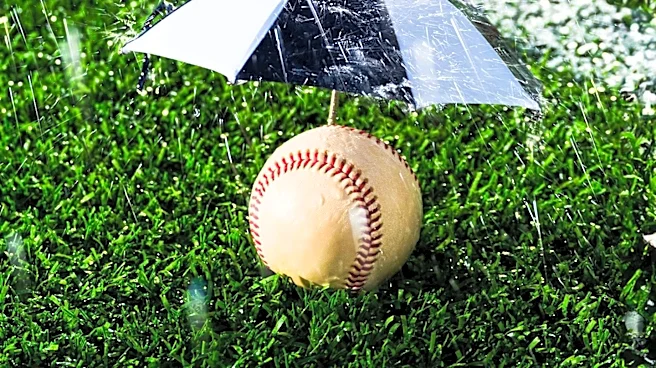
The original poem laid out this strategy: "First we'll use Spahn / then we'll use Sain / Then an off day / followed by rain / Back will come Spahn / followed by Sain / And followed / we hope / by two days of rain." This verse quickly resonated with the public and sports enthusiasts, leading to its widespread adoption and eventual condensation into the more commonly known phrases like "Spahn and Sain and pray for rain" or "Spahn and Sain, then pray for rain." The poem's popularity cemented its place in baseball's cultural lexicon, becoming a shorthand for a team's reliance on a limited but highly effective pitching duo.
The 1948 Pennant Drive: A Story of Two Aces
The inspiration for Hern's poem was not merely anecdotal; it was rooted in the actual performance of Spahn and Sain during a critical stretch of the 1948 season. The Braves' pennant drive saw these two pitchers deliver extraordinary results. For instance, the team swept a Labor Day doubleheader, with Spahn pitching a complete 14-inning victory in the first game, followed by Sain throwing a shutout in the second. This remarkable display of endurance and skill highlighted their importance to the team.
Following these games, the team had two off days, after which it did indeed rain. Spahn then secured a win on the next day, and Sain followed with another victory the day after that. This pattern continued, with Spahn winning again three days later, and Sain winning the subsequent day. After another off day, the two pitchers were brought back to win yet another doubleheader. In a span of just twelve days, Spahn and Sain collectively achieved an impressive 8–0 record, a testament to their dominance and the strategic deployment that inspired the famous poem. Sain, in particular, had a stellar year, winning 24 games against 15 losses and finishing second in the National League's Most Valuable Player Award voting.
Beyond the Poem: Spahn and Sain's Individual Prowess
While the poem immortalized their partnership, both Warren Spahn and Johnny Sain were formidable pitchers in their own right. Spahn, a future Hall of Famer, had his first full season as a starting pitcher in 1947, leading the National League in ERA, shutouts, and innings pitched with a 21–10 record. This was the first of his thirteen 20-win seasons, and he would go on to win two more ERA titles in 1953 and 1961. His career was interrupted by military service in World War II, but he returned to become one of baseball's all-time greats.
Sain, a right-handed pitcher, also had a distinguished career, winning 139 games and losing 116 with a 3.49 earned run average over 11 seasons. His best years were immediately after World War II, during which he won 100 games for the Boston Braves. After being traded to the New York Yankees in 1951, Sain transitioned to a relief pitcher role and found late-career success, leading the American League in saves with 22 in 1954. The poem, therefore, not only captured a unique moment in baseball strategy but also celebrated the individual brilliance of two pitchers who left an indelible mark on the sport.