







The George Washington Bridge stands as a monumental suspension bridge, connecting New York City, New York, with Fort Lee, New Jersey, across the Hudson River. This vital artery is not only a testament to early 20th-century engineering but also a crucial link in the transportation network of the northeastern United States. Its construction marked a significant achievement in bridging geographical divides and facilitating commerce and travel between
two major states.
Designed by the renowned engineer Othmar H. Ammann, the bridge's construction commenced on October 21, 1927. The project was an ambitious undertaking, aiming to create a robust and enduring structure capable of handling substantial traffic volumes. The initial phase of construction culminated in its grand opening on October 25, 1931, a mere four years after breaking ground. This rapid development underscored the pressing need for improved connectivity across the Hudson River.
Architectural and Structural Marvel
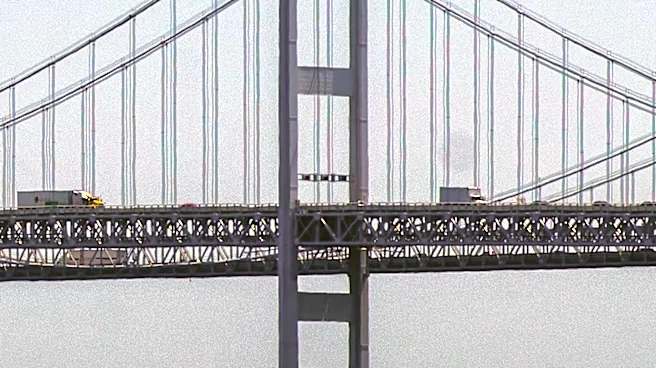
The George Washington Bridge is characterized by its impressive dimensions and structural integrity. It spans a total length of 4,750 feet, with its main span alone stretching 3,500 feet. This main span is suspended by four massive cables, each a marvel of engineering in itself. Each of these cables weighs an astonishing 28,450 tons and is composed of 26,474 individual wires, meticulously woven together to provide immense strength and support. The bridge's width measures 119 feet, accommodating multiple lanes of traffic and ensuring efficient flow.
The initial cost of constructing this engineering feat was $59 million, a substantial investment for its time, reflecting the scale and complexity of the project. This investment, however, proved to be well-placed, as the bridge quickly became an indispensable part of the region's infrastructure. Its design not only prioritized functionality but also incorporated aesthetic elements that have made it an iconic structure.
Expanding Capacity: The Second Level
As the years passed and traffic volumes steadily increased, the need for expanded capacity became evident. To address this growing demand, a second level was added below the main deck of the bridge. This significant expansion project further enhanced the bridge's ability to handle the ever-increasing flow of vehicles between New York and New Jersey. The addition of this lower level was a testament to the foresight of its planners and engineers, ensuring the bridge's continued relevance and utility.
The second level was officially opened to traffic on August 29, 1962, more than three decades after the bridge's initial inauguration. This expansion effectively doubled the bridge's vehicular capacity, allowing it to accommodate even more commuters and commercial traffic. The George Washington Bridge, with its dual levels, continues to serve as a critical transportation link, facilitating millions of crossings annually and playing a pivotal role in the economic and social fabric of the region.