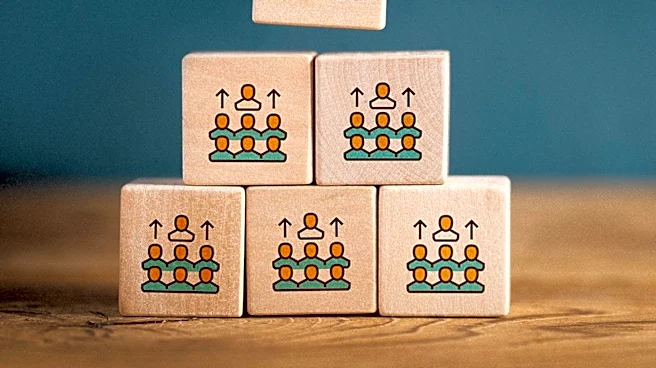








Abraham Maslow's hierarchy of needs offers a foundational model for understanding the motivations behind human behavior. Proposed by the American psychologist, this conceptualization outlines five sets of basic needs that are interconnected and arranged in a hierarchy of prepotency, or strength. While often depicted as a pyramid, a visual representation Maslow himself did not create, the model begins with the most fundamental physiological needs and progresses
upward to the pinnacle of self-actualization. This framework has become a widely recognized tool across various fields, including education, business, healthcare, and social work, providing insight into the dynamics that drive individuals.
The Foundation: Physiological Needs
At the very base of Maslow's hierarchy are the physiological needs, which are considered the most prepotent of all. These are the biological requirements essential for human survival. According to Maslow's theory, individuals are compelled to satisfy these needs first before they can pursue any higher levels of intrinsic satisfaction. If a person is struggling to meet their physiological needs, they are unlikely to focus on safety, belonging, esteem, or self-actualization. These fundamental needs include air, water, food, heat, clothes, reproduction, shelter, and sleep. Many of these are crucial for maintaining homeostasis within the human body. For instance, the need for air is more urgent than a sense of social belonging, highlighting the critical role these basic essentials play in sustaining life and preventing disruptions to bodily regulation.
Seeking Stability: Safety Needs
Once physiological needs are adequately met, safety needs emerge as the next dominant motivator of behavior. This level focuses on an individual's desire for security, order, and stability in their environment. The absence of physical safety, perhaps due to war, natural disaster, or abuse, or the lack of economic safety, such as during a financial crisis or unemployment, can cause these needs to become paramount. Manifestations of safety needs can include a preference for job security, grievance procedures to protect individuals from arbitrary authority, savings accounts, insurance policies, and disability accommodations. This level is particularly prominent in children, who generally have a greater need to feel secure, especially those with disabilities. However, adults are also significantly impacted, often in economic contexts, as the need for safety is not exclusive to childhood. The goal of consistently meeting safety needs is to achieve stability in one's life, which contributes to a sense of homeostasis.
Connection and Belonging: Love and Social Needs
Following the satisfaction of physiological and safety needs, the third level of the hierarchy centers on interpersonal connections and the feeling of belongingness. Maslow posited that humans have a fundamental need for acceptance and a sense of belonging within social groups, whether these groups are large or small. Being part of a group, be it work colleagues, sports teams, family, or online communities, is considered crucial. This sense of belonging stems from receiving acceptance, respect, and love from others. Humans need to both give and receive love, in both sexual and non-sexual forms. A lack of this love or belonging can lead to feelings of loneliness, social anxiety, and even clinical depression. This need can be so powerful, especially in childhood, that it may even override the need for safety, as seen in children who remain attached to abusive parents. Deficiencies in this area, such as neglect or ostracism, can significantly impair an individual's ability to form and maintain emotionally meaningful relationships. Mental health is deeply intertwined with the fulfillment of these needs; for example, studies suggest that prolonged financial stress can strain parent-child relationships and contribute to higher rates of depression, not only because basic needs are unmet but also due to the impact on social connections.
Achieving Recognition: Esteem Needs
After the needs for love and belonging are addressed, esteem needs come to the forefront. Esteem encompasses both self-respect and the respect received from others. Most individuals seek stable esteem, meaning a sense of worth that is genuinely based on their capabilities and achievements. Maslow identified two facets of esteem needs. The "lower" version involves the desire for respect from others, which can include a need for status, recognition, fame, prestige, and attention. The "higher" version, conversely, focuses on self-respect, encompassing needs for strength, competence, mastery, self-confidence, independence, and freedom. Maslow emphasized that these higher levels are not rigidly separated but are interrelated. Esteem develops through daily experiences that offer learning opportunities and allow individuals to discover their own capabilities. This is particularly vital for children, making it essential for adults, including parents and educators, to provide supportive environments and opportunities for successful, positive experiences that foster a strong sense of self and help children see themselves as respectable and capable individuals. Maslow also noted that the need for respect or reputation is often more important for children and precedes the development of true self-esteem or dignity.
Reaching Full Potential: Self-Actualization
At the apex of Maslow's original hierarchy is self-actualization, which he famously described with the phrase, "What a man can be, he must be." This level represents the realization of one's full potential and the desire to accomplish everything one is capable of becoming. This could manifest as a strong desire to be an ideal parent, excel athletically, or create art or inventions. To truly understand and pursue this level, an individual must not only succeed in but also master the preceding needs. Self-actualization functions as a value-based system in terms of motivation, where it is the ultimate goal or explicit motive. The earlier stages of the hierarchy serve as the step-by-step process through which self-actualization becomes achievable. Individuals driven by self-actualization seek to understand how their needs, relationships, and sense of self are expressed through their behavior, constantly striving for personal betterment and the fullest use of their talents and interests.