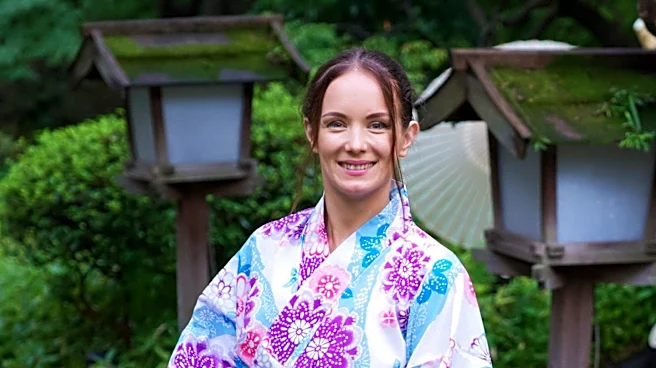







The yukata, a casual summer kimono, represents a fascinating blend of tradition and modern practicality in Japanese attire. While simpler than its formal counterpart, the kimono, the yukata still adheres to specific construction and wearing customs that are deeply rooted in Japanese culture. Understanding these elements provides insight into the garment's enduring appeal and its role in contemporary fashion, particularly during the warm summer months.
Construction and Material Choices
At its core, the yukata is an unlined garment, typically made from cotton or linen, though synthetic fabrics are also used today. This choice of material and the absence of a lining make it ideal for summer wear, offering breathability and comfort in hot weather. Like other traditional Japanese garments, the yukata is characterized by its straight seams and wide sleeves, a design that allows for ease of movement and a distinctive silhouette.
Historically, yukata were often made using specific dyeing techniques. One traditional method was Nagaita-Chugata, which involved dyeing fabric on both sides with stencils. Due to the expense of this technique, a method called Chusen was developed in the late Edo period to create a similar double-sided cloth more affordably. While traditionally indigo-dyed cotton was common, the late 1990s saw a significant expansion in available colors and designs, reflecting a broader embrace of diverse aesthetics and the convenience of machine washability.
The Proper Way to Wear a Yukata
Wearing a yukata involves a specific method of wrapping and securing the garment. Crucially, the proper left side of the yukata must always be wrapped over the proper right side. This is a significant cultural detail; wrapping the right side over the left is traditionally associated with burial attire, making it an important custom to observe. Once wrapped correctly, the yukata is secured with an obi, a sash that cinches the waist.
Unlike the complex obi used with formal kimonos, the yukata obi is typically a stiff, single-layer sash, or a softer, also single-layer, version. This simpler obi is easier to tie, aligning with the yukata's casual nature. The ensemble is completed with geta, which are traditional wooden sandals, worn without socks. This sockless tradition further emphasizes the yukata's role as a relaxed, summer garment, distinct from the more formal kimono which is typically worn with tabi socks.
Distinctions Between Men's and Women's Yukata
While both men and women wear yukata, there are subtle yet important distinctions in their design, particularly concerning the sleeves. Men's yukata are characterized by a shorter sleeve extension, typically measuring approximately 10 centimeters (about 3.9 inches) from the armpit seam. In contrast, women's yukata feature a longer sleeve extension, usually around 20 centimeters (about 7.9 inches).
These differences contribute to the distinct aesthetics of men's and women's yukata, reflecting traditional gendered styles in Japanese clothing. Beyond sleeve length, while traditional indigo and white patterns were once common for both, modern yukata for men and women now come in a vast array of colors and designs, catering to individual preferences and contemporary fashion trends. This evolution allows for personal expression while still honoring the garment's traditional form.
Essential Accessories for the Yukata Ensemble
Accessorizing a yukata enhances both its aesthetic appeal and its practicality. A common accessory is a hand fan, which can be either foldable or fixed, providing a functional way to combat the summer heat. Another traditional item is the kinchaku, a small carry bag used by both men and women. This bag is practical for carrying modern essentials like mobile phones and other small personal items, blending traditional style with contemporary needs.
For cooler evenings, an outer jacket can be added to the yukata ensemble, providing an extra layer of warmth without compromising the casual elegance of the outfit. These accessories, from the obi and geta to fans and kinchaku, complete the yukata experience, making it a versatile and culturally rich form of dress for various summer occasions.