

The Library of Congress (LOC) stands as a monumental research library in Washington, D.C., serving a dual and vital role for the United States. It functions as both the primary library and research service for the U.S. Congress and the de facto national library of the country. Beyond its vast collections, the LOC is also responsible for administering U.S. copyright law through the United States Copyright Office and houses the Congressional Research
Service. While its primary duty is to Congress, the library is open to the public for research, embodying its commitment to knowledge and information access for all, even though borrowing privileges are restricted to members of Congress, their staff, and library employees.
Origins and Early Challenges
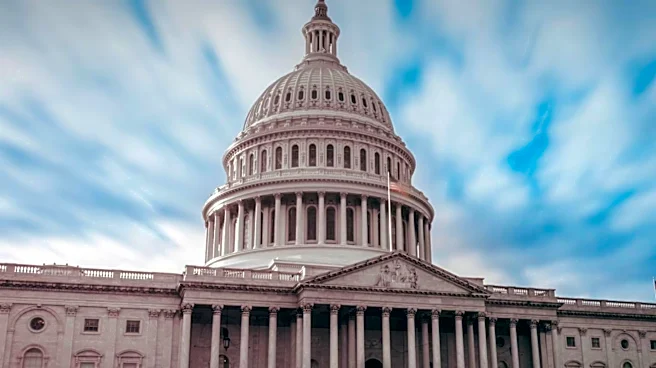
The journey of the Library of Congress began when Congress relocated to Washington in November 1800. Initially, a small congressional library was established within the Capitol building. However, this nascent collection faced a significant setback during the War of 1812. In 1814, British forces burned Washington, and much of the original library's collection was tragically lost. This devastating event prompted a crucial turning point in the library's history. Former President Thomas Jefferson stepped forward with an offer to sell his entire personal collection of 6,487 books to help restore the library. Congress accepted this offer, laying the foundation for a more robust collection.Despite this significant acquisition, the library's growth was slow, and it suffered another major fire in 1851. This second fire proved particularly destructive, destroying two-thirds of Jefferson's original books. These early challenges highlight the fragility of the library's existence and the persistent efforts required to build and preserve its resources. The period leading up to the American Civil War saw the library grappling with issues such as space shortages, understaffing, and a lack of adequate funding, underscoring the need for greater recognition and support for its critical role.
Growth, Expansion, and Modern Responsibilities
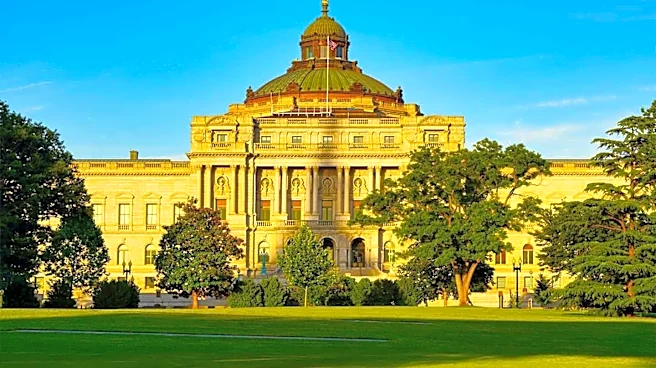
The American Civil War marked a turning point, increasing the importance of legislative research to meet the demands of a growing federal government. This period spurred significant developments for the Library of Congress. In 1870, a pivotal change occurred when the library gained the right to receive two copies of every copyrightable work printed in the United States. This legal mandate dramatically expanded its collections, which were further augmented through strategic acquisitions and generous donations.The need for more space became evident with the burgeoning collections. Between 1890 and 1897, a new library building, now known as the Thomas Jefferson Building, was constructed to accommodate its growing holdings. This expansion continued with the addition of two more significant structures: the John Adams Building, which opened in 1939, and the James Madison Memorial Building, inaugurated in 1980. These buildings, located on Capitol Hill, are interconnected by an underground tunnel system, forming a sprawling complex dedicated to knowledge and research.
Today, the Library of Congress continues its multifaceted mission. Its Congressional Research Service provides objective, non-partisan research to Congress, a crucial function in assisting legislators with the complex task of passing legislation. The library's administration of U.S. copyright law ensures the protection of intellectual property, while its vast collections serve as an unparalleled resource for scholars, researchers, and the general public. The evolution from a small congressional collection to the largest library in the U.S. reflects its enduring importance as a cornerstone of American democracy and intellectual life.
The Librarian of Congress and Institutional Leadership
The leadership of the Library of Congress is vested in the Librarian of Congress, an individual appointed by the President of the United States with the advice and consent of the Senate, serving a ten-year term. This position carries broad responsibilities, including overseeing the Register of Copyrights of the U.S. Copyright Office and making determinations regarding DMCA prohibitions on technological access protection. The Librarian also appoints the U.S. Poet Laureate and awards the Gershwin Prize for Popular Song, highlighting the library's engagement with cultural and artistic endeavors.The creation of the Library of Congress itself was formalized on April 24, 1800, when the 6th United States Congress passed and President John Adams signed an appropriations bill. This act provided for the removal and accommodation of the U.S. Government and specifically designated the library's early functions, including the acquisition of books for congressional use and the establishment of a joint committee for their selection and circulation. An initial appropriation of $5,000 was made for the new library. In 1802, President Thomas Jefferson signed a bill creating the Office of the Librarian, granting the president appointment power. John J. Beckley, Jefferson's former campaign manager, became the first Librarian of Congress, earning $2 a day and also serving as clerk to the House of Representatives. It wasn't until 1897 that the Senate gained confirmation power for the president's nominee, and the Librarian was granted sole authority for making institutional rules and appointing staff. Historically, many Librarians lacked prior experience in librarianship, often coming from backgrounds in journalism, law, writing, publishing, academia, and politics, with only a few having professional library experience.