






Richard Rodgers and Oscar Hammerstein II, renowned for their Broadway successes like *Oklahoma!* and *Carousel*, ventured into new theatrical territory with their 1947 musical, *Allegro*. This production marked a significant departure from the conventional "boy and girl" format, instead focusing on the life journey of a single man, Joseph Taylor Jr. Hammerstein envisioned a work that would be simply staged, akin to Thornton Wilder's *Our Town*, and suitable
for college productions after its initial run. This ambition led to several innovative staging and narrative techniques that set *Allegro* apart from its contemporaries.
A New Approach to Staging and Scenery
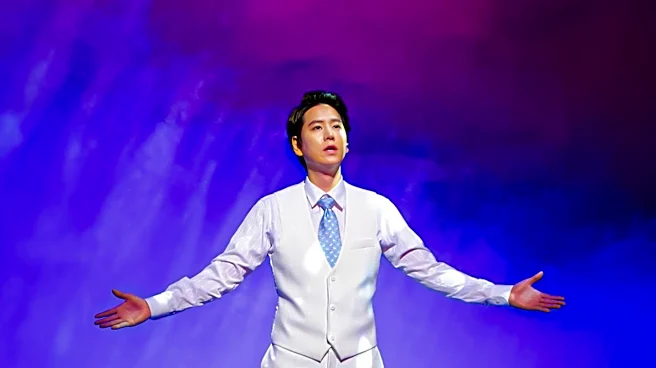
*Allegro* was conceived to take place in an open space, utilizing props and projections to convey scenery rather than elaborate sets. This minimalist approach was a bold choice for a Broadway production of its time. The staging relied heavily on lighting cues, with a record-breaking 500 cues used throughout the show. This complex lighting design, combined with images projected onto backdrops, created a dynamic and fluid environment that could transform rapidly to suggest different locations and moods. The physical demands of this staging were immense, requiring forty stagehands to manage sixty partial sets and objects moved by a semicircular track hidden by curtains.
Choreographer Agnes de Mille, who had previously worked on *Oklahoma!* and *Carousel*, was hired to direct *Allegro*, an unusual move at the time for someone primarily known for choreography. De Mille's vision for the staging was integral to its innovative nature. She designed ballets that were not merely decorative but served to reveal the characters' psychological states. The dances were extremely complicated and formed the framework for many scenes, illustrating Joe's journey from learning to walk to falling in love and navigating life's challenges. For Joe's childhood scenes, de Mille used adults in children's clothes, creating an illusion that worked effectively due to the absence of actual children on stage to provide scale.
The Role of the Greek Chorus and Narrative Structure
Beyond the visual innovations, *Allegro* also introduced a speaking chorus, reminiscent of a Greek chorus, which commented on the action and directly addressed both characters and the audience. This narrative device allowed for a unique storytelling perspective, providing insights into the protagonist's inner world and the broader societal pressures he faced. The chorus played a crucial role in guiding the audience through Joe's life, from his birth to age 35, a scope that Hammerstein initially considered extending from birth to death.
Hammerstein's personal experiences heavily influenced the play's narrative. His son, William, noted that much of the first act was based on his father's childhood memories, particularly his feelings about his mother, who died when he was twelve. Stephen Sondheim, who worked on the production, later recognized that Hammerstein was attempting to tell the story of his own life, using Joe's struggle as a metaphor for the "trappings of success" and the risk of "losing sight of what your goal is." This deeply personal and reflective narrative, combined with the innovative theatrical techniques, positioned *Allegro* as a pioneering work in musical theater, even if its advanced integration of story and music was initially misunderstood by audiences and critics.
Challenges and Legacy of Innovation
The ambitious nature of *Allegro* presented significant challenges during its development and tryouts. The sheer scale of the production, described as a "leviathan," stretched the capabilities of its creators. Rehearsals were split across three New York locations for principals, singers, and dancers, involving a large cast of 67 performers. The tryouts were particularly eventful, with incidents ranging from collapsing scenery to a performer falling into the orchestra pit. These early struggles highlighted the difficulties of bringing such a complex and innovative vision to the stage.
Despite its mixed critical reception and the initial perception that its message was unclear, *Allegro* is now seen by some as being ahead of its time. Frederick Nolan, a biographer of Rodgers and Hammerstein, suggested that the musical's integration of story and music was "far too advanced even for audiences now becoming accustomed to musicals which actually had stories." Sondheim further characterized it as an early attempt at "epic theatre in contemporary musical theatre," employing a Brechtian approach to tell a life story through generalities rather than specific events. While its relative failure led Rodgers and Hammerstein to return to more traditional forms for subsequent productions, *Allegro* remains a testament to their willingness to experiment and push the boundaries of musical theater.